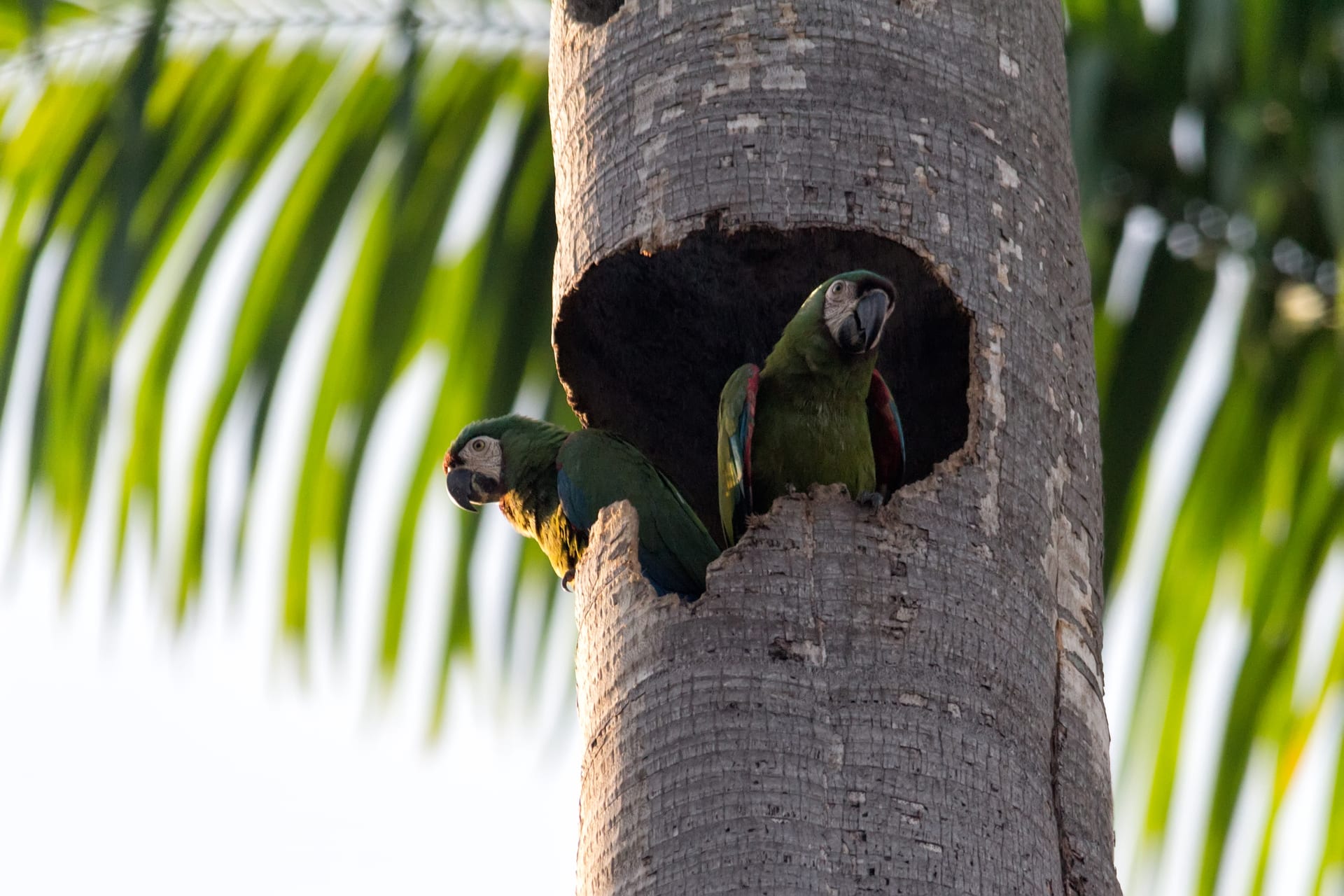
 © Fernando Flores from Caracas, Venezuela / CC BY-SA 2.0
Chestnut-fronted Macaw (Severe Macaw)
The Chestnut-fronted Macaw, also known as the Severe Macaw, is one of the larger mini macaws, with a sturdy green body accented by red and blue in the wings and a distinctive chestnut patch above the beak. Measuring 45–50 cm and weighing 300–410 g, it's the only macaw species with rows of dark feather lines across its bare facial skin. Curious and eager to bond with their people, these birds also come with a powerful beak and a loud voice that call for real experience, which is why they're considered best suited to advanced keepers. With a lifespan that can stretch from 30 to 80 years, welcoming one means committing to a genuinely long-term relationship.
View Chestnut-fronted Macaw (Severe Macaw) encyclopedia →0% commission on your first sales!Register by September 30, 2026 and your first 2 sales are commission-free!
Breeder Wanted!
List on BreederDirect and sell directly to customers nationwide!
Six Transparency Commitments from BreederDirect
All Birds listings include complete Breeder transparency: hand-raised status, DNA sex determination, and health certification details.
- Hand-Raised
- DNA Sex-Determined
- Health Certified
- Origin Disclosed
- Color Variation Specified
- Age in Months Disclosed
Browse all 247 breeds
Care Level
No listings match your filters
Adjust your filters, or get notified when new listings arrive.
Getting alerts is free with a member account. When new listings match your saved search, we'll notify you by email and in-app.
Browse other categories
Verified breeders (preview)
Chestnut-fronted Macaw (Severe Macaw) key facts
- Care level
- Advanced
- Lifespan
- 30-80 years
- Size
- 45-50cm
- Diet
- Large parrot pellets, nuts, fruit and vegetables
- Cage
- At 45 to 50 cm with a long tail it needs a tall, large cage or a bird room. The bite is powerful, so choose cage mesh and fittings accordingly.
- Temperament
- It is gregarious and tames well, but tends to become more aggressive at sexual maturity, so consistent daily handling is a precondition for keeping it.
- Vocalization
- It gives the loud, piercing calls typical of macaws, and keeping one in an apartment is not realistic.
- Notes
- With a lifespan of 30 to 80 years the bird may outlive its keeper, so plan for the long term, including who will take it on.
About Chestnut-fronted Macaw (Severe Macaw)
A mid-sized mini macaw (45–50 cm) with a green body, red-and-blue wings, and a chestnut patch above the beak. Its bare face is marked by unique dark feather lines, and with a 30–80 year lifespan, it's best suited to experienced keepers.
7 things to know before welcoming a Chestnut-fronted Macaw (Severe Macaw)
1Spacious Housing Needed
As a larger mini macaw, this bird needs a cage roomy enough to stretch and flap, plus daily time outside the cage. Without enough space to move, they can become stressed or develop problem behaviors, so plan for a dedicated flight area before bringing one home.
2A Powerful Beak
Their sturdy beak can easily crack hard branches and wooden toys, so it's important to provide plenty of chew items as an outlet. Thoughtful daily handling also helps prevent that beak strength from turning into nipping at fingers or furniture.
3A Loud Voice
These macaws are expressive and can call out loudly when excited or seeking attention. If you live in an apartment or close to neighbors, it's worth thinking ahead about noise management and how to keep the peace nearby.
4Best Suited to Experienced Keepers
Intelligent and strong-willed, this species can develop biting or excessive vocalizing if taken on without adequate experience. It's best suited to keepers who already have experience with parrots or who have thoroughly researched the species beforehand.
5A Lifespan of 30 to 80 Years
This species is remarkably long-lived, with a lifespan ranging from 30 to 80 years. When welcoming one, it's worth thinking not only about your own life changes ahead but also about who might care for the bird if you no longer can.
6A Balanced Diet
A pellet-based diet supplemented with fresh vegetables, fruit, and nuts in appropriate proportions forms the foundation of good nutrition. An unbalanced diet can lead to health issues, so it helps to manage feeding with guidance from an avian specialist.
7Enjoys Bonding with People
Social by nature, these birds enjoy interacting with their people and can become quite affectionate once settled in. On the other hand, too little attention can lead to frustration-driven behavior problems, so setting aside time for daily interaction matters.
Frequently asked questions about Chestnut-fronted Macaw (Severe Macaw)
- Q.Can beginners keep this species?
- A.This species is considered best suited to experienced keepers. Handling its powerful beak and loud vocalizations calls for prior knowledge, so it's recommended for those with parrot-keeping experience or thorough preparation.
- Q.How loud is its call?
- A.It can vocalize loudly when excited or seeking attention. This varies by individual, but if you live in an apartment or near neighbors, it's wise to plan for noise management in advance.
- Q.How long do they live?
- A.Their lifespan can range from 30 to 80 years, making this a genuinely long-term commitment. It's worth thinking ahead about who will continue caring for the bird over its lifetime.
- Q.Is this species subject to trade regulations?
- A.Chestnut-fronted Macaw (Severe Macaw) is listed in CITES Appendix II. International trade requires a permit from the exporting country, but as far as CITES is concerned, no registration is needed to buy or sell individuals already legally in Japan.
- Q.How does it differ from other mini macaws?
- A.It's one of the larger mini macaws at 45–50 cm in length, and the rows of dark feather lines around its bare facial skin are unique to this species. The chestnut patch above the beak is another distinguishing feature.
Useful tools for Chestnut-fronted Macaw (Severe Macaw) care
Learn more about Chestnut-fronted Macaw (Severe Macaw) in the encyclopedia
View Chestnut-fronted Macaw (Severe Macaw) encyclopedia entry →
Care difficulty, lifespan, size and diet — all basics covered.
More in this category
Can't find the one you're looking for?
Post your wishes for free and breeders with matching animals will contact you with introductions.