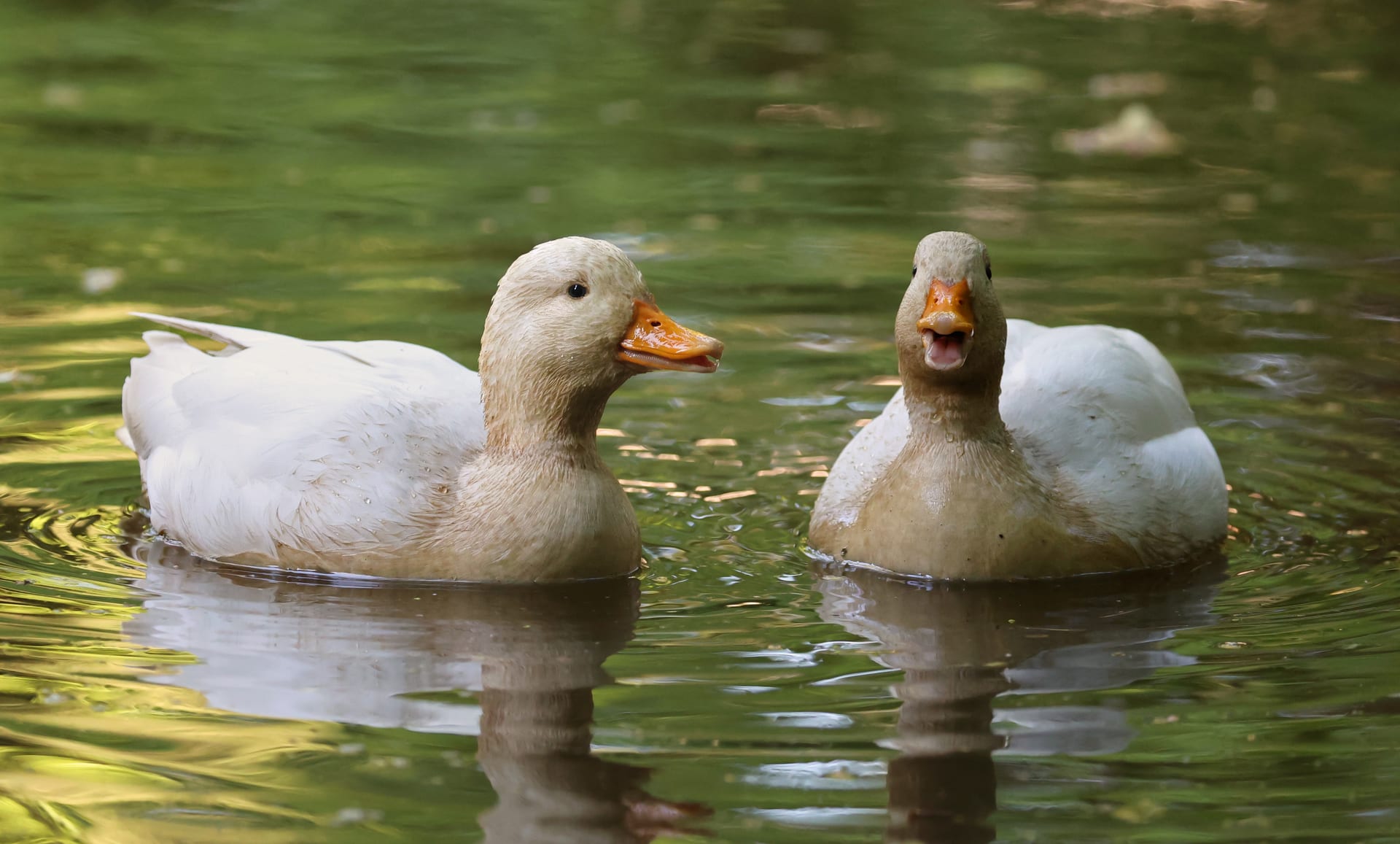
 © Clément Bardot / CC BY-SA 4.0
Call Duck
The Call Duck is the smallest duck breed, known for its round head, unusually short bill, and endearing appearance that makes it a popular companion bird. Adults stay compact at roughly 800g (males run up to 100g heavier, females up to 100g lighter), and many individuals are friendly and lively. Females, however, have a notably loud, far-carrying call, so noise considerations matter when planning where to keep them. Prospective owners should also understand ducks' need for bathing water and flock social behavior before bringing one home.
View Call Duck encyclopedia →0% commission on your first sales!Register by September 30, 2026 and your first 2 sales are commission-free!
Breeder Wanted!
List on BreederDirect and sell directly to customers nationwide!
Six Transparency Commitments from BreederDirect
All Birds listings include complete Breeder transparency: hand-raised status, DNA sex determination, and health certification details.
- Hand-Raised
- DNA Sex-Determined
- Health Certified
- Origin Disclosed
- Color Variation Specified
- Age in Months Disclosed
Browse all 247 breeds
Care Level
No listings match your filters
Adjust your filters, or get notified when new listings arrive.
Getting alerts is free with a member account. When new listings match your saved search, we'll notify you by email and in-app.
Browse other categories
Verified breeders (preview)
Call Duck key facts
- Care level
- Intermediate
- Lifespan
- 5-20 years
- Size
- About 800g (drakes up to 100g heavier, ducks up to 100g lighter)
- Diet
- Waterfowl pellets, greens and a little grain, fed alongside a container of water
- Cage
- It needs open water for bathing and preening, a predator-proof house at night and dry bedding. Even a small duck fouls water quickly, so plan for easy drainage and cleaning.
- Temperament
- A flock bird that settles better in company than alone. Many individuals become tame, which is why the breed is kept as a pet.
- Vocalization
- Females call frequently in a high, piercing voice that carries a long way - the origin of the breed name and the chief constraint on keeping it, so it does not suit dense housing. Drakes are quieter and hoarse.
- Notes
- It is the same species as the wild mallard, so escapees can hybridise with native populations and housing must be escape-proof. As a rare breed, sources of stock are limited.
About Call Duck
The Call Duck is the smallest duck breed, with a round head, short bill, and weight of about 800g. Suited to intermediate keepers, with loud female calls to plan around.
7 things to know before welcoming a Call Duck
1Plan for the Loud Call
Female Call Ducks have a loud, high-pitched call that carries a long distance. Check your distance from neighbors and any sound insulation beforehand to make sure the noise won't cause issues.
2Provide Bathing Water
Ducks need regular access to water for bathing and play. Make sure you can provide a shallow, safe water area outdoors or in a garden, as it helps maintain healthy eyes and feathers.
3Avoid Keeping Just One
Ducks are strongly social and tend to become stressed when kept alone. Consider keeping more than one, or housing them alongside other ducks or birds.
4Space Suited to Their Size
Despite weighing only about 800g, Call Ducks are active and capable fliers. It's reassuring to secure both outdoor space for movement and a shelter they can retreat to in bad weather.
5Intermediate-Level Care
Call Ducks are considered an intermediate-level breed to keep. Beyond the basics of duck care (feeding, water access, housing), there are breed-specific points like noise management, so it's wise to research thoroughly before your first duck.
6Size Differs by Sex
Adult weight is roughly 800g as a guideline, with males tending up to 100g heavier and females up to 100g lighter. Keep this size difference in mind when preparing their environment.
7Build a Health-Check Routine
Given their distinctive short bill and round head, it's good practice to regularly observe appetite, movement, and feather condition. If you notice concerning changes, consult a specialist promptly.
Frequently asked questions about Call Duck
- Q.How big does a Call Duck get?
- A.Adults typically weigh around 800g. Males tend to be up to 100g heavier and females up to 100g lighter, making this the smallest duck breed overall.
- Q.How loud is the Call Duck's voice?
- A.Females in particular have a high-pitched call that carries a long way. If you're considering keeping one in a densely populated area, it's worth planning for noise management in advance.
- Q.Can beginners keep a Call Duck?
- A.They're considered an intermediate-level breed. Beyond basic duck care, there are breed-specific considerations like noise management and bathing setup, so pre-research is recommended.
- Q.Can they be kept indoors?
- A.Since ducks need bathing and outdoor activity, it's generally recommended to provide an environment that includes outdoor space. Keeping them fully indoors requires extra care and adaptation.
- Q.Where does the name "Call Duck" come from?
- A.The name is said to originate from their historical use as "call ducks" that lured other ducks during hunting. Their round head, short bill, and small size remain the breed's defining traits.
Useful tools for Call Duck care
Learn more about Call Duck in the encyclopedia
View Call Duck encyclopedia entry →
Care difficulty, lifespan, size and diet — all basics covered.
More in this category
Can't find the one you're looking for?
Post your wishes for free and breeders with matching animals will contact you with introductions.