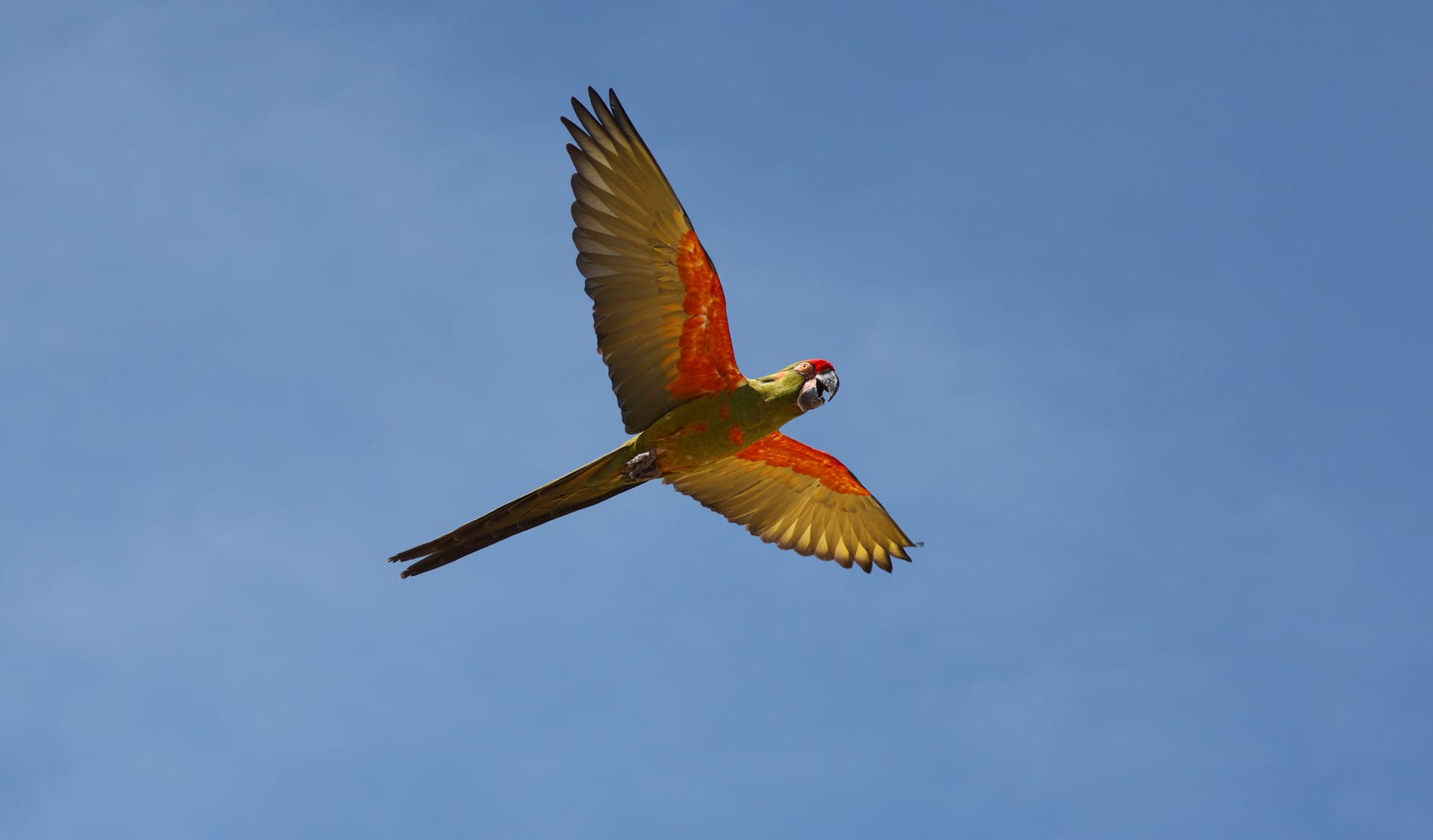
 © Clément Bardot / CC BY-SA 4.0
Red-fronted Macaw
The Red-fronted Macaw is a striking parrot native to Bolivia, its green plumage set off by patches of vivid orange-red around the forehead and wings. At 55–60cm, it is a relatively compact member of the macaw family, and it is the only macaw known to live in semi-arid mountain terrain above 1,100m, nesting in the crevices of cliff faces in the wild. Highly social and affectionate once bonded with people, it can also be quite loud, and its intelligence and curiosity mean it thrives only with daily interaction and stimulation — making it a bird best suited to experienced keepers.
View Red-fronted Macaw encyclopedia →0% commission on your first sales!Register by September 30, 2026 and your first 2 sales are commission-free!
Breeder Wanted!
List on BreederDirect and sell directly to customers nationwide!
Six Transparency Commitments from BreederDirect
All Birds listings include complete Breeder transparency: hand-raised status, DNA sex determination, and health certification details.
- Hand-Raised
- DNA Sex-Determined
- Health Certified
- Origin Disclosed
- Color Variation Specified
- Age in Months Disclosed
Browse all 247 breeds
Care Level
No listings match your filters
Adjust your filters, or get notified when new listings arrive.
Getting alerts is free with a member account. When new listings match your saved search, we'll notify you by email and in-app.
Browse other categories
Verified breeders (preview)
Red-fronted Macaw key facts
- Care level
- Advanced
- Lifespan
- 35-45 years
- Size
- 55-60cm
- Diet
- Large parrot pellets, nuts, seeds, fruit and vegetables
- Cage
- A medium-large bird of 55 to 60 cm needing a cage with real height and depth, or an indoor aviary, with chewable wood always available.
- Temperament
- Highly social, gathering in large flocks outside the breeding season, and it tames well; a solitary bird needs a great deal of contact time.
- Vocalization
- It gives the loud, piercing calls typical of macaws, and keeping one in an apartment is not realistic.
- Notes
- As a CITES Appendix I and internationally endangered species, a bird without a registration certificate can be neither transferred nor advertised for sale. Captive breeding has succeeded, so check both the certificate and the breeding history.
About Red-fronted Macaw
A Bolivian macaw with green plumage and orange-red facial patches, measuring 55–60cm. The only macaw known to nest in cliff crevices, it is best suited to experienced keepers.
7 things to know before welcoming a Red-fronted Macaw
1Cliff-Dwelling Origins
In the wild, this macaw lives in semi-arid mountains above 1,100m and nests in cliff crevices — a habitat unique among macaws. Since it favors dry conditions, keep its enclosure well ventilated rather than humid.
2An Advanced-Level Bird
This species is considered demanding to keep and isn't recommended for first-time bird owners. It suits keepers who already have experience with large parrots and understand their behavior and needs.
3Smart and Social by Nature
Quick to learn and quite affectionate once bonded, it may also vocalize loudly when its demands aren't met. Building trust takes consistent daily interaction.
4Be Ready for a Loud Voice
Like macaws in general, it can produce loud calls that carry a long way. If you live in an apartment or close to neighbors, consider location and sound insulation before bringing one home.
5A Powerful, Destructive Beak
Its beak is powerful enough to quickly chew through wooden perches and toys. Choose cage materials and furnishings durable enough to withstand this level of force.
6Needs Plenty of Space
At 55–60cm long, this is a large bird that needs a spacious cage plus daily out-of-cage time to stay active. Ideally its space should let it stretch its wings freely without feeling cramped.
7Keep Its Mind Engaged
Curious and easily bored, it benefits from daily mental stimulation such as foraging toys and puzzle-style enrichment. A lack of stimulation can lead to problem behaviors like feather plucking.
Frequently asked questions about Red-fronted Macaw
- Q.Can beginners keep a Red-fronted Macaw?
- A.This species is considered suitable for experienced keepers, so it isn't recommended for first-time bird owners or those new to large parrots. It's best to build experience with other species first.
- Q.How loud is its call?
- A.Like other macaws, it can produce loud calls that carry over long distances. If you live in an apartment or close to neighbors, plan ahead for how to manage the noise.
- Q.How large does it grow?
- A.It measures roughly 55–60cm, making it relatively compact among macaws. Even so, it's still a large parrot and requires a spacious enclosure.
- Q.How affectionate is it toward people?
- A.It's intelligent and social, and once it bonds with its keeper it can become quite affectionate. That said, it may vocalize loudly when frustrated, so consistent daily interaction matters.
- Q.What equipment does it need?
- A.Given its size and powerful beak, it needs a sturdy, spacious cage along with durable perches and toys. Foraging or puzzle toys also help prevent boredom.
Useful tools for Red-fronted Macaw care
Learn more about Red-fronted Macaw in the encyclopedia
View Red-fronted Macaw encyclopedia entry →
Care difficulty, lifespan, size and diet — all basics covered.
More in this category
Can't find the one you're looking for?
Post your wishes for free and breeders with matching animals will contact you with introductions.