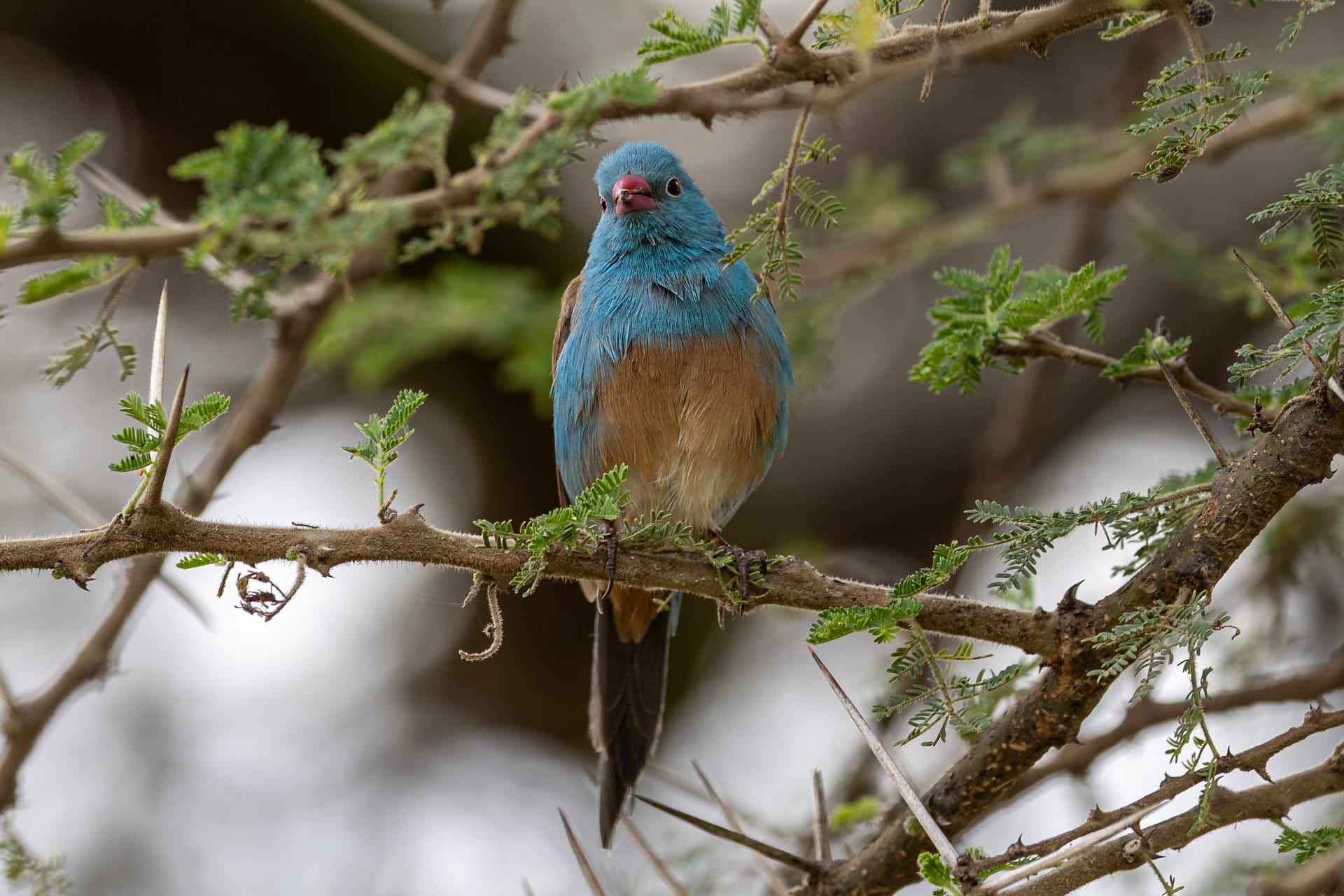
 © Hobbyfotowiki / CC0
Blue-capped Cordon-bleu
Native to the dry grasslands and scrublands of East Africa, this small finch belongs to the cordon-bleu group. Reaching only about 14 cm in length, males are especially striking, with vivid cobalt blue extending from the forehead all the way over the crown, while females keep a paler brown head, making the sexes easy to tell apart at a glance. They are lively, spirited birds, and watching their movements and listening to their song can be a real pleasure day to day. That said, breeding them is considered difficult, and their everyday care calls for a fair amount of prior experience, so this is generally regarded as a bird for keepers who already have some background with the group.
View Blue-capped Cordon-bleu encyclopedia →0% commission on your first sales!Register by September 30, 2026 and your first 2 sales are commission-free!
Breeder Wanted!
List on BreederDirect and sell directly to customers nationwide!
Six Transparency Commitments from BreederDirect
All Birds listings include complete Breeder transparency: hand-raised status, DNA sex determination, and health certification details.
- Hand-Raised
- DNA Sex-Determined
- Health Certified
- Origin Disclosed
- Color Variation Specified
- Age in Months Disclosed
Browse all 247 breeds
Care Level
No listings match your filters
Adjust your filters, or get notified when new listings arrive.
Getting alerts is free with a member account. When new listings match your saved search, we'll notify you by email and in-app.
Browse other categories
Verified breeders (preview)
Blue-capped Cordon-bleu key facts
- Care level
- Advanced
- Lifespan
- 4-6 years
- Size
- About 14cm
- Diet
- Mixed seed, spray millet, greens, small insects
- Cage
- It is active with a long tail, so it needs a deep cage or an aviary, with planting to give it a place to settle.
- Temperament
- Quiet and calm compared with other finches, though males of the same genus clash in the breeding season.
- Vocalization
- The voice is quiet, the song a short thin phrase, and noise is almost never an issue.
- Notes
- A bird of arid country, it dislikes cold and damp. Since breeding is difficult, concentrate first on settling a single pair in good condition.
About Blue-capped Cordon-bleu
A small East African finch of the cordon-bleu group. Males show vivid blue extending over the crown, while females have a paler brown head. About 14 cm long, lively and spirited, and generally considered a breed for experienced keepers due to the difficulty of breeding.
7 things to know before welcoming a Blue-capped Cordon-bleu
1An advanced-keeper bird
Keeping this species itself is manageable, but breeding it is considered quite difficult. It's best suited to keepers with prior experience, or those who can get guidance from someone experienced with this group.
2Sexing by head color
Males show vivid blue spreading from the forehead all the way over the crown, while females keep a paler brown head. This difference makes the sexes relatively easy to distinguish.
3Prefers a warm environment
Since it originates from the warm regions of East Africa, it isn't very tolerant of cold. Provide extra warmth during cooler months and avoid sudden temperature swings in the cage.
4Lively, active temperament
It has a spirited, active temperament and is often seen flitting around the cage or enjoying a bath. Provide a cage with enough space for it to move around freely.
5Seed-based diet plus extras
Its base diet centers on small mixed seeds. Offer supplementary foods such as leafy greens and crushed shell grit to help maintain a balanced diet, and keep an eye on its daily intake.
6Watch compatibility with others
Because of its spirited nature, conflicts can occur between individuals of the same species. If keeping multiple birds together, watch cage size, hiding spots, and compatibility closely.
7Breeding is challenging
Breeding in captivity is considered quite difficult. If you're aiming to breed this species, it's best to research it thoroughly and consult experienced keepers before getting started.
Frequently asked questions about Blue-capped Cordon-bleu
- Q.Can beginners keep this bird?
- A.Basic care is manageable even for a first bird, but the difficulty rises considerably if breeding is the goal. It's best kept by someone with prior experience, or with support from an experienced keeper.
- Q.How can you tell males from females?
- A.They can be told apart by head color. Males have vivid blue extending over the crown, while females have a paler brown head, so the difference is easy to spot when compared side by side.
- Q.Is it true this bird is sensitive to cold?
- A.Yes, since it comes from East Africa, it isn't very tolerant of cold. Provide heating during cooler months and avoid letting room temperature swing suddenly.
- Q.Can multiple birds be kept together?
- A.It has a spirited side, and conflicts can arise between individuals of the same species. If keeping several together, watch cage space and compatibility carefully as you go.
- Q.Is this species covered by CITES?
- A.The Blue-capped Cordon-bleu is not covered by CITES.
Useful tools for Blue-capped Cordon-bleu care
Learn more about Blue-capped Cordon-bleu in the encyclopedia
View Blue-capped Cordon-bleu encyclopedia entry →
Care difficulty, lifespan, size and diet — all basics covered.
More in this category
Can't find the one you're looking for?
Post your wishes for free and breeders with matching animals will contact you with introductions.