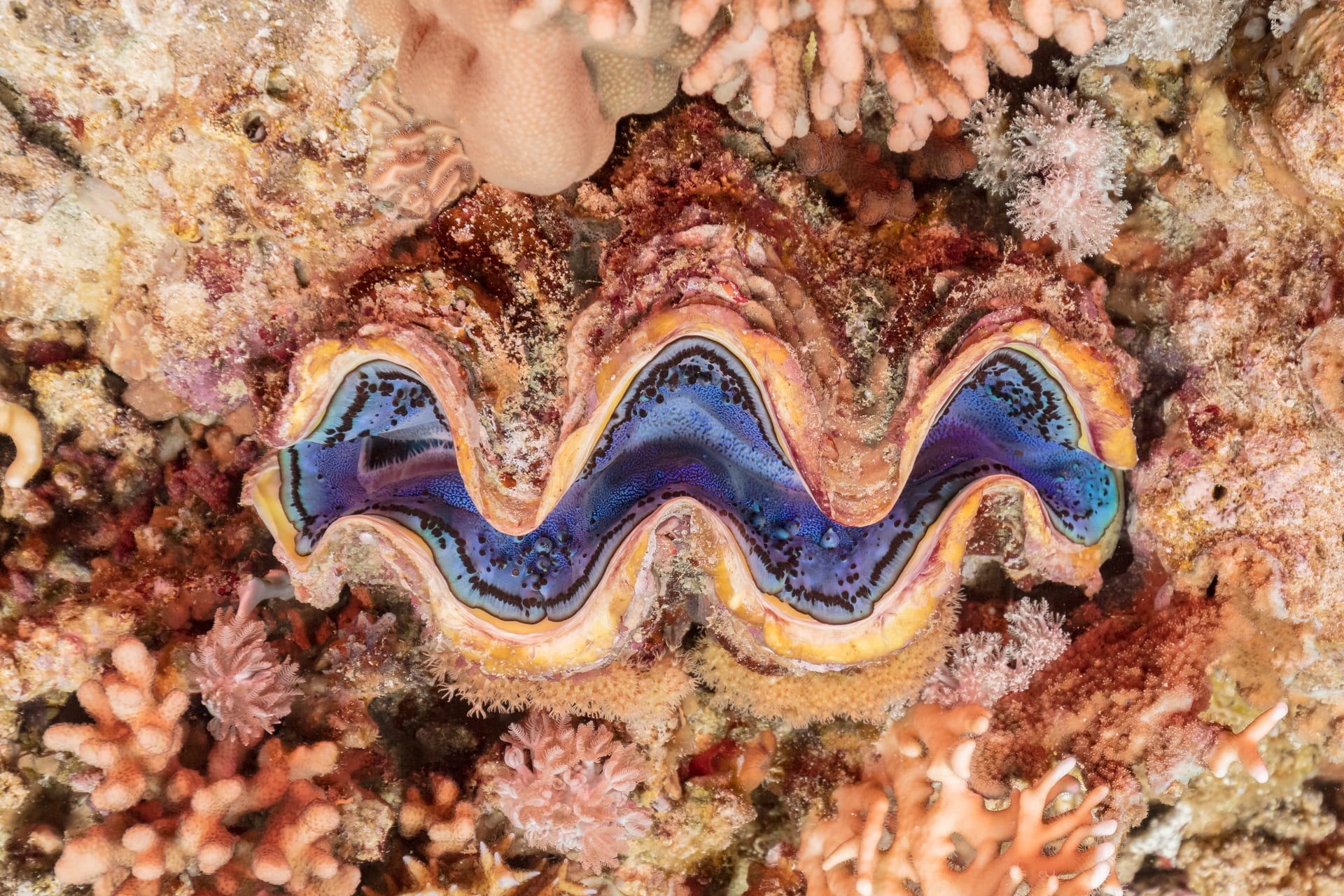
 © Diego Delso / CC BY-SA 4.0
Maxima Clam
The Maxima Clam is a large giant clam species reaching up to roughly 42cm in shell length, known for its distinctive wavy shell margin. Its mantle displays densely packed blue and green speckled patterns that vary uniquely from individual to individual. As the second most commonly available giant clam after the Crocea Clam, and with the widest distribution range in the family—from Egypt to the Pitcairn Islands—it offers keepers a chance to encounter specimens from many different origins. Considered suitable for intermediate keepers, it's best introduced once you're comfortable managing water quality and lighting.
View Maxima Clam encyclopedia →0% commission on your first sales!Register by September 30, 2026 and your first 2 sales are commission-free!
Breeder Wanted!
List on BreederDirect and sell directly to customers nationwide!
Br-Choku's 6 Transparency Standards
Our Breeder sellers disclose detailed care specs for all Coral listings. We prioritize Aquacultured/CB specimens, verify WYSIWYG photos, and provide difficulty ratings—avoiding wild-caught.
- Aquacultured
- WYSIWYG Photo
- Difficulty Disclosed
- Frag/Colony
- Care Info Included
- Trade name shown
Browse all 210 breeds
Difficulty
No listings match your filters
Adjust your filters, or get notified when new listings arrive.
Getting alerts is free with a member account. When new listings match your saved search, we'll notify you by email and in-app.
Browse other categories
Verified breeders (preview)
Maxima Clam key facts
- Care level
- Intermediate
- Size
- Shell length to about 42cm
- Temperature
- 24〜27℃
- Diet
- Mainly photosynthesis by the zooxanthellae in its mantle; small specimens also filter-feed on phytoplankton.
- Lighting
- LiveAquaria lists high lighting. Its nutrition depends on photosynthesis in the mantle, so under weak light the mantle retracts and its markings dull. A position directly under high-output LED or metal halide suits it.
- Flow & Placement
- LiveAquaria lists medium flow and a bottom-to-middle position. It attaches to rock by byssal threads, so set it on live rock or a flat piece of coral rock. Strong direct flow keeps the mantle retracted.
- Water Temperature & Quality
- Water 24-27C, specific gravity 1.023-1.025 (33-35 ppt), KH 8-12, calcium 400-450 ppm, magnesium 1280-1350 ppm. Shell growth consumes calcium heavily, so dose and test for it consistently.
- Feeding
- Most of its nutrition comes from photosynthesis by the zooxanthellae in its mantle. Adults need little feeding, but specimens under about 5 cm rely more on filter feeding and benefit from added phytoplankton.
- Notes
- The IUCN lists it as Least Concern, but as a member of the Tridacnidae it falls under the blanket CITES Appendix II listing and international trade requires permits. A mantle that will not open, retracted edges, or no response to light all signal trouble. Severing the byssus is usually fatal, so never force a clam off the rock it has attached to. Check at night for parasitic pyramidellid snails around the shell gape and remove them.
About Maxima Clam
The Maxima Clam is a large giant clam prized for its wavy shell and blue-green speckled mantle, growing up to about 42cm and suited to intermediate keepers.
7 things to know before welcoming a Maxima Clam
1Strong Lighting Is Essential
Since the zooxanthellae in the mantle rely on photosynthesis for energy, strong lighting is essential. Place it in the upper to mid-water area of the tank where light intensity is highest.
2Prefers Stable Water Flow
It prefers gentle, stable water flow that's neither too strong nor too weak. Excessive flow can cause the mantle to close, interfering with nutrient intake.
3Distinctively Wavy Shell
Its most defining trait is the wavy shell margin, which becomes more pronounced as it grows. It's a large species that can reach up to about 42cm in shell length.
4Avoid Moving It Once Placed
It attaches firmly to rock via byssal threads, so once positioned it's best left undisturbed. Frequent relocation can cause stress.
5Sensitive to Sudden Water Changes
It's sensitive to abrupt changes in temperature, pH, and salinity. Take time to acclimate it gradually and carefully.
6Enjoy Each Individual's Unique Coloration
The blue and green mantle patterns vary greatly between individuals, with no two exactly alike. Comparing these unique colorations is part of the enjoyment of choosing one.
7Consider Tankmate Compatibility
Fish that peck at mantle tissue can injure it if housed together. Check tankmate compatibility carefully in advance.
Frequently asked questions about Maxima Clam
- Q.Is the Maxima Clam subject to CITES?
- A.Maxima Clam is listed in CITES Appendix II. International trade requires a permit from the exporting country, but as far as CITES is concerned, no registration is needed to buy or sell individuals already legally in Japan.
- Q.Can beginners keep a Maxima Clam?
- A.It's classified as suitable for intermediate keepers. It's recommended to gain some experience with lighting and water quality management before taking one on.
- Q.How large does it grow?
- A.It can reach up to about 42cm in shell length. Growth should be factored into planning tank space.
- Q.How does it differ from the Crocea Clam?
- A.The Maxima Clam is distinguished by its wavy shell margin and has the widest distribution range in the family. It's said to be the second most commonly available after the Crocea Clam.
- Q.How much lighting does it need?
- A.Since the zooxanthellae in its mantle perform photosynthesis, strong lighting is necessary. Placement in a well-lit area of the tank is recommended.
Useful tools for Maxima Clam care
Learn more about Maxima Clam in the encyclopedia
View Maxima Clam encyclopedia entry →
Care difficulty, lifespan, size and diet — all basics covered.
Maxima Clam related articles
See more Maxima Clam articles →More in this category
Can't find the one you're looking for?
Post your wishes for free and breeders with matching animals will contact you with introductions.