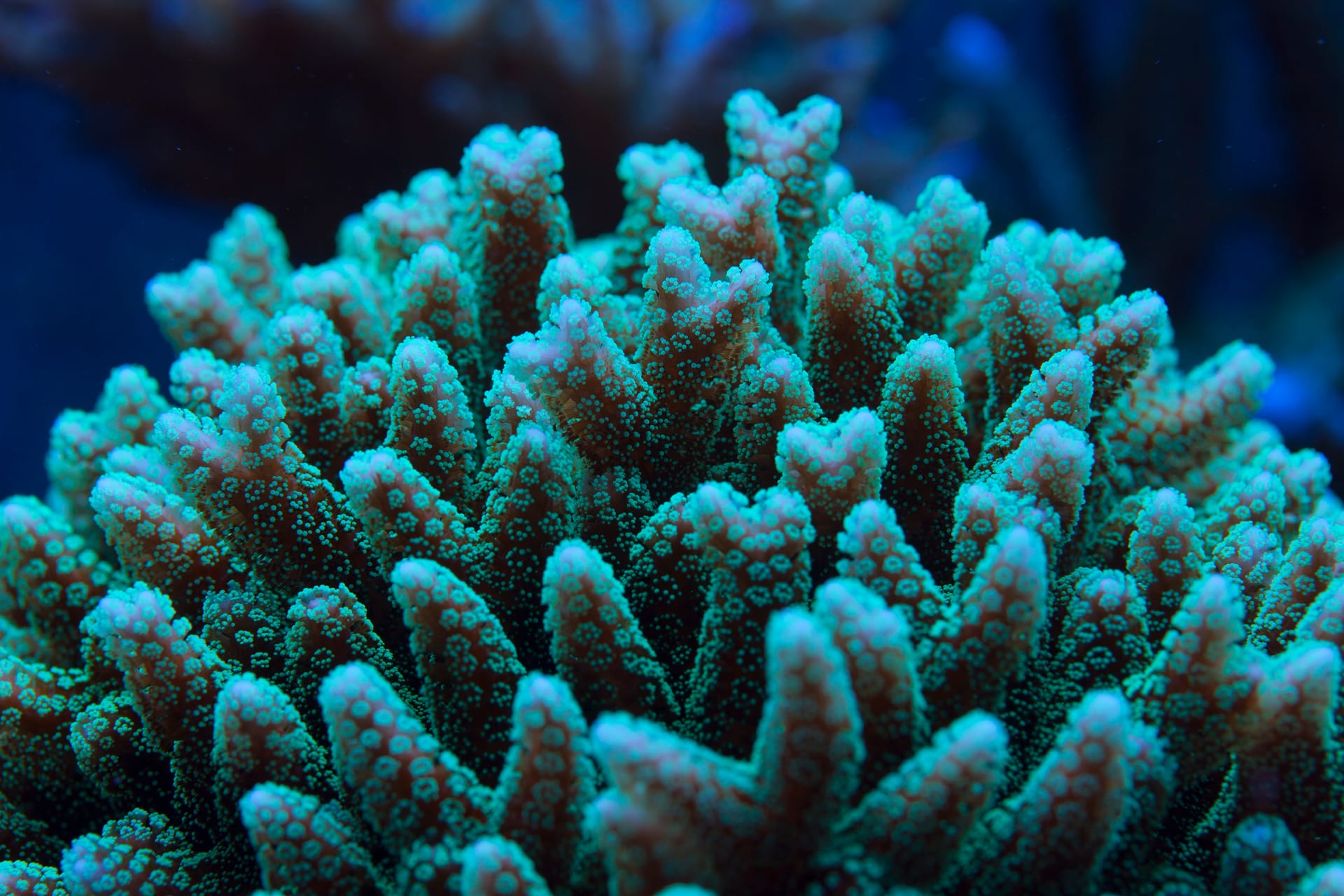
 © Will Thomas / CC BY 2.0
Seriatopora Caliendrum
Seriatopora caliendrum, known in Japanese as Futo-toge-sango, is a reef-building coral from the Seriatopora genus that grows into dense, hemisphere-shaped bushes of fine, tightly branching stems. Unlike its close relative Seriatopora hystrix, its branch tips are rounded rather than needle-sharp — a trait reflected in its Japanese name, which points to its thicker branches. Coloration varies between pink, brown, and green individuals, and as a colony matures its branching grows denser, creating a lush, voluminous centerpiece in a reef tank. Because it benefits from some hands-on experience to keep thriving, it tends to suit aquarists who have already built up coral-keeping confidence.
View Seriatopora Caliendrum encyclopedia →0% commission on your first sales!Register by September 30, 2026 and your first 2 sales are commission-free!
Breeder Wanted!
List on BreederDirect and sell directly to customers nationwide!
Br-Choku's 6 Transparency Standards
Our Breeder sellers disclose detailed care specs for all Coral listings. We prioritize Aquacultured/CB specimens, verify WYSIWYG photos, and provide difficulty ratings—avoiding wild-caught.
- Aquacultured
- WYSIWYG Photo
- Difficulty Disclosed
- Frag/Colony
- Care Info Included
- Trade name shown
Browse all 210 breeds
Difficulty
No listings match your filters
Adjust your filters, or get notified when new listings arrive.
Getting alerts is free with a member account. When new listings match your saved search, we'll notify you by email and in-app.
Browse other categories
Verified breeders (preview)

Seriatopora Caliendrum key facts
- Care level
- Intermediate
- Size
- Colonies to about 30cm across
- Temperature
- 24〜27℃
- Diet
- Mainly nutrition from symbiotic zooxanthellae, supplemented with powdered coral foods and phytoplankton.
- Lighting
- Prefers strong light; LiveAquaria lists high lighting for birdsnest corals. Start at reduced intensity and raise it gradually.
- Flow & Placement
- Bleaching starts where water stagnates inside the thicket. Choose a spot where moderate to strong randomised flow reaches the interior, and place it high on the rockwork.
- Water Temperature & Quality
- Water 24-27C, specific gravity 1.023-1.025 (33-35 ppt), KH 8-12, calcium 400-450 ppm, magnesium 1280-1350 ppm. Sudden swings in alkalinity are the most common cause of tissue recession.
- Feeding
- Most of its nutrition comes from photosynthesis by its zooxanthellae. Powdered coral foods and phytoplankton can be offered as a supplement, but stable light and water chemistry matter more than feeding.
- Notes
- The branches are slender and break easily, so avoid touching the colony when handling or changing water. The IUCN lists it as Vulnerable, and as a scleractinian it falls under the blanket CITES Appendix II listing.
About Seriatopora Caliendrum
Seriatopora caliendrum is a reef-building coral with fine, densely branching stems that form hemisphere-shaped colonies with rounded branch tips, reaching a colony diameter of up to about 30cm — suited to intermediate keepers.
7 things to know before welcoming a Seriatopora Caliendrum
1Strong Light & Flow Needed
As a reef-building coral, Seriatopora caliendrum needs plenty of light and steady water movement to grow well. Positioning it so light and flow reach every branch helps the whole colony develop evenly.
2Stable Water Parameters Matter
Like most corals, it depends on consistent water quality — temperature, calcium, and alkalinity in particular — to stay healthy. Sudden swings in these parameters are more likely to cause stress than gradual, well-managed conditions.
3Grows Into a Rounded Bush
Fine branches divide densely as the coral grows into a hemisphere-shaped colony. Since a mature colony can reach roughly 30cm across, it's worth planning for that eventual footprint when placing it in your layout.
4Rounded Branch Tips
Unlike its close relative Seriatopora hystrix, whose branch tips taper to sharp points, this species has noticeably rounder, thicker tips — the feature behind its Japanese name. It's a handy detail for telling the two apart.
5Colors Vary by Colony
Individual colonies can show up in pink, brown, or green tones. That natural variation means no two specimens look quite alike, which adds to the appeal of choosing one.
6Best Suited to Intermediate Keepers
This coral is generally considered suitable for intermediate-level keepers. Having some prior coral-keeping experience makes it easier to maintain stable conditions once it's in your tank.
7Settle Your Tank First
It's best to introduce this coral once your tank's water quality and rockwork have had time to settle into a stable state. Keep an eye on lighting and flow in the early period so it can acclimate smoothly.
Frequently asked questions about Seriatopora Caliendrum
- Q.How can I tell it apart from Seriatopora hystrix?
- A.The main difference is the branch tips. Seriatopora hystrix has sharp, needle-like tips, while this species has thicker, rounded branch tips.
- Q.Is this coral suitable for beginners?
- A.It's generally considered an intermediate-level coral, so it's best kept by aquarists who already have some experience managing lighting, flow, and water quality. Starting with easier corals first can help build that foundation.
- Q.How large does it grow?
- A.A mature colony can reach roughly 30cm in diameter. Growth rate varies with tank conditions, so it's worth leaving enough room for it to expand.
- Q.What colors does it come in?
- A.Colonies can appear in pink, brown, or green. Since coloration varies between individuals, no two colonies look exactly the same.
- Q.Are there any legal restrictions on keeping it?
- A.Seriatopora Caliendrum is listed in CITES Appendix II. International trade requires a permit from the exporting country, but as far as CITES is concerned, no registration is needed to buy or sell individuals already legally in Japan.
Useful tools for Seriatopora Caliendrum care
Learn more about Seriatopora Caliendrum in the encyclopedia
View Seriatopora Caliendrum encyclopedia entry →
Care difficulty, lifespan, size and diet — all basics covered.
More in this category
Can't find the one you're looking for?
Post your wishes for free and breeders with matching animals will contact you with introductions.