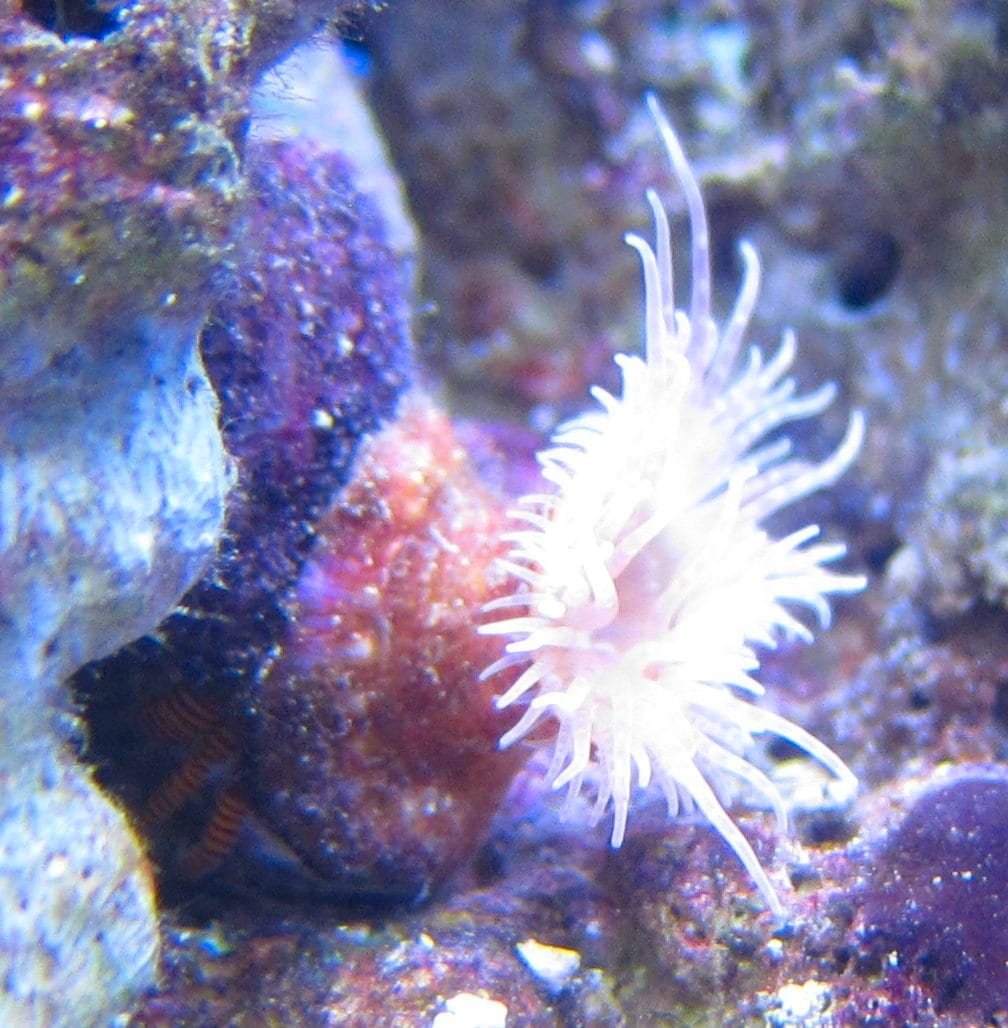
 © Wmpearl / CC0
Orange Ball Anemone (Pseudocorynactis)
The Orange Ball Anemone is a corallimorph prized for the bright orange or white balls that tip each of its tentacles. Despite its common name, it isn't a true anemone and, like other corallimorphs, doesn't build a calcium skeleton. By day it withdraws into rocky crevices, all but disappearing from view, but after dark it opens its oral disc wide and uses those swollen tentacle tips to snare zooplankton and small crustaceans drifting past. This day-and-night transformation makes it rewarding to watch under dim lighting, revealing a very different personality once the lights go down. Because it needs careful placement and stable water quality, it's generally recommended for intermediate keepers rather than first-timers.
View Orange Ball Anemone (Pseudocorynactis) encyclopedia →0% commission on your first sales!Register by September 30, 2026 and your first 2 sales are commission-free!
Breeder Wanted!
List on BreederDirect and sell directly to customers nationwide!
Br-Choku's 6 Transparency Standards
Our Breeder sellers disclose detailed care specs for all Coral listings. We prioritize Aquacultured/CB specimens, verify WYSIWYG photos, and provide difficulty ratings—avoiding wild-caught.
- Aquacultured
- WYSIWYG Photo
- Difficulty Disclosed
- Frag/Colony
- Care Info Included
- Trade name shown
Browse all 210 breeds
Difficulty
No listings match your filters
Adjust your filters, or get notified when new listings arrive.
Getting alerts is free with a member account. When new listings match your saved search, we'll notify you by email and in-app.
Browse other categories
Verified breeders (preview)
About Orange Ball Anemone (Pseudocorynactis)
A corallimorph with tentacles tipped in bright orange or white balls. It opens its oral disc at night to catch zooplankton and small crustaceans and builds no calcium skeleton. Generally suited to intermediate keepers.
7 things to know before welcoming a Orange Ball Anemone (Pseudocorynactis)
1Very Different by Day and Night
During the day it shrinks into crevices and shadows, becoming almost invisible. At night it opens its oral disc wide and extends its ball-tipped tentacles to actively feed. Timing your viewing around dusk lets you see its full character.
2Carnivorous, Needs Direct Feeding
It preys on zooplankton and small crustaceans rather than relying mainly on photosynthesis like many soft corals. Offering occasional target feeding with tweezers helps it stay healthy and well colored.
3Fairly Potent Stinging Cells
Its tentacles carry stronger stinging cells than many other corallimorphs and some corals, and can damage neighbors it touches. Give it distance from other livestock so it can't sting tankmates directly.
4Prefers Shaded Crevices
Rather than sitting in direct strong light or flow, it tends to settle into rock crevices and shaded overhangs. Leaving gaps in your live rock structure gives it a spot to anchor and thrive.
5Builds No Calcium Skeleton
Despite "anemone" in its name, it's a corallimorph that doesn't form a calcium skeleton like hard corals. It grows through its soft body rather than skeletal accretion.
6Spreads by Splitting
Once settled, it can reproduce by splitting its body into new individuals over time. Because it may spread further than expected, check periodically that it isn't encroaching on neighboring livestock.
7Stabilize Conditions First
As an intermediate-level species, it's best introduced once your water parameters and lighting are reasonably stable. Plan its placement in advance with its sting potential in mind.
Frequently asked questions about Orange Ball Anemone (Pseudocorynactis)
- Q.Is it actually related to true sea anemones?
- A.No — despite "anemone" in its common name, it's classified as a corallimorph, a group more closely related to corals. It's a different animal from true anemones and doesn't build a calcium skeleton.
- Q.Does it disappear from view during the day?
- A.Yes, it typically shrinks into rocky crevices during daylight hours and is hard to spot. It becomes active and opens its oral disc at night, so evening viewing is recommended.
- Q.Can it be kept alongside other corals?
- A.Its sting is fairly potent and can damage neighboring livestock it touches, so it's best placed with some distance from other corals and animals.
- Q.What should it be fed?
- A.It's a carnivore that preys on zooplankton and small crustaceans. Offering occasional target feeding with tweezers helps it stay in good condition.
- Q.Is it suitable for beginners?
- A.It's generally considered an intermediate-level species. It's best to introduce it once your water quality and lighting have stabilized.
Useful tools for Orange Ball Anemone (Pseudocorynactis) care
Learn more about Orange Ball Anemone (Pseudocorynactis) in the encyclopedia
View Orange Ball Anemone (Pseudocorynactis) encyclopedia entry →
Care difficulty, lifespan, size and diet — all basics covered.
More in this category
Can't find the one you're looking for?
Post your wishes for free and breeders with matching animals will contact you with introductions.