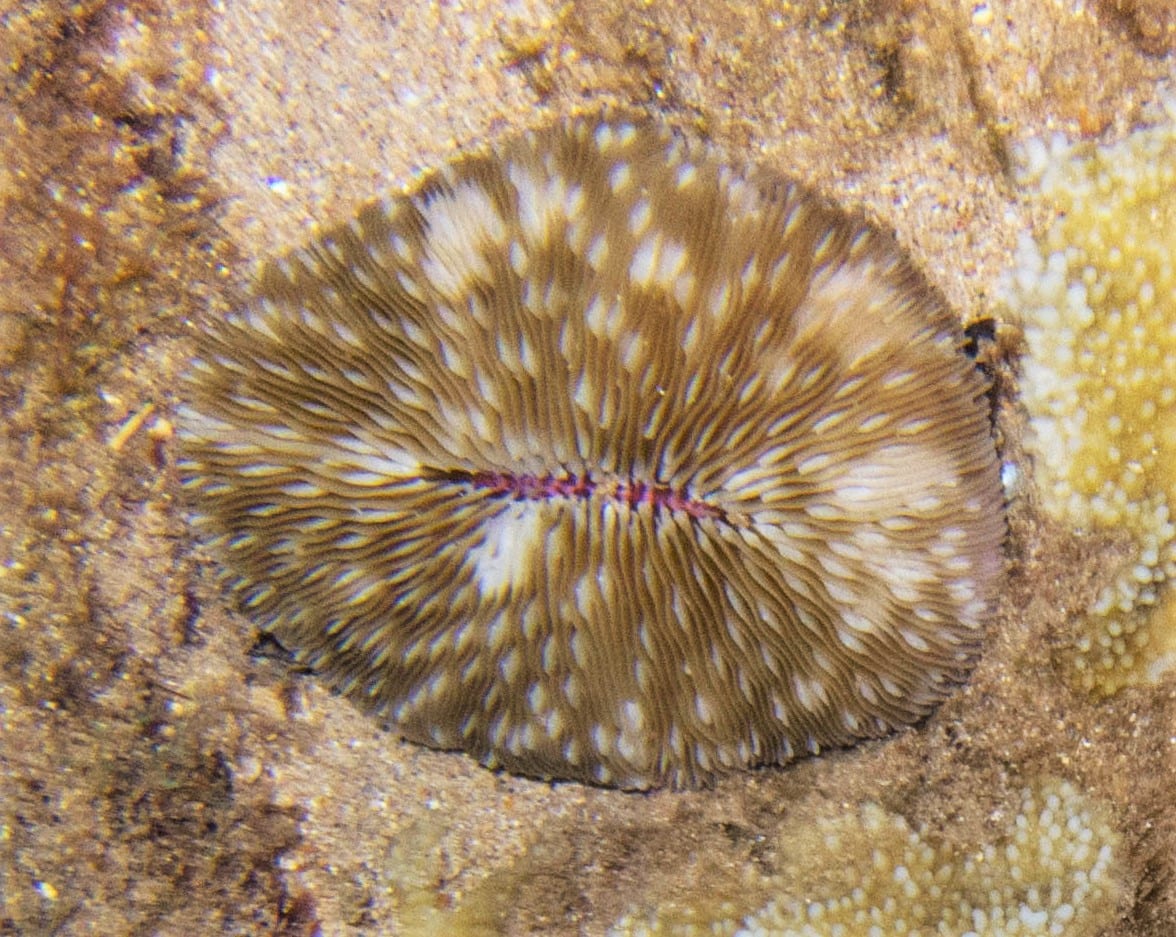
 © Ryan McMinds / CC BY 2.0
Lobactis (Fungia Scutaria)
Lobactis (formerly known as Fungia scutaria) is a solitary coral that lives freely on sand or coral rubble instead of attaching itself to rock. Its disc-to-oval skeleton features tentacular lobes arranged toward the center of the septa, creating a striking contrast against its body color. Growing up to about 17 cm, it can become a real centerpiece in a tank. Rated beginner-friendly in difficulty, it's an approachable choice for anyone new to coral keeping, and it extends its tentacles at night to feed, offering a very different look than during the day.
View Lobactis (Fungia Scutaria) encyclopedia →0% commission on your first sales!Register by September 30, 2026 and your first 2 sales are commission-free!
Breeder Wanted!
List on BreederDirect and sell directly to customers nationwide!
Br-Choku's 6 Transparency Standards
Our Breeder sellers disclose detailed care specs for all Coral listings. We prioritize Aquacultured/CB specimens, verify WYSIWYG photos, and provide difficulty ratings—avoiding wild-caught.
- Aquacultured
- WYSIWYG Photo
- Difficulty Disclosed
- Frag/Colony
- Care Info Included
- Trade name shown
Browse all 210 breeds
Difficulty
No listings match your filters
Adjust your filters, or get notified when new listings arrive.
Getting alerts is free with a member account. When new listings match your saved search, we'll notify you by email and in-app.
Browse other categories
Verified breeders (preview)
About Lobactis (Fungia Scutaria)
Lobactis is a solitary coral that lives freely on sand or rubble rather than attaching to rock, growing up to about 17 cm with tentacular lobes that contrast strikingly against its body color. It's rated beginner-friendly.
7 things to know before welcoming a Lobactis (Fungia Scutaria)
1Free-Living, Not Attached
Lobactis lives detached from rock, freely on sand or coral rubble. Because water flow can shift it slightly, consider flow direction and surrounding layout to help it settle into one spot.
2Contrasting Tentacle Lobes
The tentacular lobes near the center of its septa create a striking contrast with its body color. The skeleton stands out by day, while at night the tentacles extend fully, giving it a very different look.
3Grows Up to 17 cm
Adults can reach up to about 17 cm, with the outline shifting from a disc shape to a more elongated oval as they grow. Plan for enough space in your tank layout as it matures.
4Beginner-Friendly Difficulty
This species is rated beginner-friendly, making it an approachable choice for those new to coral keeping. That said, the same basic water quality care required for other corals still applies.
5Solitary, Not Colonial
Lobactis is a solitary coral, the sole species in its genus, with each individual living as a single independent polyp. Unlike colonial corals, it doesn't grow by budding into a colony.
6Give It Room to Roam
Because it lives unattached, water flow and nearby corals can cause it to shift position over time. Leave enough space around it to avoid contact with other specimens or live rock.
7Sits on Sand, Not Rock
Rather than attaching to rock, Lobactis is simply placed on sand or coral rubble. Checking the substrate and flow direction before placement helps it settle into a stable spot.
Frequently asked questions about Lobactis (Fungia Scutaria)
- Q.Does Lobactis need to be attached to rock?
- A.No — Lobactis is naturally a free-living coral, so attaching it to rock isn't necessary. It's simply placed on sand or coral rubble.
- Q.Why does it look different during the day and at night?
- A.By day, the contrast between the skeleton and tentacular lobes stands out; at night it extends its tentacles widely to feed, giving it a different appearance.
- Q.Can it move around in the tank?
- A.Because it lives unattached, water flow and its position relative to other corals can cause it to shift slightly over time. Avoiding excessively strong flow helps keep it in place.
- Q.Is this coral suitable for beginners?
- A.Yes, it's rated beginner-friendly, making it approachable for those new to coral keeping, though basic water quality care is still required.
- Q.How large does it grow?
- A.Adults reach up to about 17 cm, with the outline shifting from disc-shaped to a more elongated oval as they grow.
Useful tools for Lobactis (Fungia Scutaria) care
Learn more about Lobactis (Fungia Scutaria) in the encyclopedia
View Lobactis (Fungia Scutaria) encyclopedia entry →
Care difficulty, lifespan, size and diet — all basics covered.
More in this category
Can't find the one you're looking for?
Post your wishes for free and breeders with matching animals will contact you with introductions.