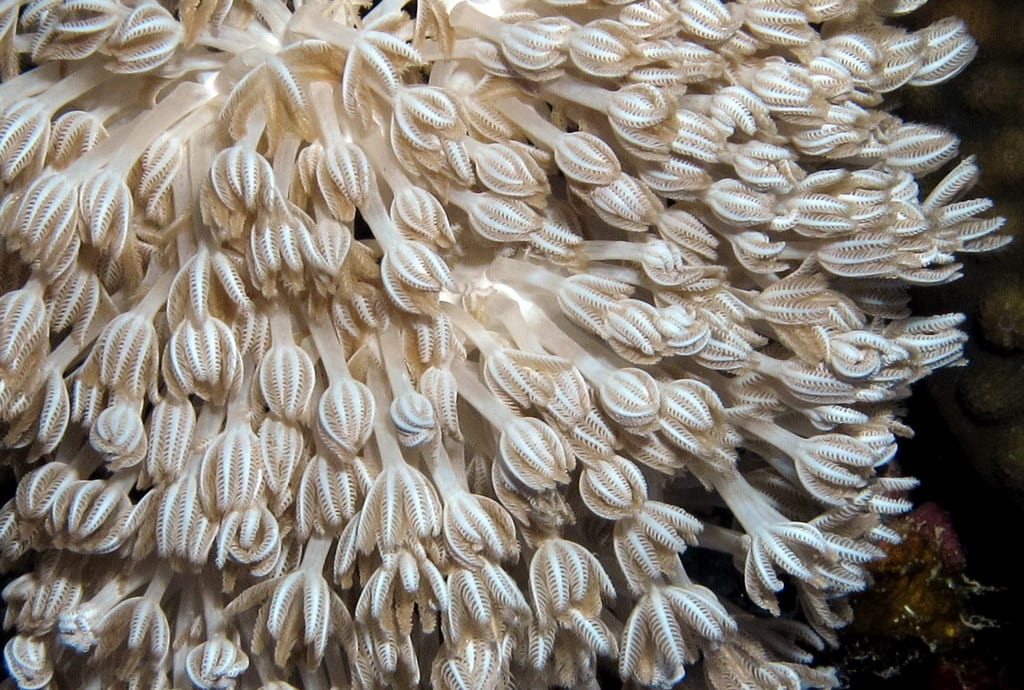
 © Derek Keats from Johannesburg, South Africa / CC BY 2.0
Heteroxenia
Heteroxenia is a soft coral in the Xeniidae family, best known for the rhythmic "pulsing" of its polyps as they open and close in a steady, hypnotic motion. Native to the Red Sea through the Indian Ocean and western Pacific, it grows dense clusters of polyps on short stalks, each crowned with eight feathery tentacles. Considered beginner-friendly, it's a popular choice for hobbyists taking their first steps into coral keeping. Watching its tentacles pulse under aquarium lighting and flow is mesmerizing, adding constant motion and life to any reef tank.
View Heteroxenia encyclopedia →0% commission on your first sales!Register by September 30, 2026 and your first 2 sales are commission-free!
Breeder Wanted!
List on BreederDirect and sell directly to customers nationwide!
Br-Choku's 6 Transparency Standards
Our Breeder sellers disclose detailed care specs for all Coral listings. We prioritize Aquacultured/CB specimens, verify WYSIWYG photos, and provide difficulty ratings—avoiding wild-caught.
- Aquacultured
- WYSIWYG Photo
- Difficulty Disclosed
- Frag/Colony
- Care Info Included
- Trade name shown
Browse all 210 breeds
Difficulty
No listings match your filters
Adjust your filters, or get notified when new listings arrive.
Getting alerts is free with a member account. When new listings match your saved search, we'll notify you by email and in-app.
Browse other categories
Verified breeders (preview)
Heteroxenia key facts
- Care level
- Beginner-friendly
- Temperature
- 24〜26℃
- Diet
- Mainly nutrition from its zooxanthellae, supplemented by dissolved organics and micro-plankton.
- Lighting
- LiveAquaria lists xeniids as high-light corals. Pulsing raises the photosynthetic efficiency of the zooxanthellae, so it becomes more active when light is adequate.
- Flow & Placement
- LiveAquaria gives placement as bottom and flow as medium; too much flow stops the pulsing. It creeps as it spreads, so mount it on rock kept apart from other corals.
- Water Temperature & Quality
- Water 24-26C, specific gravity 1.023-1.025 (salinity 33-35 ppt), pH 8.1-8.4, KH 8-12. Iodine and trace elements are recommended. Abrupt changes in water chemistry stop the pulsing.
- Feeding
- Most of its nutrition comes from photosynthesis, so direct feeding is largely unnecessary; it also absorbs dissolved organics and micro-plankton.
- Notes
- It grows fast and blankets rockwork, so remove excess growth early. If the pulsing stops, suspect a sudden change in light, flow or water chemistry. Having no stony skeleton, it is not covered by the CITES coral listings.
About Heteroxenia
Heteroxenia is a pulsing soft coral from the Red Sea to the western Pacific, prized for its easy care and constant tentacle motion. Learn its traits, care tips, and FAQs here.
7 things to know before welcoming a Heteroxenia
1Signature "Pulsing" Motion
The most striking feature of Heteroxenia is the slow, continuous opening and closing of its polyp tentacles, a movement rarely seen in other soft corals. This living motion draws the eye in any tank. The way it responds to light and flow gives the display an ever-changing character.
2Prefers Bright Lighting
Heteroxenia hosts symbiotic zooxanthellae and relies on photosynthesis for much of its energy, so it prefers reasonably bright lighting. Placing it in the upper to mid-water column of the tank helps it get enough light. In very dim conditions, its pulsing motion can weaken.
3Needs Gentle Water Flow
A gentle, steady water flow helps Heteroxenia move its tentacles efficiently for respiration and feeding. Flow that's too strong can damage the delicate tentacles, while stagnant water tends to slow the pulsing. It's worth adjusting placement while observing how it responds to flow.
4Propagates and Forms Colonies
Given suitable conditions, Heteroxenia tends to propagate readily and can form dense colonies over time. If it spreads too much, dividing and thinning the colony helps keep the overall layout balanced. Enjoying its growth while managing it in moderation is part of the appeal.
5Spacing from Other Corals
As with many soft corals, it's wise to leave adequate space between Heteroxenia and neighboring corals to avoid contact and competition. Because it tends to spread as it grows, planning extra room in the layout ahead of time helps avoid crowding later.
6Watch for Stalled Pulsing
A healthy specimen pulses its tentacles continuously, but the motion can slow or stop when water quality declines or the coral is stressed. Getting familiar with its normal rhythm makes it easier to notice changes and treat them as a cue to check water conditions.
7Acclimate Carefully at Arrival
When bringing a new specimen home, take time with drip acclimation to avoid sudden shifts in temperature and water chemistry. Pulsing may temporarily weaken right after transport, but it typically returns to normal once the coral settles into its new environment.
Frequently asked questions about Heteroxenia
- Q.Can beginners keep Heteroxenia?
- A.Yes, Heteroxenia is generally considered a beginner-friendly soft coral. With basic water quality management and adequate lighting and flow, it's regarded as relatively easy to keep.
- Q.Why do its tentacles keep moving constantly?
- A.The repeated opening and closing, known as "pulsing," is a signature behavior of this group of corals. It's thought to help move water around the polyp, aiding respiration and feeding.
- Q.How much light and flow does it need?
- A.Because it relies partly on symbiotic algae for energy, moderately bright lighting suits it well. It prefers a gentle, uninterrupted water flow rather than strong or stagnant conditions.
- Q.Is it safe to place near other corals?
- A.Placement is generally fine, but since it tends to spread into dense colonies, it's best to leave some space between it and neighboring corals.
- Q.Is Heteroxenia listed under CITES?
- A.No, Heteroxenia is not listed under CITES.
Useful tools for Heteroxenia care
Learn more about Heteroxenia in the encyclopedia
View Heteroxenia encyclopedia entry →
Care difficulty, lifespan, size and diet — all basics covered.
More in this category
Can't find the one you're looking for?
Post your wishes for free and breeders with matching animals will contact you with introductions.