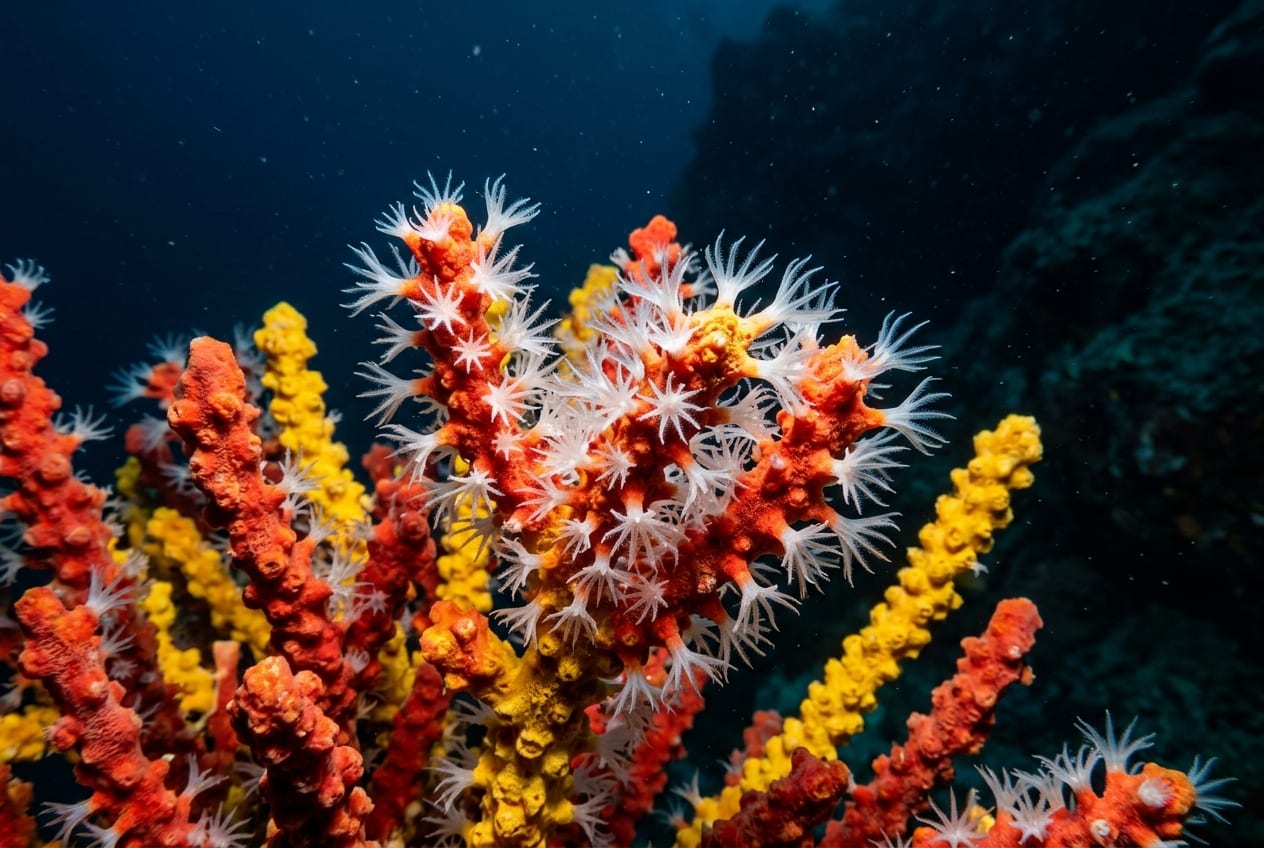
Diodogorgia (Red Finger Gorgonian)
Diodogorgia, also known as the Red Finger Gorgonian, is an octocoral native to the western Atlantic, prized for its thick, finger-like branches in vivid red or yellow topped with clusters of white polyps. When those polyps extend, the contrast between branch and polyp color gives this coral a striking presence unlike typical soft corals. Unlike most reef corals, it lacks symbiotic zooxanthellae, so it cannot rely on aquarium lighting for nutrition and instead depends on regular feeding with phytoplankton and similar foods. This makes it a species that demands consistent feeding routines rather than just good lighting, placing it firmly in advanced-keeper territory for hobbyists ready for hands-on care.
View Diodogorgia (Red Finger Gorgonian) encyclopedia →0% commission on your first sales!Register by September 30, 2026 and your first 2 sales are commission-free!
Breeder Wanted!
List on BreederDirect and sell directly to customers nationwide!
Br-Choku's 6 Transparency Standards
Our Breeder sellers disclose detailed care specs for all Coral listings. We prioritize Aquacultured/CB specimens, verify WYSIWYG photos, and provide difficulty ratings—avoiding wild-caught.
- Aquacultured
- WYSIWYG Photo
- Difficulty Disclosed
- Frag/Colony
- Care Info Included
- Trade name shown
Browse all 210 breeds
Difficulty
No listings match your filters
Adjust your filters, or get notified when new listings arrive.
Getting alerts is free with a member account. When new listings match your saved search, we'll notify you by email and in-app.
Browse other categories
Verified breeders (preview)
Diodogorgia (Red Finger Gorgonian) key facts
- Care level
- Advanced
- Temperature
- 24〜27℃
- Diet
- Zooplankton and phytoplankton (feeding is mandatory; it does not photosynthesise)
- Lighting
- It has no zooxanthellae, so lighting is unnecessary; a shaded spot or under an overhang suits it better.
- Flow & Placement
- Give strong random flow so sediment cannot settle between branches; mount it on an overhang or side wall.
- Water Temperature & Quality
- 24-27 C and 1.022-1.025 specific gravity. Heavy feeding fouls water, so maintain it with skimming and water changes.
- Feeding
- Feed phytoplankton and fine zooplankton daily in several portions; without it the colony wastes away.
- Notes
- Balancing heavy feeding with water quality is hard, so it is for experienced keepers. Increase flow if cyanobacteria settle on the branches.
About Diodogorgia (Red Finger Gorgonian)
A non-photosynthetic octocoral from the western Atlantic with red or yellow branches and white polyps. Lacking zooxanthellae, it needs frequent feeding and suits advanced keepers.
7 things to know before welcoming a Diodogorgia (Red Finger Gorgonian)
1A Non-Photosynthetic Coral
Diodogorgia has no symbiotic zooxanthellae, so strong lighting does nothing to support its growth. Nearly all of its nutrition must come from feeding, and relying on light alone will cause it to gradually decline.
2Frequent Feeding Is Essential
Fine foods such as phytoplankton need to be offered regularly while the polyps are extended. Whether you can sustain this feeding routine over time is the key factor in successfully keeping this species.
3Mind the Water Flow
Providing steady, moderate water flow — not too strong — helps the polyps stay extended and capture food effectively. Excessive flow can cause the polyps to remain closed.
4Why It's for Advanced Keepers
Because it depends on feeding rather than lighting alone, this coral suits keepers who commit to daily observation and consistent feeding management. It's best to avoid introducing it in the early stages of setting up a tank.
5Placement Considerations
Placing it with enough surrounding space lets the branching skeleton show off polyps opening in all directions. Position it so it doesn't come into contact with other livestock.
6Watch for Color Changes
The color of the branches and how fully the white polyps extend can serve as a general health indicator. Observing it daily helps you notice changes early.
7Tank Readiness Before Bringing One Home
Before bringing one home, confirm you can maintain a consistent feeding routine and stable water quality. It's also important to plan the introduction with compatibility with existing livestock in mind.
Frequently asked questions about Diodogorgia (Red Finger Gorgonian)
- Q.Can stronger lighting reduce how often I need to feed it?
- A.No. Diodogorgia lacks zooxanthellae and cannot photosynthesize for nutrition, so regardless of lighting strength, feeding on phytoplankton and similar foods remains its primary nutrition source.
- Q.Why won't the polyps open?
- A.Possible causes include water flow that's too strong, unstable water parameters, or the coral still acclimating to its new environment. Try adjusting the flow at its placement and observe it for a while.
- Q.Can it be kept in the same tank as other corals?
- A.It can share a tank with other corals as long as they don't physically touch. Keep in mind that since it requires feeding, maintaining it alongside light-dependent reef-building corals adds extra care considerations.
- Q.Is it subject to CITES regulation?
- A.Diodogorgia is not subject to CITES. No special procedures are required for its trade or keeping.
- Q.Can beginners try keeping this coral?
- A.Diodogorgia is considered an advanced-keeper species due to its essential feeding requirements. It's recommended to gain experience with coral keeping before taking it on.
Useful tools for Diodogorgia (Red Finger Gorgonian) care
Learn more about Diodogorgia (Red Finger Gorgonian) in the encyclopedia
View Diodogorgia (Red Finger Gorgonian) encyclopedia entry →
Care difficulty, lifespan, size and diet — all basics covered.
More in this category
Can't find the one you're looking for?
Post your wishes for free and breeders with matching animals will contact you with introductions.