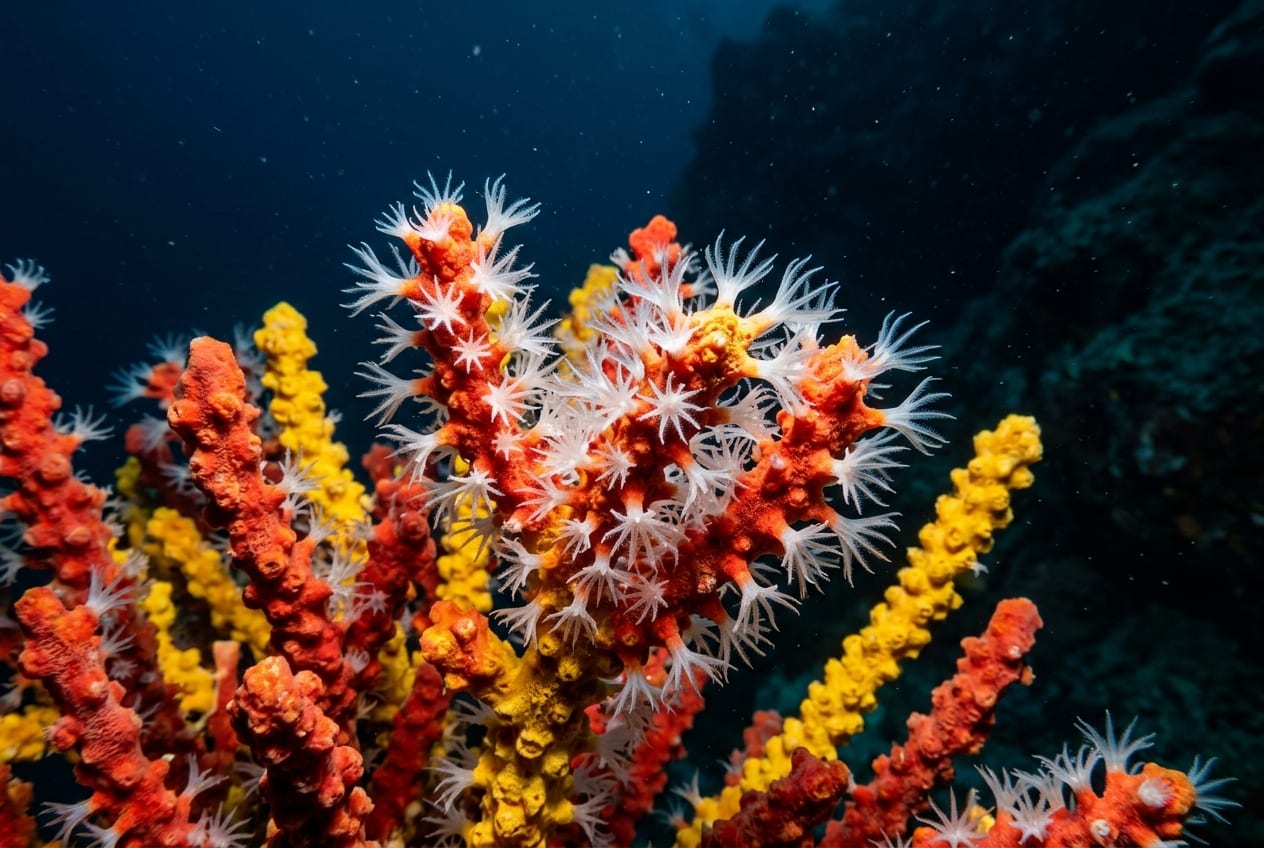
AI-generated image
Diodogorgia (Red Finger Gorgonian)
AdvancedDiodogorgia nodulifera
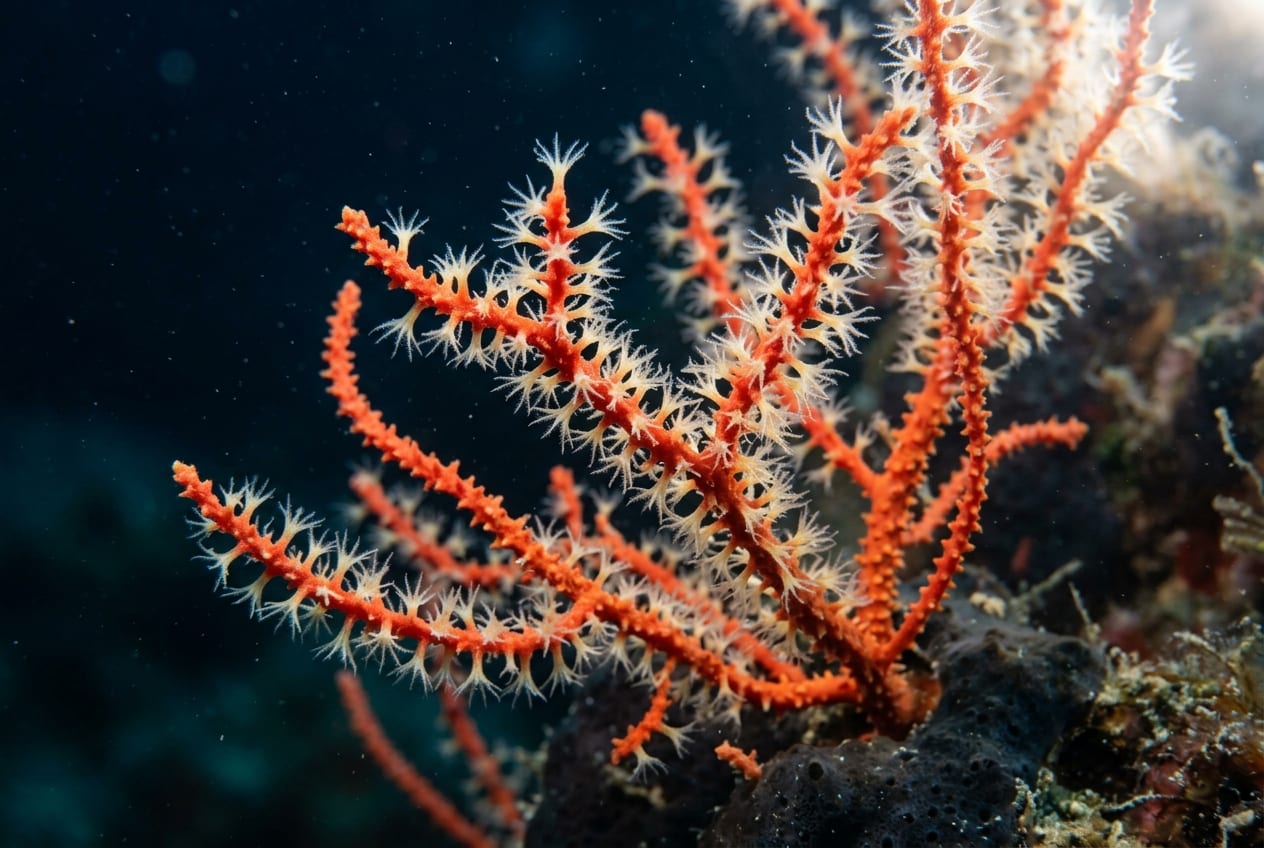
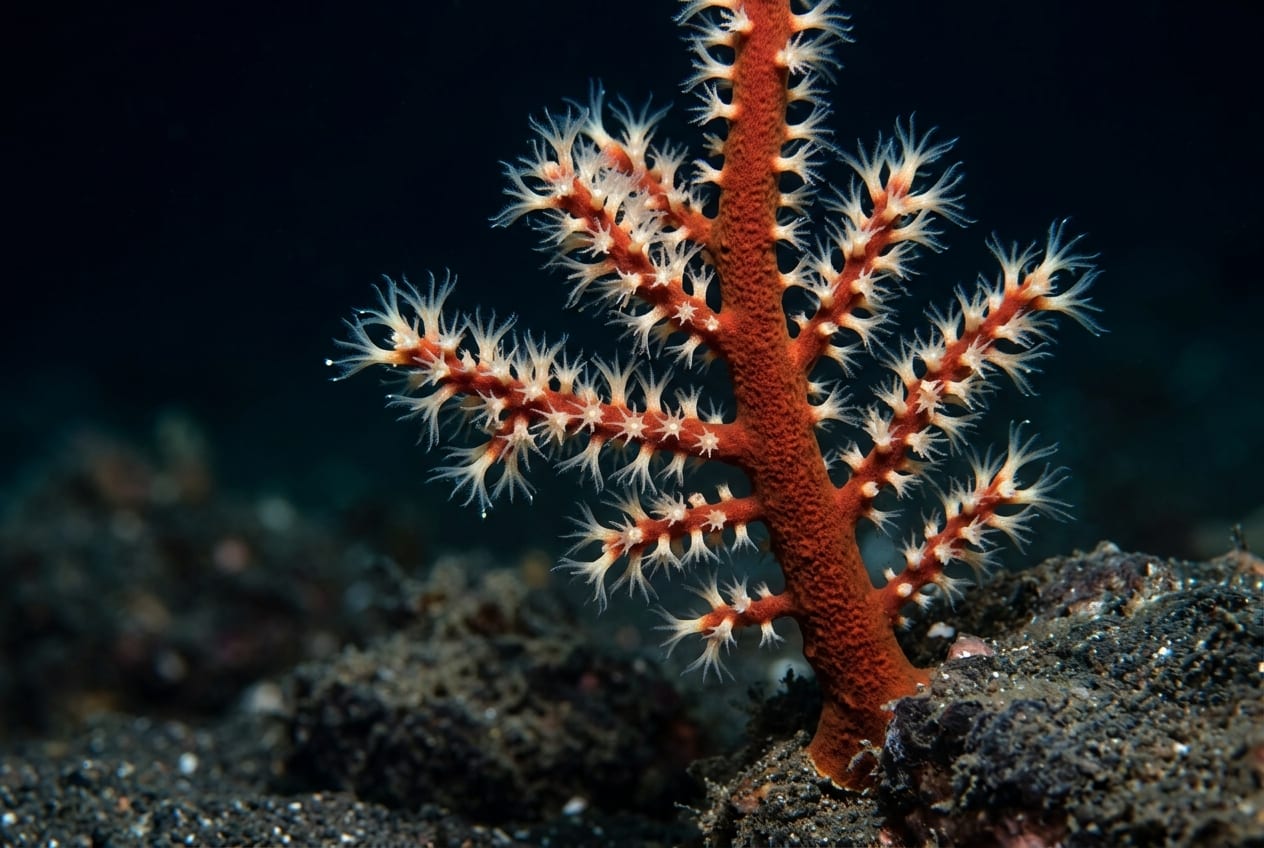
A western Atlantic octocoral with thick red or yellow finger-like branches studded with white polyps. It lacks zooxanthellae, so light will not feed it and frequent target feeding is essential.
Difficulty
Advanced
Temperature
24〜27℃
Diet
Zooplankton and phytoplankton (feeding is mandatory; it does not photosynthesise)
About
Diodogorgia nodulifera is a gorgonian octocoral of the family Spongiodermidae found in the western Atlantic from the Gulf of Mexico to the Caribbean. Its skeleton is not calcium carbonate but gorgonin, a flexible yet tough protein, and it raises thick, finger-like branches. Branches are red, orange or yellow and the contrast with the many small white polyps is its main appeal. Like most gorgonians it is non-photosynthetic, holding no zooxanthellae, so lighting will not sustain it and it must be fed phytoplankton and fine zooplankton frequently. Heavy feeding degrades water quality, so the central challenge is combining generous feeding with skimming and water changes. Give strong random flow and keep sediment from settling between the branches.
Source: Wikipedia (CC BY-SA 4.0)
Temperature & humidity for the Diodogorgia (Red Finger Gorgonian)
The ideal temperature for the Diodogorgia (Red Finger Gorgonian) is 24〜27℃.
Basic Info
Origin
Western Atlantic (Gulf of Mexico, Caribbean, off Florida)
Temperature
24〜27℃
Diet
Zooplankton and phytoplankton (feeding is mandatory; it does not photosynthesise)
Care Guide
Lighting
It has no zooxanthellae, so lighting is unnecessary; a shaded spot or under an overhang suits it better.
Care Specifications
- Water Temp.
- 24–27℃
- Specific Gravity
- 1.023–1.025
- Salinity
- 33–35 ppt
Soft coralLight: Low (PAR 30-50)Flow: HighPlacement: Flexible
Sources: Wikipedia: Reef aquarium (water parameters) / AlgaeBarn: Gorgonians in the Marine Aquarium / AlgaeBarn: Feeding Your NPS Aquarium / AlgaeBarn: Natural Water Quality Management for Non-Photosynthetic Reef Aquaria
References & Sources
Edited & verified by: BreederDirect editorial team
The taxonomic, regulatory, and husbandry data on this page are compiled and verified against the authoritative primary sources below.
Taxonomy & Authority
Accepted name: Diodogorgia nodulifera (Hargitt in Hargitt & Rogers, 1901)
Synonyms: Corallium vanderbilti, Diodogorgia ceratosa, Diodogorgia cervicornis, Diodogorgia crustata, Solanderia crustata, Solanderia nodulifera, Solandria crustata, Solandria nodulifera
Authority databases: WoRMS
Nomenclature follows global taxonomic authority databases.
Regulations & Conservation Status
Not CITES-listed
Octocoral, order Scleralcyonacea (Diodogorgia nodulifera, Spongiodermidae). Not listed by CITES: it belongs to none of Scleractinia, Antipatharia, Helioporidae, Tubiporidae, Milleporidae or Stylasteridae.
Sources: DOC NZ / CITES-listed corals (taxon not listed) / CITES Appendices
Regulations may change. Always verify the latest information with the relevant authorities.
Diodogorgia (Red Finger Gorgonian) Listings
Loading latest listingsFind listings for this species