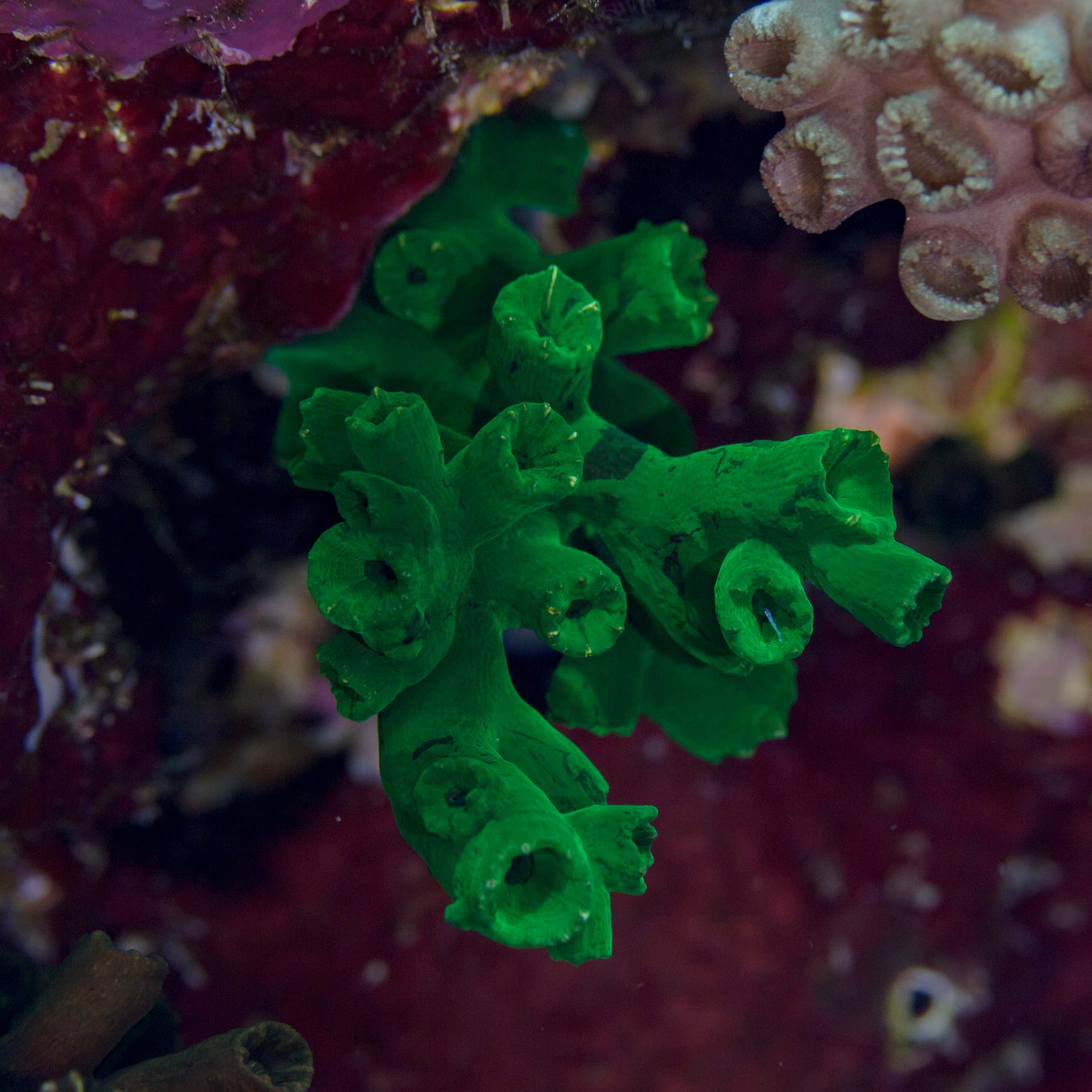
 © Diego Delso / CC BY-SA 4.0
Black Sun Coral
The Black Sun Coral is a non-photosynthetic stony coral that lacks zooxanthellae, its branching skeleton appearing dark green to black. By day it looks dormant, but at night its polyps extend roughly 3 cm to catch passing plankton, a dramatic transformation that gives this coral its appeal. Because it doesn't rely on light for energy, intense illumination isn't required, but regular direct feeding is essential for its health. It grows about 4 cm a year, a relatively fast pace for a non-reef-building species. This is considered an advanced-level coral, best suited to keepers already comfortable with consistent feeding routines and water quality management.
View Black Sun Coral encyclopedia →0% commission on your first sales!Register by September 30, 2026 and your first 2 sales are commission-free!
Breeder Wanted!
List on BreederDirect and sell directly to customers nationwide!
Br-Choku's 6 Transparency Standards
Our Breeder sellers disclose detailed care specs for all Coral listings. We prioritize Aquacultured/CB specimens, verify WYSIWYG photos, and provide difficulty ratings—avoiding wild-caught.
- Aquacultured
- WYSIWYG Photo
- Difficulty Disclosed
- Frag/Colony
- Care Info Included
- Trade name shown
Browse all 210 breeds
Difficulty
No listings match your filters
Adjust your filters, or get notified when new listings arrive.
Getting alerts is free with a member account. When new listings match your saved search, we'll notify you by email and in-app.
Browse other categories
Verified breeders (preview)
Black Sun Coral key facts
- Care level
- Advanced
- Size
- Colonies to 1 m tall in the Philippines, to 44 cm in the Red Sea
- Temperature
- 24〜26℃
- Diet
- Azooxanthellate and filter-feeding, taking zooplankton and also larger planktonic prey.
- Lighting
- It has no zooxanthellae, so light is not needed. The polyps open at night and stay shut by day under bright lighting, so a shaded spot or the underside of an overhang suits it.
- Flow & Placement
- Give it moderate flow so food reaches the polyps, but not so much that they cannot extend. Detritus collects between the branches, so blow it clear with a turkey baster from time to time.
- Water Temperature & Quality
- Water 24-26C, specific gravity 1.023-1.025 (salinity 33-35 ppt), KH 8-12, calcium 380-440 ppm, magnesium 1300-1400 ppm. Heavy feeding makes nutrient control essential.
- Feeding
- Success depends on feeding. AlgaeBarn argues these corals should be able to feed continuously and recommends maintaining a standing population of large copepods such as Tigriopus californicus in the system, combined with spot feeding after lights-out.
- Notes
- Starvation is the commonest cause of death: if feeding lapses the polyps stop opening and the branches die back. It is an invasive species in the Gulf of Mexico, so never release tank water or fragments into natural waters. As a scleractinian it is on CITES Appendix II and international trade requires permits.
About Black Sun Coral
Black Sun Coral is a non-photosynthetic stony coral whose polyps extend at night to catch plankton. An advanced-level species that grows about 4 cm per year.
7 things to know before welcoming a Black Sun Coral
1Feeding Is Essential
Because it lacks zooxanthellae, this coral can't photosynthesize for energy and depends entirely on direct feeding of animal plankton. Skipping feedings over time leads to gradual decline, so consistent care is essential.
2No Need for Strong Light
As a non-photosynthetic coral, it doesn't need the intense lighting that reef-building corals require. It actually does better in a calmer spot away from direct, strong light.
3Feed After Lights-Out
The polyps extend about 3 cm at night to catch plankton, staying withdrawn for most of the day. Feeding is best timed for after the lights go out, when the polyps are actually open.
4Advanced-Level Care
Due to the demands of frequent feeding and water-quality upkeep, this coral is considered suitable for advanced keepers. It's best approached after gaining experience with easier corals first.
5Keep Flow Moderate
Provide gentle, moderate water flow so the polyps can extend fully. Flow that's too strong can interfere with feeding and keep the polyps closed.
6Watch Water Quality
Because it's fed a lot of meaty food, water quality can deteriorate more quickly than with photosynthetic corals. Regular nutrient export, such as with a protein skimmer, helps keep conditions stable.
7Plan for Growth Space
Growth is fast for a non-reef-building coral, at roughly 4 cm per year. Colony height can reach up to 1 m for Philippine specimens or up to 44 cm for Red Sea specimens, so plan its placement with future size in mind.
Frequently asked questions about Black Sun Coral
- Q.Can beginners keep this coral?
- A.This is considered an advanced-level species. It requires a solid understanding of feeding routines and water-quality management, so it's best kept by hobbyists with some coral-keeping experience already.
- Q.It looks dull during the day, is that a problem?
- A.No, that's normal. The polyps extend only at night to feed, so during the day you're seeing just the skeleton, which naturally appears dark green to black.
- Q.Does it need strong lighting?
- A.No. As a non-photosynthetic coral without zooxanthellae, it doesn't rely on light for energy, so intense lighting isn't required the way it is for reef-building corals.
- Q.How large does it grow?
- A.Size varies by origin: Philippine colonies can reach up to about 1 m in height, while Red Sea colonies reach up to about 44 cm. Growth is roughly 4 cm per year.
- Q.What should I feed it?
- A.Direct feeding of animal plankton is needed while the polyps are extended at night. Since it doesn't feed during the day, timing your feedings to the evening is important.
Useful tools for Black Sun Coral care
Learn more about Black Sun Coral in the encyclopedia
View Black Sun Coral encyclopedia entry →
Care difficulty, lifespan, size and diet — all basics covered.
More in this category
Can't find the one you're looking for?
Post your wishes for free and breeders with matching animals will contact you with introductions.