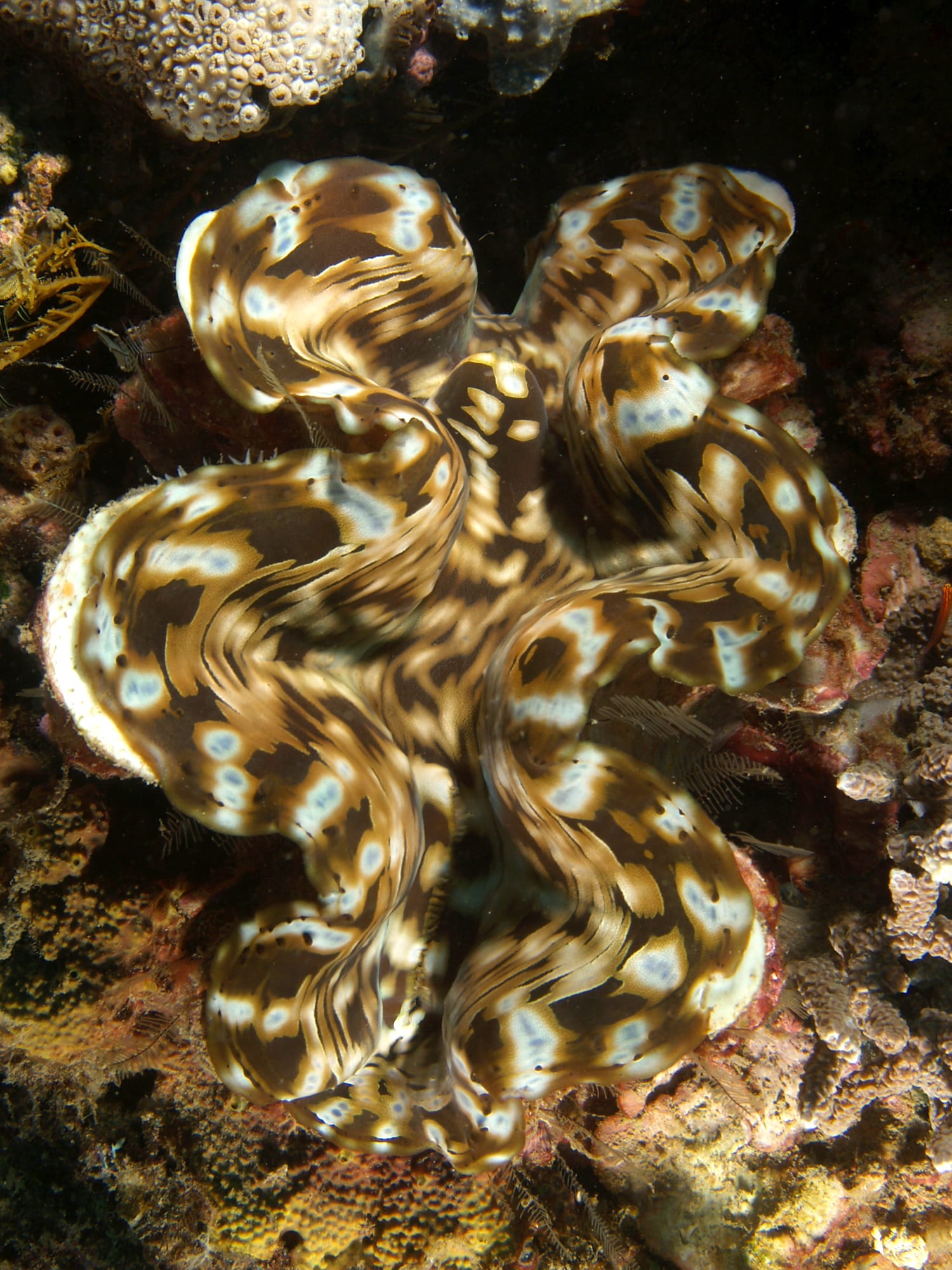
 © Nick Hobgood / CC BY-SA 3.0
Squamosa Clam
The Squamosa Clam is a giant clam species known for the large, leaf-like fluted scales spaced across its shell surface — the feature behind both its Japanese name and its English name, "fluted clam." Most individuals show a mantle in shades of brown or gold, with coloration that can shift subtly as its symbiotic algae respond to lighting conditions. Given time, it grows to an impressive shell length of up to 45 cm, becoming a real centerpiece in a reef tank. Because it calls for attentive water quality management and thoughtful rock placement, it's best suited to keepers with some prior reef experience — but the payoff is a striking, long-term companion for the tank.
View Squamosa Clam encyclopedia →0% commission on your first sales!Register by September 30, 2026 and your first 2 sales are commission-free!
Breeder Wanted!
List on BreederDirect and sell directly to customers nationwide!
Br-Choku's 6 Transparency Standards
Our Breeder sellers disclose detailed care specs for all Coral listings. We prioritize Aquacultured/CB specimens, verify WYSIWYG photos, and provide difficulty ratings—avoiding wild-caught.
- Aquacultured
- WYSIWYG Photo
- Difficulty Disclosed
- Frag/Colony
- Care Info Included
- Trade name shown
Browse all 210 breeds
Difficulty
No listings match your filters
Adjust your filters, or get notified when new listings arrive.
Getting alerts is free with a member account. When new listings match your saved search, we'll notify you by email and in-app.
Browse other categories
Verified breeders (preview)
Squamosa Clam key facts
- Care level
- Intermediate
- Size
- Shell length to 45cm
- Temperature
- 24〜27℃
- Diet
- Mainly photosynthesis by the zooxanthellae in its mantle; small specimens also filter-feed on phytoplankton.
- Lighting
- LiveAquaria lists moderate to high lighting. It is less light-hungry than T. crocea, but it depends just as much on photosynthesis in the mantle and will decline under insufficient light.
- Flow & Placement
- LiveAquaria lists medium flow and a bottom-to-middle position. It does not bore deeply, so it can sit on sand, but choose a stable surface where the shell will not topple. Strong direct flow keeps the mantle retracted.
- Water Temperature & Quality
- Water 24-27C, specific gravity 1.023-1.025 (33-35 ppt), KH 8-12, calcium 400-450 ppm, magnesium 1280-1350 ppm. Shell growth consumes calcium heavily, so dose and test for it consistently.
- Feeding
- Most of its nutrition comes from photosynthesis by the zooxanthellae in its mantle. Adults need little feeding, but specimens under about 5 cm rely more on filter feeding and benefit from added phytoplankton.
- Notes
- It grows to 45 cm, so long-term keeping calls for a tank sized accordingly. The IUCN lists it as Least Concern, but as a member of the Tridacnidae it falls under the blanket CITES Appendix II listing and trade requires permits. A mantle that will not open, retracted edges, or no response to light all signal trouble. Severing the byssus is usually fatal, so never force a clam off the rock it has attached to. Check at night for parasitic pyramidellid snails around the shell gape and remove them.
About Squamosa Clam
The Squamosa Clam features large fluted scales on its shell, growing to 45 cm. A reef species suited to intermediate-level keepers.
7 things to know before welcoming a Squamosa Clam
1Distinctive Fluted Scales
Its defining trait is the row of large, leaf-like fluted scales spaced across the shell surface — the feature behind both its Japanese and English (fluted clam) names. The pattern varies from individual to individual, adding to the appeal of watching it grow.
2Grows to a Large Size
The shell can reach up to 45 cm in length at full growth. When bringing one home, plan ahead for a tank size and placement space that can accommodate its eventual full size.
3Symbiotic Algae and Lighting
Symbiotic algae living in its mantle contribute to its nutrition, so stable, adequate lighting is essential. Check how much light actually reaches the intended placement spot before adding one.
4Stable Water Quality Matters
Sudden shifts in water parameters can be stressful for this species, so ongoing management of calcium and trace elements is needed. This is one reason it's considered suited to intermediate keepers.
5Thoughtful Placement
Choosing a stable spot on live rock or substrate where it won't easily tip over or shift reduces stress. Also check how water flow reaches the chosen location.
6Watching the Mantle
The mantle typically shows brown or gold tones, and observing it daily makes it easier to notice changes in condition. Regularly checking its opening and closing response is also a good habit.
7Compatibility with Tankmates
It's worth checking its position relative to other tank inhabitants and the range of any cleanup crew, which helps maintain a calm, stable environment.
Frequently asked questions about Squamosa Clam
- Q.Is the Squamosa Clam suitable for beginners?
- A.This species is generally considered suited to intermediate-level keepers. Since it requires some experience managing water quality and lighting, it's best introduced after you're comfortable with saltwater keeping.
- Q.How large does it grow?
- A.The shell can grow up to 45 cm in length. It's a good idea to plan tank space around this eventual size from the start.
- Q.What is the purpose of its distinctive fluted scales?
- A.The leaf-like fluted scales along the shell are the defining feature behind both its Japanese and English (fluted clam) names. Their pattern varies between individuals, adding visual interest.
- Q.Are there fixed requirements for lighting duration or intensity?
- A.Because the symbiotic algae in its mantle contribute to its nutrition, an environment with stable, adequate lighting is considered important. It's worth checking how light reaches the intended placement beforehand.
- Q.Is this species covered by CITES?
- A.Squamosa Clam is listed in CITES Appendix II. International trade requires a permit from the exporting country, but as far as CITES is concerned, no registration is needed to buy or sell individuals already legally in Japan.
Useful tools for Squamosa Clam care
Learn more about Squamosa Clam in the encyclopedia
View Squamosa Clam encyclopedia entry →
Care difficulty, lifespan, size and diet — all basics covered.
More in this category
Can't find the one you're looking for?
Post your wishes for free and breeders with matching animals will contact you with introductions.