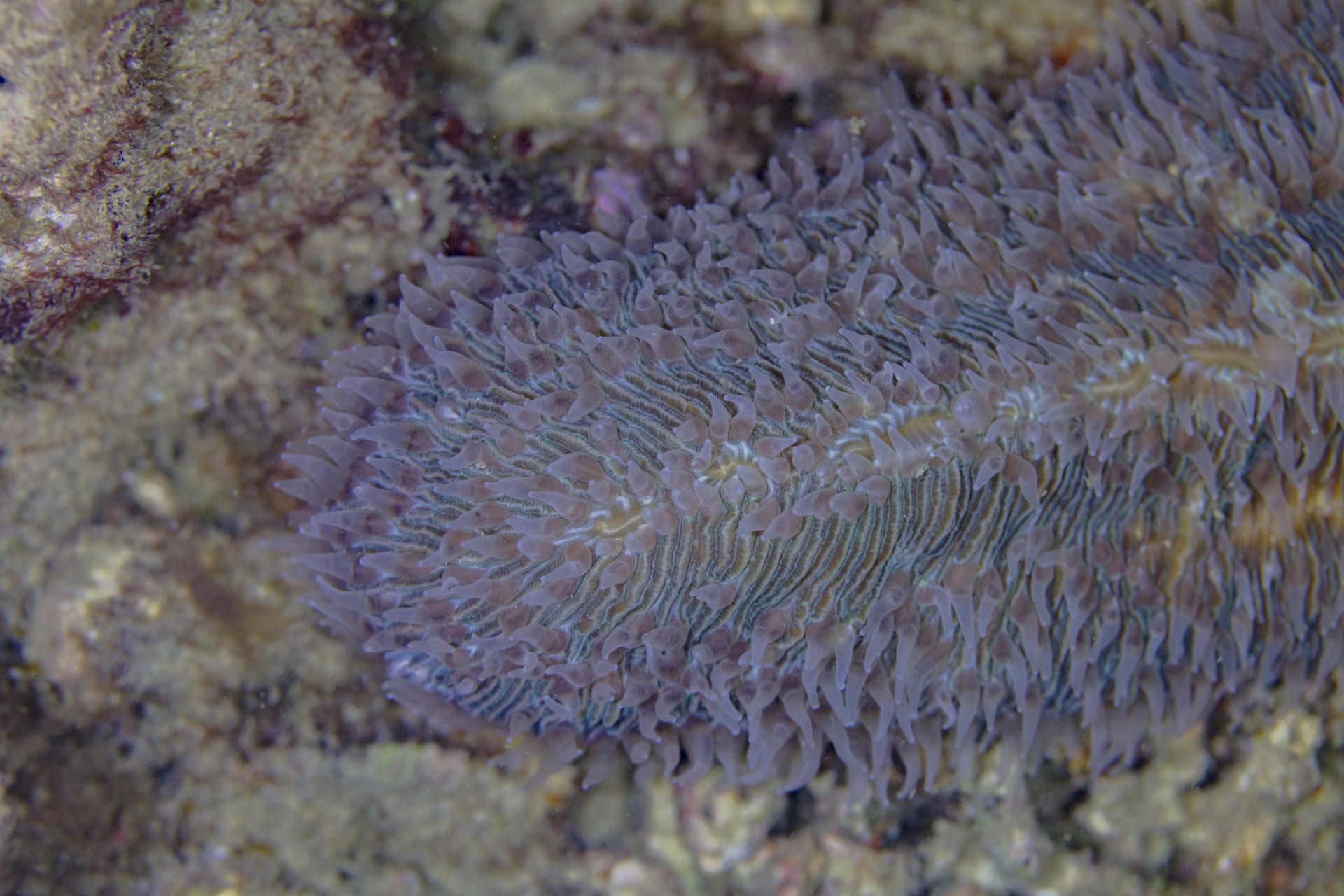
 © Diego Delso / CC BY-SA 4.0
Tongue Coral (Herpolitha)
Tongue Coral (Herpolitha) is a distinctive free-living coral from the Fungiidae family, known for its elongated shape with rounded ends. A central groove runs nearly the full length of its body, lined with numerous slit-like mouths that give it a truly unique appearance. Its coloration ranges from gray to brown and greenish-brown, adding visual interest to any reef tank. Since it doesn't attach to substrate, it can be placed freely on sand or rock, offering flexibility in aquascaping. Considered beginner-friendly, it's a popular entry point for those new to coral keeping, and can grow to lengths of 45cm or more over time.
View Tongue Coral (Herpolitha) encyclopedia →0% commission on your first sales!Register by September 30, 2026 and your first 2 sales are commission-free!
Breeder Wanted!
List on BreederDirect and sell directly to customers nationwide!
Br-Choku's 6 Transparency Standards
Our Breeder sellers disclose detailed care specs for all Coral listings. We prioritize Aquacultured/CB specimens, verify WYSIWYG photos, and provide difficulty ratings—avoiding wild-caught.
- Aquacultured
- WYSIWYG Photo
- Difficulty Disclosed
- Frag/Colony
- Care Info Included
- Trade name shown
Browse all 210 breeds
Difficulty
No listings match your filters
Adjust your filters, or get notified when new listings arrive.
Getting alerts is free with a member account. When new listings match your saved search, we'll notify you by email and in-app.
Browse other categories
Verified breeders (preview)
Tongue Coral (Herpolitha) key facts
- Care level
- Beginner-friendly
- Size
- 45 cm or more in length
- Temperature
- 24〜26℃
- Diet
- Mainly nutrition from its zooxanthellae, supplemented by zooplankton and micro-plankton caught with tentacles at night.
- Lighting
- Moderate light is enough; LiveAquaria lists fungiid plate corals as moderate-light corals. It bleaches readily when strong light and high temperature coincide.
- Flow & Placement
- Rest it on a fine sand bed. AlgaeBarn recommends low to moderate flow for fungiids. It gets large, so allow for its eventual length when siting it.
- Water Temperature & Quality
- Water 24-26C, specific gravity 1.023-1.025 (salinity 33-35 ppt), pH 8.1-8.4, KH 8-12, calcium 380-440 ppm, magnesium 1300-1400 ppm. Sustained high temperature causes bleaching.
- Feeding
- It extends tentacles at night, so drop brine shrimp or micro-plankton along the axial furrow after lights-out. Most of its nutrition is from zooxanthellae, but feeding speeds growth.
- Notes
- Its tissue is thin and rots if buried or left upside down. It is sensitive to bleaching, so keep the temperature stable. As a scleractinian it is on CITES Appendix II and international trade requires permits.
About Tongue Coral (Herpolitha)
Tongue Coral (Herpolitha) is a beginner-friendly free-living coral known for its elongated shape and central groove, making it a popular choice for new reef keepers.
7 things to know before welcoming a Tongue Coral (Herpolitha)
1Free-Living, Not Attached
Tongue Coral doesn't attach to rockwork, so it can be placed freely on sand or between rocks. It may shift slightly with water flow, so give it enough space to avoid contact with other corals or obstacles.
2Distinctive Elongated Shape
Its most notable feature is the elongated, rounded-end body with a central groove running its full length. This groove contains numerous slit-like mouths, giving it a look unlike other corals.
3Prefers Gentle Water Flow
Strong currents can tumble or damage the coral. Providing gentle, stable flow helps it expand fully and stay in place.
4Moderate Lighting Needs
Excessive direct lighting can stress the coral, so consider placing it in a spot that isn't in the most intense light. Observe its response and adjust positioning as needed.
5Multiple Mouths for Feeding
It feeds through the multiple mouths lined along its central groove. When feeding, observe the coral's response and avoid overfeeding.
6Can Grow Quite Large
This coral can grow to 45cm or more in length. Before bringing one home, make sure your tank has enough space to accommodate its potential adult size.
7Stable Water Quality Matters
As with most corals, sudden changes in water parameters can be stressful. Regular water testing and maintaining stable conditions are important for long-term health.
Frequently asked questions about Tongue Coral (Herpolitha)
- Q.Is this coral suitable for beginners?
- A.Yes, Tongue Coral is generally considered beginner-friendly. That said, basic water quality management and attention to flow and lighting are still important for keeping it healthy.
- Q.Can it be placed near other corals?
- A.Since it's free-living and may shift with water flow, contact with neighboring corals could cause stinging interactions. It's best to give it plenty of surrounding space.
- Q.How large does Tongue Coral grow?
- A.Adults can reach 45cm or more in length. It's worth considering not just its current size but also the tank space it will need as it grows.
- Q.Is it okay to move its position in the tank?
- A.Since it doesn't attach to the substrate, repositioning it is possible when adjusting your aquascape. Just be sure to handle it gently to avoid causing damage.
- Q.Is this species subject to any trade regulations?
- A.Tongue Coral (Herpolitha) is listed in CITES Appendix II. International trade requires a permit from the exporting country, but as far as CITES is concerned, no registration is needed to buy or sell individuals already legally in Japan.
Useful tools for Tongue Coral (Herpolitha) care
Learn more about Tongue Coral (Herpolitha) in the encyclopedia
View Tongue Coral (Herpolitha) encyclopedia entry →
Care difficulty, lifespan, size and diet — all basics covered.
More in this category
Can't find the one you're looking for?
Post your wishes for free and breeders with matching animals will contact you with introductions.