Source: Wikimedia Commons
Tongue Coral (Herpolitha)
BeginnerHerpolitha limax
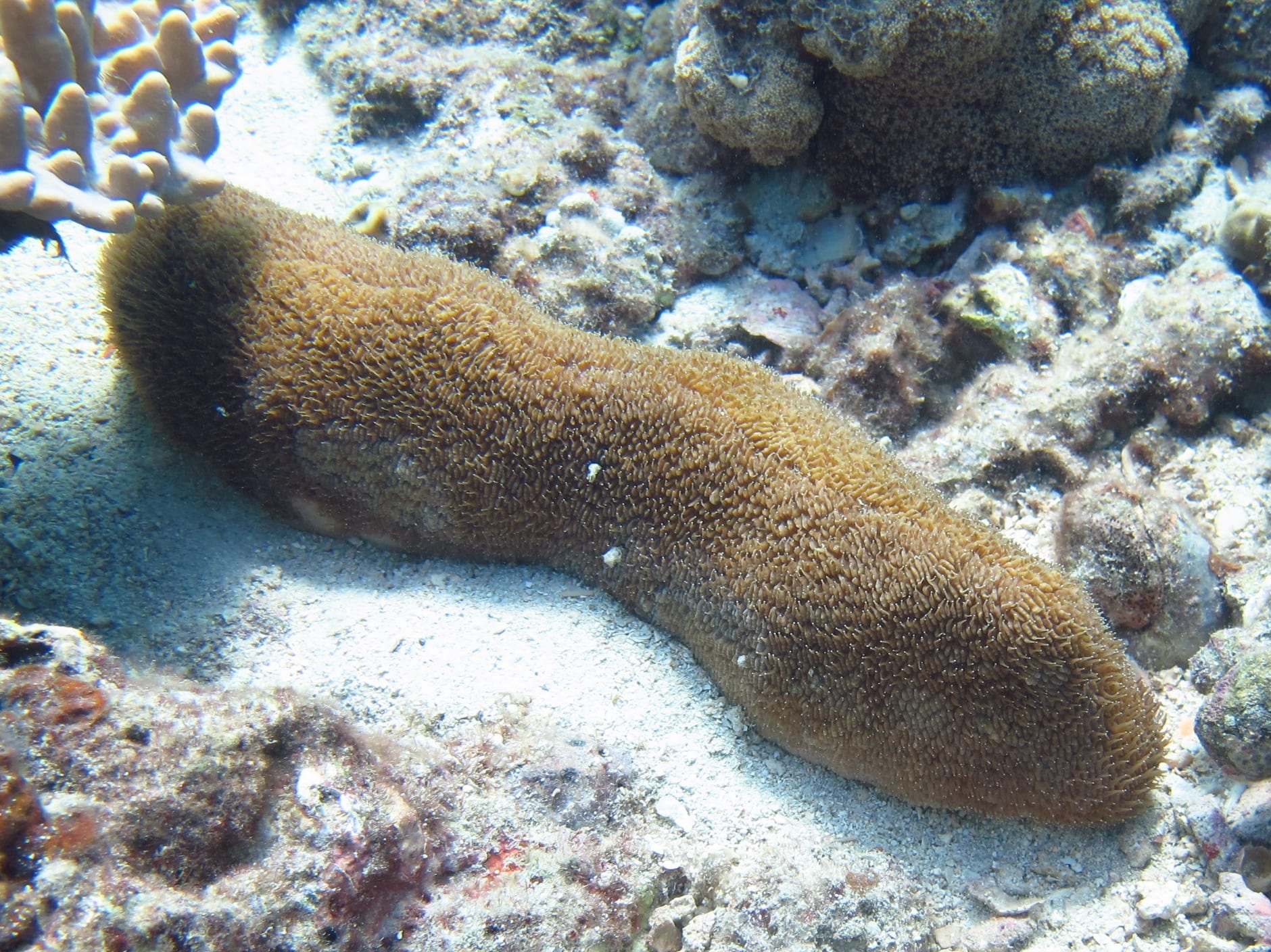
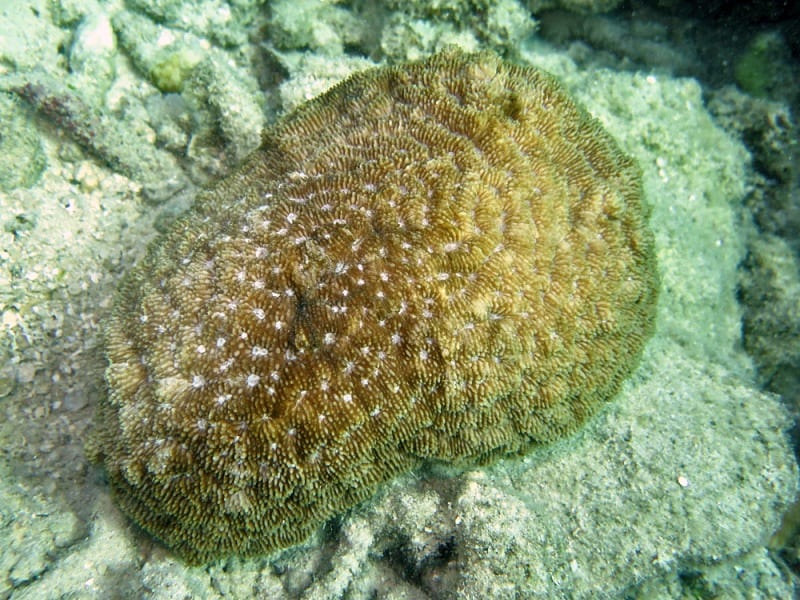
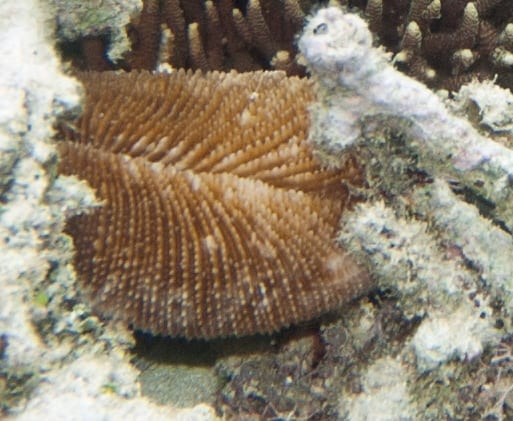
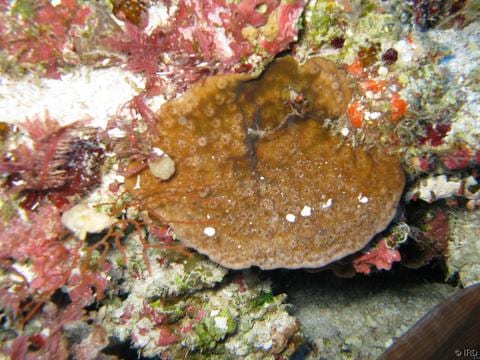
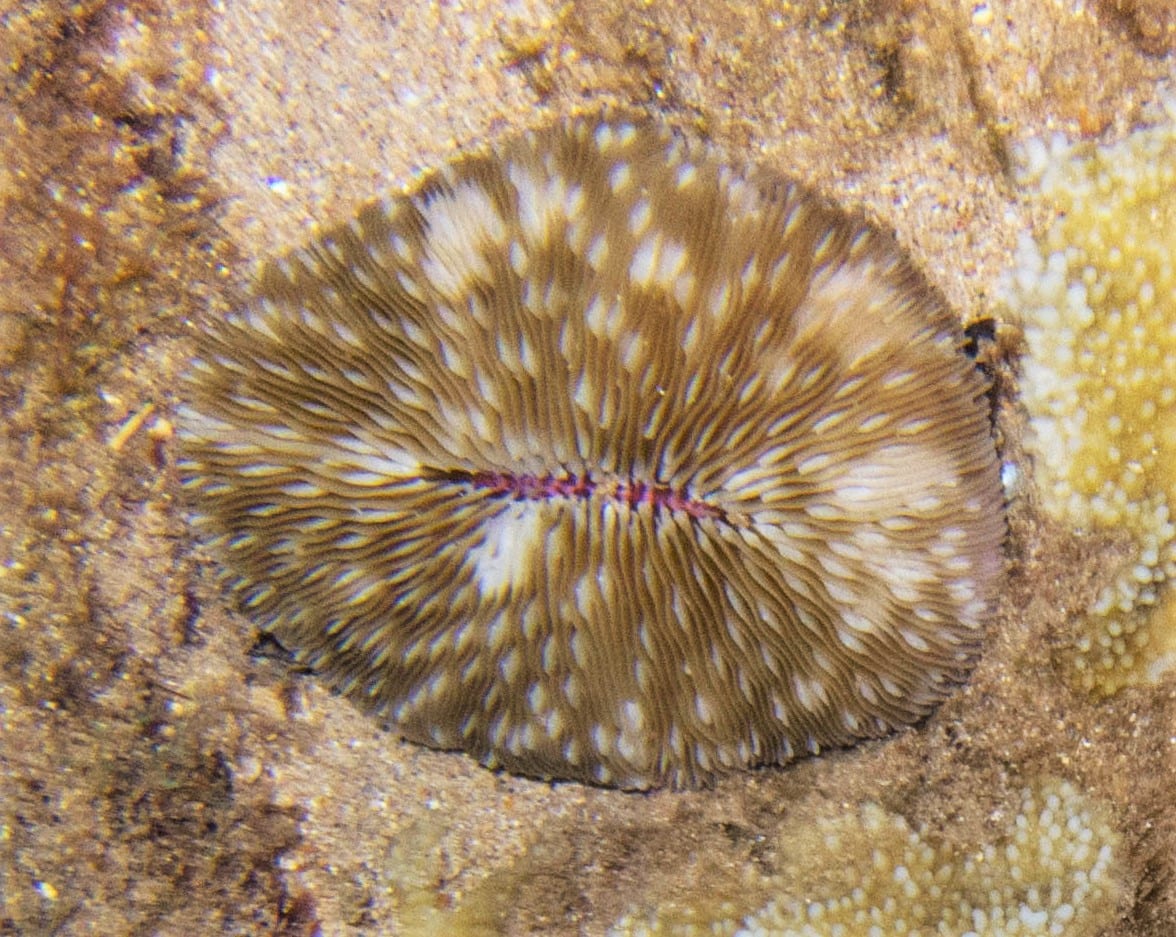
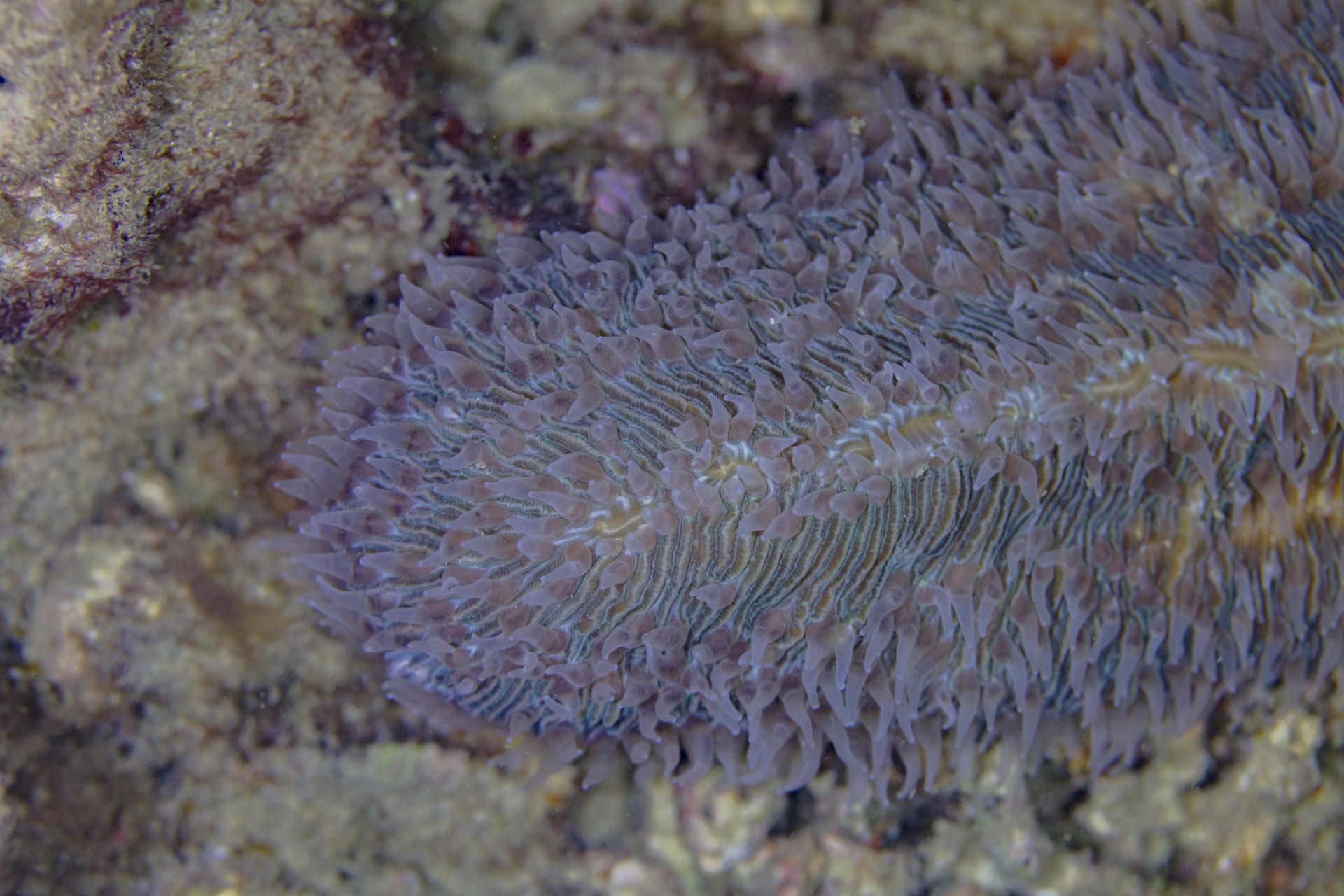
An elongated free-living fungiid with rounded ends. A central axial furrow runs almost end to end and holds many slit-like mouths. It grows to 45 cm or more and is grey, brown or greenish-brown.
Difficulty
Beginner
Temperature
24〜26℃
Size
45 cm or more in length
Diet
Mainly nutrition from its zooxanthellae, supplemented by zooplankton and micro-plankton caught with tentacles at night.
About
Herpolitha limax, the only species in its genus, is a fungiid found from East Africa and the Red Sea to Australia, Indonesia, Papua New Guinea and the south-central Pacific. The elongated colony with rounded ends lives free of the substrate and reaches 45 cm or more. A central axial furrow runs almost end to end and holds many conspicuous slit-like mouths, with less distinct mouths scattered irregularly outside it. The primary septa are densely set with fine spiny teeth and stop short of the colony edge; the costae are low with crowded, obtuse teeth. In some colonies the furrow forks into a Y, T or even X shape. It is zooxanthellate and occurs on reef slopes and in lagoons to about 30 m, often near Fungia species. It bleaches readily in warm water: in Thailand in 2010, 52 percent of colonies of this species bleached, and they had recovered by the following February. It is collected for the aquarium trade, with over 2,000 pieces taken in 2005. As a scleractinian it is on CITES Appendix II, and the IUCN rates it Least Concern.
Source: Wikipedia (CC BY-SA 4.0)
Size of the Tongue Coral (Herpolitha)
The Tongue Coral (Herpolitha) grows to 45 cm or more in length.
Temperature & humidity for the Tongue Coral (Herpolitha)
The ideal temperature for the Tongue Coral (Herpolitha) is 24〜26℃.
Basic Info
Origin
Indo-Pacific, from East Africa and the Red Sea to Australia, Indonesia, Papua New Guinea and the south-central Pacific
Size
45 cm or more in length
Temperature
Care Specifications
- Carbonate (KH)
- 8–12 dKH
- Water Temp.
- 24–26℃
- Specific Gravity
- 1.023–1.025
- Salinity
- 33–35 ppt
- Calcium (Ca)
- 380–440 ppm
- Magnesium (Mg)
- 1300–1400 ppm
LPSLight: Medium (PAR 50-150)Flow: LowPlacement: Bottom
Sources: LiveAquaria (Plate Coral, Long Tentacle/クサビライシ科の飼育値) / AlgaeBarn: A Quick Guide to LPS and SPS / WoRMS (World Register of Marine Species)
References & Sources
Edited & verified by: BreederDirect editorial team
The taxonomic, regulatory, and husbandry data on this page are compiled and verified against the authoritative primary sources below.
Taxonomy & Authority
Accepted name: Herpolitha limax (Esper, 1792)
Authority databases: WoRMS
Nomenclature follows global taxonomic authority databases.
Regulations & Conservation Status
CITES Appendix IIIUCN LC · Least Concern
Domestic law: Collecting in Japanese waters is governed by each prefecture's fisheries adjustment regulations, which differ by prefecture. Okinawa Prefecture's regulations ban the collection of reef-building corals, including stony corals (Scleractinia), organ-pipe corals (Tubiporidae) and blue coral (Helioporacea); this covers corals naturally attached to quays or ropes, broken fragments lying on the seabed, and skeletons. Possessing or selling illegally collected corals is also banned. Cultured corals are exempt, and the prefecture advises buyers to confirm that a coral is cultured, on an artificial base or tagged.
Sources: CITES Appendix II (Scleractinia spp. listed as an order) / IUCN Red List (via SeaLifeBase)
Regulations may change. Always verify the latest information with the relevant authorities.
Tongue Coral (Herpolitha) Listings
Loading latest listingsFind listings for this species