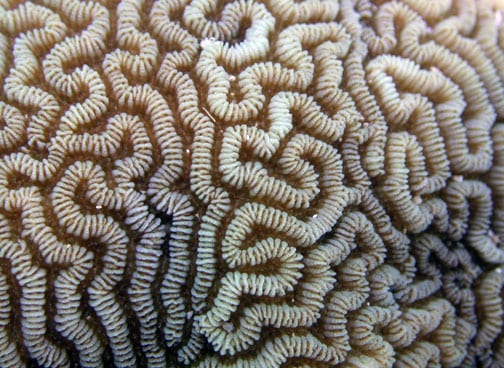
 © Larry Basch/NPS / Public domain
Leptoria
Leptoria, known in Japanese as Nagare-sango, is a reef-building coral in the family Merulinidae whose skeleton forms narrow, evenly meandering valleys. The regular arrangement of ridges and valleys creates a fingerprint-like pattern that makes it instantly recognizable. It's also called the "least valley coral" in English. Considered beginner-friendly to keep, colonies can grow to several tens of centimeters across, and their striking geometric surface makes them a distinctive centerpiece in a reef tank.
View Leptoria encyclopedia →0% commission on your first sales!Register by September 30, 2026 and your first 2 sales are commission-free!
Breeder Wanted!
List on BreederDirect and sell directly to customers nationwide!
Br-Choku's 6 Transparency Standards
Our Breeder sellers disclose detailed care specs for all Coral listings. We prioritize Aquacultured/CB specimens, verify WYSIWYG photos, and provide difficulty ratings—avoiding wild-caught.
- Aquacultured
- WYSIWYG Photo
- Difficulty Disclosed
- Frag/Colony
- Care Info Included
- Trade name shown
Browse all 210 breeds
Difficulty
No listings match your filters
Adjust your filters, or get notified when new listings arrive.
Getting alerts is free with a member account. When new listings match your saved search, we'll notify you by email and in-app.
Browse other categories
Verified breeders (preview)
About Leptoria
Leptoria is a Merulinidae coral known for its fingerprint-like meandering pattern. Beginner-friendly and growing to tens of centimeters across — learn the essentials before bringing one home.
7 things to know before welcoming a Leptoria
1Distinctive meandering pattern
Its defining trait is a skeleton of narrow valleys that meander in a regular, repeating pattern. Because the ridges and valleys line up so evenly, the surface resembles a fingerprint and stands out in any reef layout.
2Beginner-friendly to keep
This coral is generally classified as beginner-friendly. That said, the usual reef-tank fundamentals — stable water quality, appropriate lighting, and flow — still apply, so don't skip the basics just because it's considered easy.
3Grows slowly into a large colony
Mature colonies can reach several tens of centimeters in diameter. Leave extra room around the placement site so future growth doesn't crowd neighboring corals.
4Provide stable flow and lighting
Merulinidae corals tend to be sensitive to sudden changes in water parameters and lighting. Acclimate new arrivals carefully and introduce them to tank lighting and flow gradually.
5Keep distance from other corals
As colonies expand, they can come into contact with neighboring corals. Space placements well apart to avoid stinging or sweeper-tentacle conflicts as the colony grows.
6Watch color and tissue for health cues
Check the polyp coloration and valley tissue regularly for any signs of recession. Catching changes early makes it easier to adjust water quality or lighting in time.
7Prepare your tank before arrival
Before bringing one home, make sure your tank is fully cycled and water parameters are stable. Having coral-appropriate lighting and flow pumps ready in advance will make the transition smoother.
Frequently asked questions about Leptoria
- Q.Can beginners keep Leptoria?
- A.Yes, it's generally classified as beginner-friendly. That said, the standard reef-keeping fundamentals — water quality, lighting, and flow — still matter, so set up your tank carefully.
- Q.How large does it grow?
- A.Mature colonies can reach several tens of centimeters across. It's a good idea to leave plenty of surrounding space to accommodate this growth.
- Q.Can it be kept alongside other corals?
- A.Yes, but as the colony grows it can come into contact with nearby corals. Space specimens apart to avoid tentacle conflicts.
- Q.Why does the pattern resemble a fingerprint?
- A.It comes from the skeleton's structure — narrow valleys that meander in a regular, repeating pattern. Because the spacing between ridges and valleys stays consistent, the overall surface reads as an orderly striped pattern.
- Q.Is it subject to CITES regulation?
- A.This species is not subject to CITES. It does not fall under that international trade regulation category.
Useful tools for Leptoria care
Learn more about Leptoria in the encyclopedia
View Leptoria encyclopedia entry →
Care difficulty, lifespan, size and diet — all basics covered.
More in this category
Can't find the one you're looking for?
Post your wishes for free and breeders with matching animals will contact you with introductions.