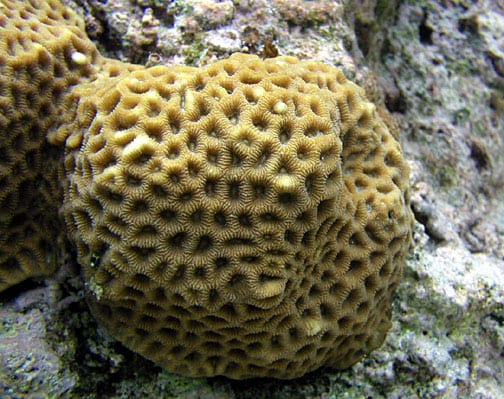
 © NPS - Larry Basch / Public domain
Favites Abdita
Favites abdita, sometimes called the larger star coral or honeycomb coral, is a reef-building species in the family Merulinidae known for its honeycomb-like skeleton of polygonal corallites that share walls with their neighbors. Native to a wide range spanning East Africa, the Red Sea, and the western Pacific, it is a hardy species that tolerates variable conditions reasonably well, making it a solid choice for beginner coral keepers. Its calm coloring and geometric skeletal pattern give any reef tank a quietly striking presence.
View Favites Abdita encyclopedia →0% commission on your first sales!Register by September 30, 2026 and your first 2 sales are commission-free!
Breeder Wanted!
List on BreederDirect and sell directly to customers nationwide!
Br-Choku's 6 Transparency Standards
Our Breeder sellers disclose detailed care specs for all Coral listings. We prioritize Aquacultured/CB specimens, verify WYSIWYG photos, and provide difficulty ratings—avoiding wild-caught.
- Aquacultured
- WYSIWYG Photo
- Difficulty Disclosed
- Frag/Colony
- Care Info Included
- Trade name shown
Browse all 210 breeds
Difficulty
No listings match your filters
Adjust your filters, or get notified when new listings arrive.
Getting alerts is free with a member account. When new listings match your saved search, we'll notify you by email and in-app.
Browse other categories
Verified breeders (preview)
Favites Abdita key facts
- Care level
- Beginner-friendly
- Size
- Colonies to several tens of cm
- Temperature
- 24〜27℃
- Diet
- Mainly nutrition from symbiotic zooxanthellae, supplemented with meaty coral foods offered at night.
- Lighting
- LiveAquaria gives moderate lighting for Favites. It reacts badly to sudden changes, so start at reduced light and acclimate it over several weeks.
- Flow & Placement
- Medium flow. Placement from the sand bed to mid-height is fine, but it is aggressive, so keep other corals out of reach of its sweeper tentacles.
- Water Temperature & Quality
- Water 24-26C, specific gravity 1.023-1.025, salinity 33-35 ppt, KH 8-12. It consumes calcium and magnesium, so test and replenish them regularly.
- Feeding
- Most of its nutrition comes from its zooxanthellae. It extends its polyps at night, so meaty coral food after lights-out speeds its growth.
- Notes
- Shared corallite walls separate Favites from Dipsastraea, but telling the species of Favites apart needs a close look at the skeleton. As a scleractinian it is on CITES Appendix II and international trade requires permits.
About Favites Abdita
Favites abdita is a hardy reef-building coral with a distinctive honeycomb-like skeleton. Widely distributed from East Africa to the western Pacific, it is a great choice for beginner coral keepers.
7 things to know before welcoming a Favites Abdita
1Hardy and Beginner-Friendly
Favites abdita tolerates fluctuations in water conditions fairly well, which is why it is often recommended as an entry-level species for new coral keepers. It generally adapts more easily than more delicate corals.
2Moderate Light and Flow
This coral prefers moderate lighting and gentle water flow rather than intense conditions. Excessive light or flow can stress its tissue over time, so it is worth observing how it responds and adjusting placement as needed.
3Give It Room to Grow
Because neighboring corallites share walls as the colony grows, this species expands outward over time. Placing it too close to other corals can lead to contact issues later, so leave adequate spacing from the start.
4Sweeper Tentacles at Night
Like other members of its family, this coral can extend sweeper tentacles at night to compete with neighbors for space. Keep this in mind when planning your layout, accounting for how much it may spread as it matures.
5Feeding Is Optional
Most of its nutrition comes from photosynthetic algae living in its tissue, so it can thrive without direct feeding. If you do choose to feed it, offering small amounts while the polyps are extended works best.
6Keep Water Parameters Stable
Although hardy, this coral still benefits from consistent calcium and alkalinity levels typical of reef tank care. Regular testing and water changes help keep conditions steady over time.
7Let Your Tank Mature First
Before adding this coral, make sure your tank is well established with stable water parameters. A short quarantine period away from other corals can help it recover from the stress of transport.
Frequently asked questions about Favites Abdita
- Q.Is this coral suitable for beginners?
- A.Yes, it is a hardy species that tolerates changes in water conditions reasonably well, which is why it is often recommended as a beginner-friendly coral. With basic reef tank maintenance, most new keepers find it manageable.
- Q.Does it need to be fed?
- A.Not necessarily. It gets most of its nutrition from photosynthetic algae living in its tissue, so it can be kept successfully without direct feeding.
- Q.Can it be placed near other corals?
- A.It is best to leave adequate space between it and other corals, since it can extend sweeper tentacles at night to compete for territory with neighbors.
- Q.How large does it grow?
- A.Colonies can reach several tens of centimeters across. It grows by expanding outward as neighboring corallites share walls with each other.
- Q.Do I need any permits or registration to keep this coral?
- A.Favites Abdita is listed in CITES Appendix II. International trade requires a permit from the exporting country, but as far as CITES is concerned, no registration is needed to buy or sell individuals already legally in Japan.
Useful tools for Favites Abdita care
Learn more about Favites Abdita in the encyclopedia
View Favites Abdita encyclopedia entry →
Care difficulty, lifespan, size and diet — all basics covered.
More in this category
Can't find the one you're looking for?
Post your wishes for free and breeders with matching animals will contact you with introductions.