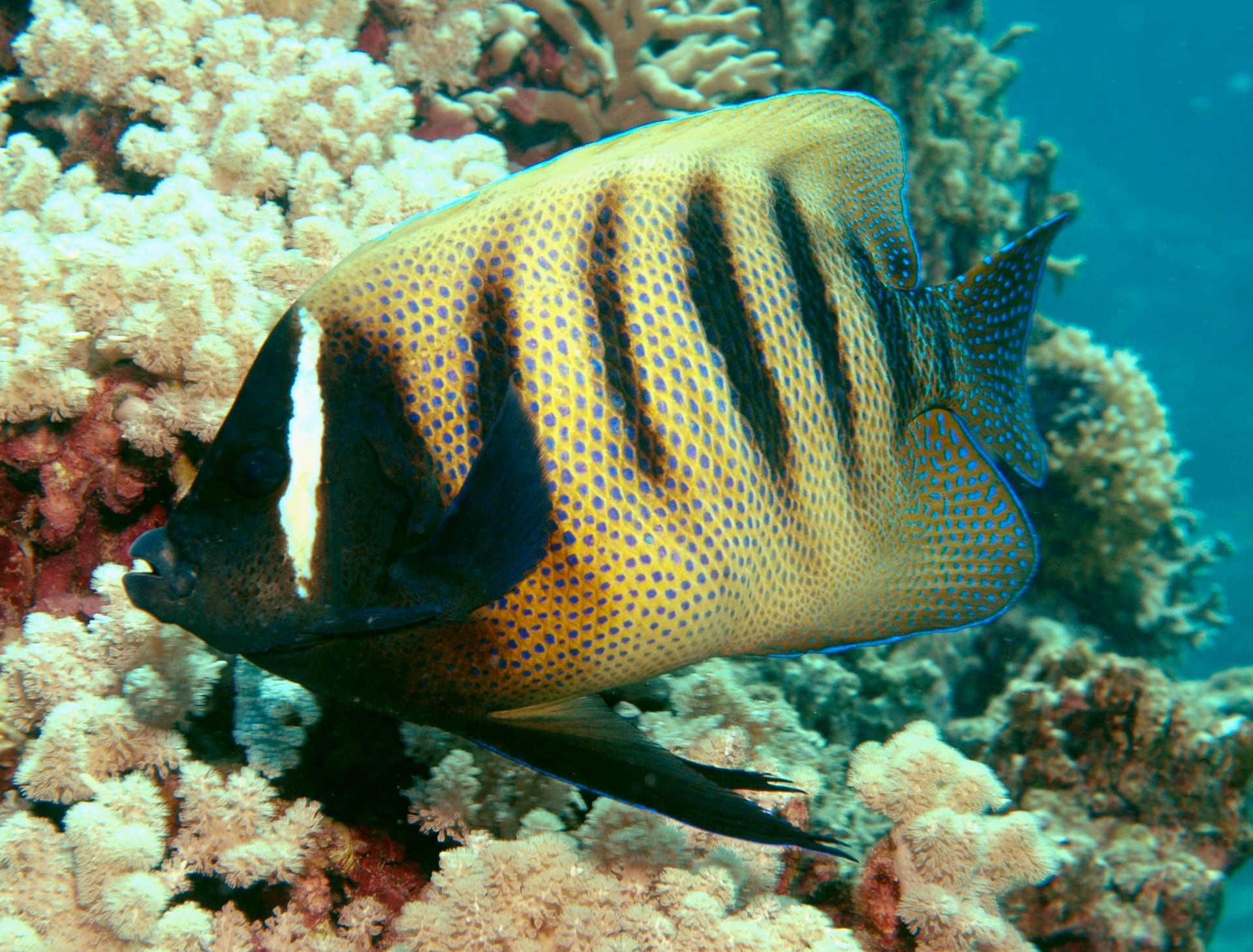
 © Leonard Low from Australia / CC BY 2.0
Sixbar angelfish
The sixbar angelfish is a large angelfish with a yellow-brown body crossed by black vertical bands, a single white band behind the head, and small blue dots scattered across the body. Juveniles look completely different, with white bars on a blue-black background, and their coloring changes as they grow, so watching the transformation is part of the appeal. Adults can reach a maximum total length of 46 cm, so a spacious tank is a must. It is rated intermediate difficulty and is best suited to hobbyists who already have some marine fish experience.
View Sixbar angelfish encyclopedia →0% commission on your first sales!Register by September 30, 2026 and your first 2 sales are commission-free!
Breeder Wanted!
List on BreederDirect and sell directly to customers nationwide!
BreederDirect's 6 Transparency Commitments
Every Marine Fish listing shows Breeder's full disclosure. No wild-caught. Captive-bred priority, tank size guidance, temperament details—transparent aquaculture.
- Captive-bred
- WYSIWYG
- Reef-safe
- Care Info Included
- Origin Disclosed
- Temperament Listed
Browse all 215 breeds
Care Difficulty
Reef-safe
Temperament
No listings match your filters
Adjust your filters, or get notified when new listings arrive.
Getting alerts is free with a member account. When new listings match your saved search, we'll notify you by email and in-app.
Browse other categories
Verified breeders (preview)
Are you raising marine fish?
Register as a breeder and connect with buyers directly.
Apply as a breederSixbar angelfish key facts
- Care level
- Intermediate
- Lifespan
- Little data available
- Size
- Up to 46 cm TL (FishBase)
- Temperature
- 22〜27℃
- Diet
- Omnivore (sponges, tunicates, algae)
- Water Temperature & Quality
- 22-27°C, specific gravity from 1.020 (Saltcorner).
- Container & Tank
- Adults reach 46 cm. Only juveniles are considered suitable for home tanks; raising one to adulthood needs about 680 L (180 gallons) or more.
- Tank Mates & Compatibility
- Do not keep it with other Pomacanthus.
- Reef Compatibility
- Adults nip stony corals, soft corals, clams and tubeworms, so it is not reef-safe.
- Diet & Feeding
- Give sponge-containing angelfish foods, frozen brine shrimp and mysis, and algae-based foods such as nori and spirulina several times a day. Juveniles eat more algae.
- Health & Cautions
- It becomes territorial once settled and may grunt when startled. Feed often after introduction to help it settle.
About Sixbar angelfish
Sixbar angelfish: a large angelfish with black bands and blue dots on a yellow-brown body, reaching up to 46 cm. Intermediate level. Learn how juveniles differ from adults and what to know before bringing one home.
7 things to know before welcoming a Sixbar angelfish
1Plan for a large tank
This is a large angelfish that can reach a maximum total length of 46 cm. Even if the fish is small when you bring it home, choose a roomy tank with its adult size in mind. A larger tank also helps keep water quality stable, not just give it room to swim.
2Juvenile vs. adult
Juveniles have white bars on a blue-black background, a pattern quite unlike the adult's. As they grow, they change into the yellow-brown body with black bands, a white band behind the head, and blue dots. Check the photos to see which growth stage a listed fish is at.
3Intermediate difficulty
Its difficulty is rated intermediate, so it suits keepers who are comfortable with marine fish and water quality management. Because it grows large, tank upkeep and daily care take more effort. Think carefully about whether you can keep it up before choosing it as a first marine fish.
4Temperament and tankmates
Large angelfish can become territorial and tend to clash with fish of a similar shape or pattern. If you keep them with tankmates, give the tank plenty of space and a layout with hiding spots. Temperament varies between individuals, so keep watching the fish for a while after introduction.
5Not suited to reef tanks
Adults pick at hard corals (LPS and SPS), soft corals, giant clams and fan worms, so this fish is not suited to a reef tank. Keep it in a large fish-focused aquarium, separate from any corals you are growing.
6Check feeding habits
Whether the fish eats reliably after arrival matters a great deal for long-term keeping. Ask on the listing page or by messaging the breeder what it is currently eating, such as prepared or frozen foods. After introduction, offer a variety of foods so its diet does not become unbalanced.
7Quarantine and observation
A newly acquired marine fish is prone to stress from the change of environment, and parasitic diseases such as white spot may appear. Quarantining it in a separate tank before adding it to a tank with existing fish can help. Watch its appetite, swimming, and body surface every day.
Frequently asked questions about Sixbar angelfish
- Q.Can a beginner keep a sixbar angelfish?
- A.It is rated intermediate difficulty and suits keepers with marine fish experience. Because it grows large, a good test is whether you can comfortably manage a big tank and water quality over time. If you are new to the hobby, consider talking to experienced keepers or gaining experience with other fish first.
- Q.How large does a sixbar angelfish get?
- A.Its total length is reported to reach a maximum of 46 cm (FishBase). Whatever size it is when you get it, choose a tank with its adult size in mind.
- Q.Do juveniles look different from adults?
- A.Yes, they look very different. Juveniles have white bars on a blue-black background, and as they grow they change into a yellow-brown body with black bands, a white band behind the head, and blue dots.
- Q.Can I keep one in a reef tank?
- A.No. Adults pick at hard and soft corals and giant clams, so it is not suited to a reef tank. Keep it in a fish-focused aquarium.
- Q.How long does a sixbar angelfish live?
- A.There is little reliable information on its lifespan, so we cannot give a figure. Plan on keeping it for the long term, and make sure you can maintain a large tank and good water quality before bringing one home.
Useful tools for Sixbar angelfish care
Learn more about Sixbar angelfish in the encyclopedia
View Sixbar angelfish encyclopedia entry →
Care difficulty, lifespan, size and diet — all basics covered.
More in this category
Can't find the one you're looking for?
Post your wishes for free and breeders with matching animals will contact you with introductions.