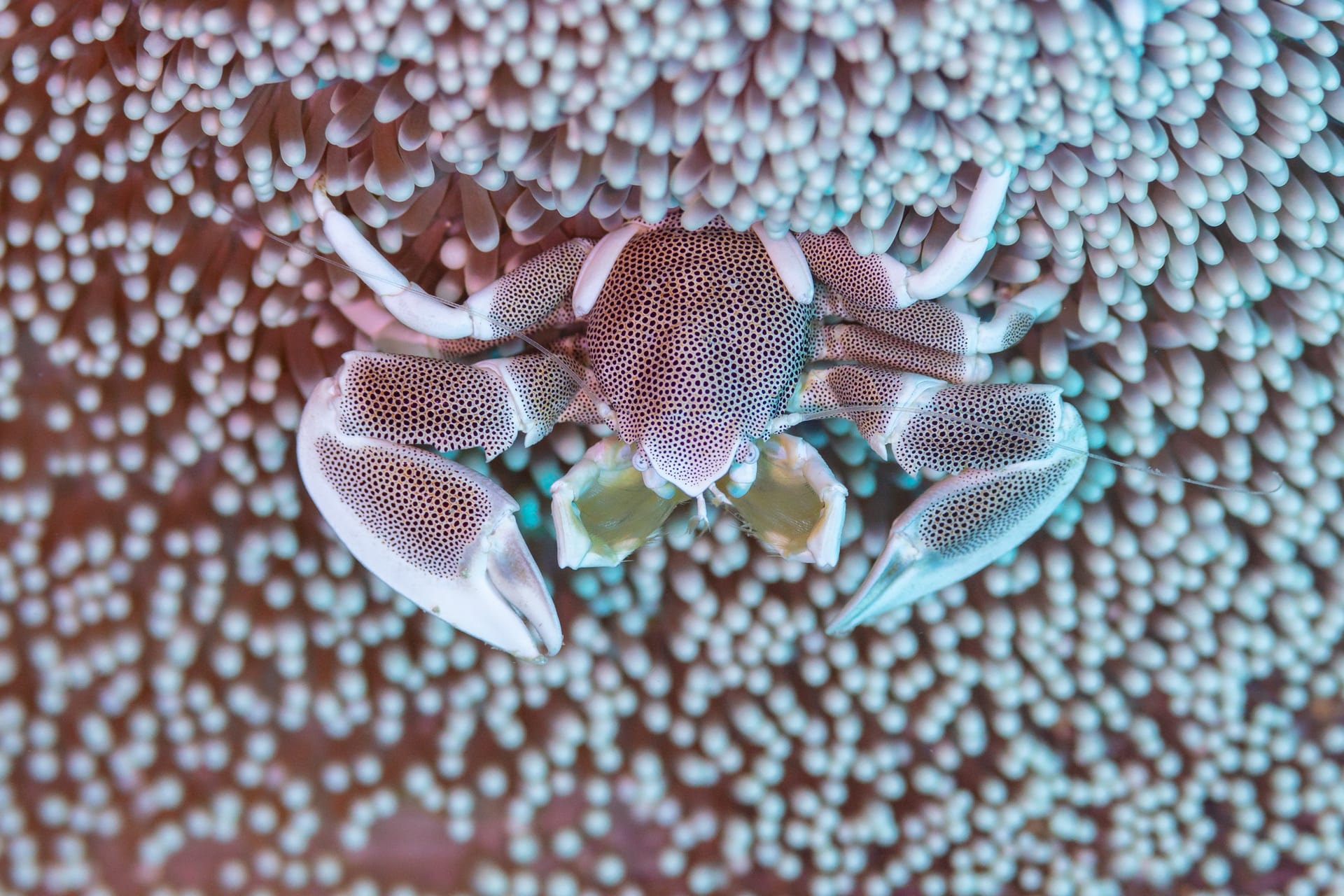
 © Diego Delso / CC BY-SA 4.0
Spotted porcelain crab
The spotted porcelain crab is a small crustacean with a white, porcelain-like shell dotted with red spots. It looks like a crab, but it is actually closer to the hermit crabs. Its carapace is only a few centimeters across, and it lives nestled among the tentacles of a large anemone. Watching it sweep plankton out of the water with the fine hairs around its mouth is a highlight. It is rated beginner-friendly, and it is fun to see it snuggle up to its host anemone. Details such as lifespan are poorly documented, so it is worth gathering information before you bring one home.
View Spotted porcelain crab encyclopedia →0% commission on your first sales!Register by September 30, 2026 and your first 2 sales are commission-free!
Breeder Wanted!
List on BreederDirect and sell directly to customers nationwide!
BreederDirect's 6 Transparency Promises
Every Marine Fish listing shows Breeder's full disclosure. No wild-caught. Captive-bred priority, tank size guidance, temperament details—transparent aquaculture.
- Captive-bred
- WYSIWYG
- Reef-safe
- Care Info Included
- Origin Disclosed
- Temperament Listed
Browse all 215 breeds
Care Difficulty
Reef-safe
Temperament
Verified breeders wanted for Marine Fish
Breeders are signing up now ahead of launch. Subscribe to be notified when new listings go live.
Getting alerts is free with a member account. When new listings match your saved search, we'll notify you by email and in-app.
Browse other categories
Verified breeders (preview)
Are you raising marine fish?
Register as a breeder and connect with buyers directly.
Apply as a breederSpotted porcelain crab key facts
- Care level
- Beginner-friendly
- Lifespan
- Little data available
- Size
- Little data (a small crab a few centimetres across)
- Temperature
- 22〜26℃
- Diet
- Filter feeder (plankton, host mucus)
- Water Temperature & Quality
- 22-26°C, specific gravity 1.023-1.025 (LiveAquaria).
- Container & Tank
- Kept with a large anemone it settles among the tentacles. It can live without one, but provide rock crevices to hide in.
- Tank Mates & Compatibility
- It fights its own kind; avoid large aggressive crabs and crustacean-eating fish. It may skirmish with clownfish over the anemone.
- Reef Compatibility
- It leaves corals and other invertebrates alone.
- Diet & Feeding
- A filter feeder that sweeps plankton with its mouthparts. Target-feed fine frozen plankton or filter-feeder foods with a pipette, or place a sinking tablet near the host.
- Health & Cautions
- As a moulting crustacean it needs stable calcium, magnesium and iodine levels (LiveAquaria). Acclimate it slowly.
About Spotted porcelain crab
The spotted porcelain crab is a small crustacean with a white shell and red spots. It lives among large anemone tentacles and filter-feeds on plankton. Rated beginner-friendly. Learn its traits, care, and what to know before buying.
7 things to know before welcoming a Spotted porcelain crab
1Plan for a Host Anemone
This crab lives among the tentacles of large anemones. The condition of the host anemone affects how settled the crab is. Decide beforehand whether you already keep an anemone or will add one at the same time.
2Start with a Mature Tank
The crab itself is small, only a few centimeters across the carapace, but its host anemone is large. A roomy tank with stable water quality suits them best. A newly set-up tank can swing in quality, so wait until it has settled before adding them.
3Feeding Plankton-Sized Food
It sweeps plankton toward its mouth with the fine hairs around it. Finely chopped or plankton-sized foods are easier for it to take, whether released into the current or offered near the crab with a pipette in small amounts. Uneaten food can foul the water, so feed sparingly.
4Choosing Tank Mates
Avoid fish that are known to prey on crustaceans. Choose calm tank mates, and keep watching how everyone behaves for a while after introduction.
5Keeping More Than One
Individuals of the same species can squabble. If you plan to keep several, allow plenty of tank space and enough host anemones, and watch them closely.
6Molting and Health Checks
As a crustacean, it molts as it grows and may leave a shed shell behind. Take care not to mistake the shell for a dead crab, and leave the crab alone right after a molt. Whether it feeds with its hairs on the host and whether its legs are intact are useful signs of health.
7Careful Acclimation and Medication
Crustaceans can be sensitive to sudden water changes and to medications. Acclimate the crab slowly when you bring it home. When treating fish, consider using a separate tank, and check a medication's effects on crustaceans before using it.
Frequently asked questions about Spotted porcelain crab
- Q.Can beginners keep this crab?
- A.Its care difficulty is listed as beginner-friendly. Still, pay attention to managing the host anemone, and choose tank mates and medications with crustaceans in mind.
- Q.Does it need an anemone?
- A.It naturally lives among the tentacles of large anemones, and with a host you are more likely to see its natural behavior. How well it does without one can vary by setup and individual, so it is worth asking the breeder before you buy.
- Q.What does it eat?
- A.It collects plankton from the water with the hairs around its mouth. You can release finely chopped food into the current or offer it near the crab with a pipette.
- Q.Can it live with other fish?
- A.Avoid fish that prey on crustaceans. Choose calm species and keep an eye on the tank for a while after introducing them.
- Q.How long does it live, and how big does it get?
- A.It is a small species, only a few centimeters across the carapace. Reliable information on lifespan is limited, so no specific figure can be given. If you are curious, ask the breeder about their experience keeping it.
Useful tools for Spotted porcelain crab care
Learn more about Spotted porcelain crab in the encyclopedia
View Spotted porcelain crab encyclopedia entry →
Care difficulty, lifespan, size and diet — all basics covered.
More in this category
Can't find the one you're looking for?
Post your wishes for free and breeders with matching animals will contact you with introductions.