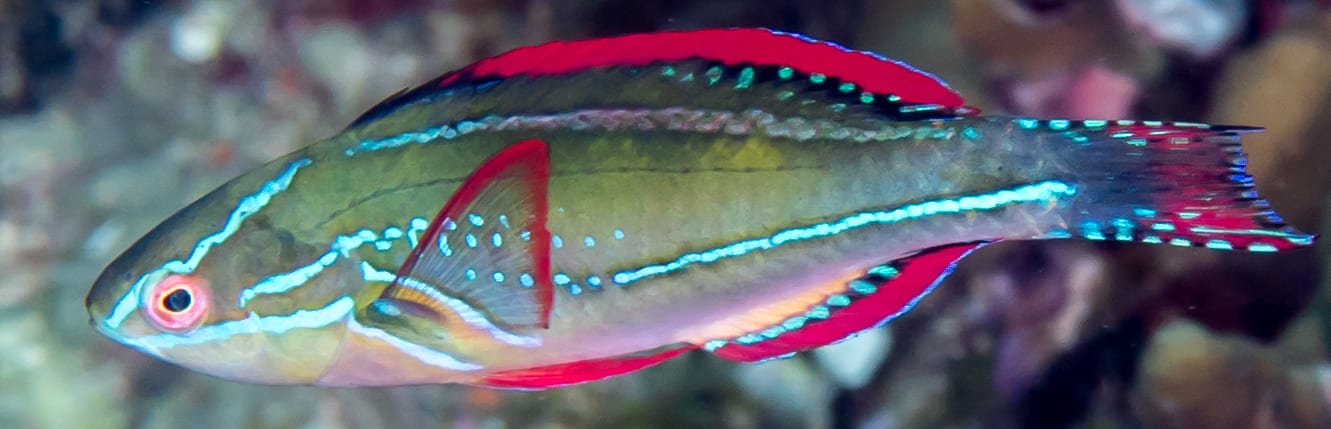
 © Rickard Zerpe / CC BY 2.0
Exquisite wrasse
The exquisite wrasse is a fairy wrasse (genus Cirrhilabrus) found widely across the Indo-Pacific. Males have a green to reddish body marked with blue lines, plus a black oval spot at the base of the tail. It feeds on zooplankton in the water column and is known as a reef-safe species, which makes it appealing for coral tanks. It reaches a maximum standard length of 12 cm (FishBase) and is rated for intermediate aquarists. Its lifespan is poorly documented, so no reliable figure can be given.
View Exquisite wrasse encyclopedia →Breeder Wanted!
List on BreederDirect and sell directly to customers nationwide!
BreederDirect's 6 Transparency Commitments
Every Marine Fish listing shows Breeder's full disclosure. No wild-caught. Captive-bred priority, tank size guidance, temperament details—transparent aquaculture.
- Captive-bred
- WYSIWYG
- Reef-safe
- Care Info Included
- Origin Disclosed
- Temperament Listed
Browse all 215 breeds
Care Difficulty
Reef-safe
Temperament
Verified breeders wanted for Marine Fish
Breeders are signing up now ahead of launch. Subscribe to be notified when new listings go live.
Getting alerts is free with a member account. When new listings match your saved search, we'll notify you by email and in-app.
Browse other categories
Verified breeders (preview)
Are you raising marine fish?
Register as a breeder and connect with buyers directly.
Apply as a breederExquisite wrasse key facts
- Care level
- Intermediate
- Size
- Up to 12 cm SL
- Diet
- Carnivore (zooplankton, frozen mysis and brine shrimp)
- Water Temperature & Quality
- Since this is a tropical marine fish, keep it at the same water temperature as typical tropical marine fish. Keep stable reef-aquarium conditions.
- Aquarium
- It swims in mid-water, so provide open space plus rockwork for cover, and use a lid against jumping.
- Tank Mates & Compatibility
- Peaceful, though males fight each other; keep one male with several females and avoid aggressive large fish.
- Reef Compatibility
- A zooplankton feeder that leaves corals and invertebrates alone; considered reef-safe.
- Diet & Feeding
- Feed frozen mysis, brine shrimp and fine prepared foods in several meals a day.
- Health & Cautions
- Colour varies by locality and it may include more than one species, so check the origin when buying. It also occurs in the Ryukyu Islands; collecting in Japanese waters must follow prefectural fisheries regulations.
About Exquisite wrasse
Exquisite wrasse guide: an Indo-Pacific fairy wrasse that grows to a maximum standard length of 12 cm. A reef-safe zooplankton feeder suited to intermediate aquarists.
7 things to know before welcoming a Exquisite wrasse
1Intermediate-Level Care
This species is rated for intermediate aquarists. It suits keepers who are comfortable with basic saltwater water-quality management and careful tank setup. Lifespan data is scarce, so it is best to plan for a long-term commitment.
2Adult Size
The maximum standard length is 12 cm (FishBase). Rather than choosing a tank based on the size at purchase, make sure there is enough room for the fish once it has grown. Wrasses are active swimmers, so leaving open swimming space in the aquascape is a good idea.
3A Zooplankton Feeder
This fish feeds on zooplankton in the water column, so small foods offered in modest portions are the basic approach. Presenting food so that it drifts through the water makes it easier to eat. Watch how the fish eats right after arrival, and ask the breeder how well it is feeding before you buy.
4Compatibility With Corals
It is a reef-safe wrasse and is easy to fit into a coral tank. However, because it feeds on zooplankton, it may also eat tiny organisms living in the aquarium. Keep an eye on how it behaves with its tank mates after introduction.
5Watch Male Aggression
Males of the fairy wrasse genus are said to squabble with other males of their own species. If you plan to keep more than one, consider tank size and the sex combination beforehand. Checking the listing details or asking the breeder is the surest way to confirm sex and pairing.
6Use a Secure Lid
Wrasses can leap out of the water when startled. Fit the tank with a secure lid and close off gaps around pipes and cables.
7Setting Up for Arrival
In a new environment, hiding places in the rockwork help the fish settle in. Acclimate it carefully, then check every day that it is eating and that its swimming looks normal. If anything seems off, it is reassuring to consult the breeder early.
Frequently asked questions about Exquisite wrasse
- Q.Can a beginner keep this fish?
- A.It is rated for intermediate aquarists. Getting comfortable with basic saltwater and reef tank management first will make it easier to care for calmly.
- Q.Is it safe to keep in a coral tank?
- A.It is regarded as a reef-safe wrasse and is kept in coral tanks. Individual behavior and tank mates can vary, so watch how it behaves after introduction.
- Q.How large does it grow?
- A.Its maximum standard length is 12 cm (FishBase). Since it will grow beyond its size at purchase, plan for a tank with some room to spare.
- Q.What does it eat?
- A.It feeds on zooplankton in the water column. Some individuals are used to frozen or pellet foods, so it is reassuring to ask the breeder how well a particular fish is feeding.
- Q.How long does it live?
- A.Lifespan data is limited, so no reliable number of years can be given. Plan for long-term care and keep up consistent water-quality and feeding routines.
Useful tools for Exquisite wrasse care
Learn more about Exquisite wrasse in the encyclopedia
View Exquisite wrasse encyclopedia entry →
Care difficulty, lifespan, size and diet — all basics covered.
More in this category
Can't find the one you're looking for?
Post your wishes for free and breeders with matching animals will contact you with introductions.