 © Philippe Bourjon / CC BY-SA 3.0
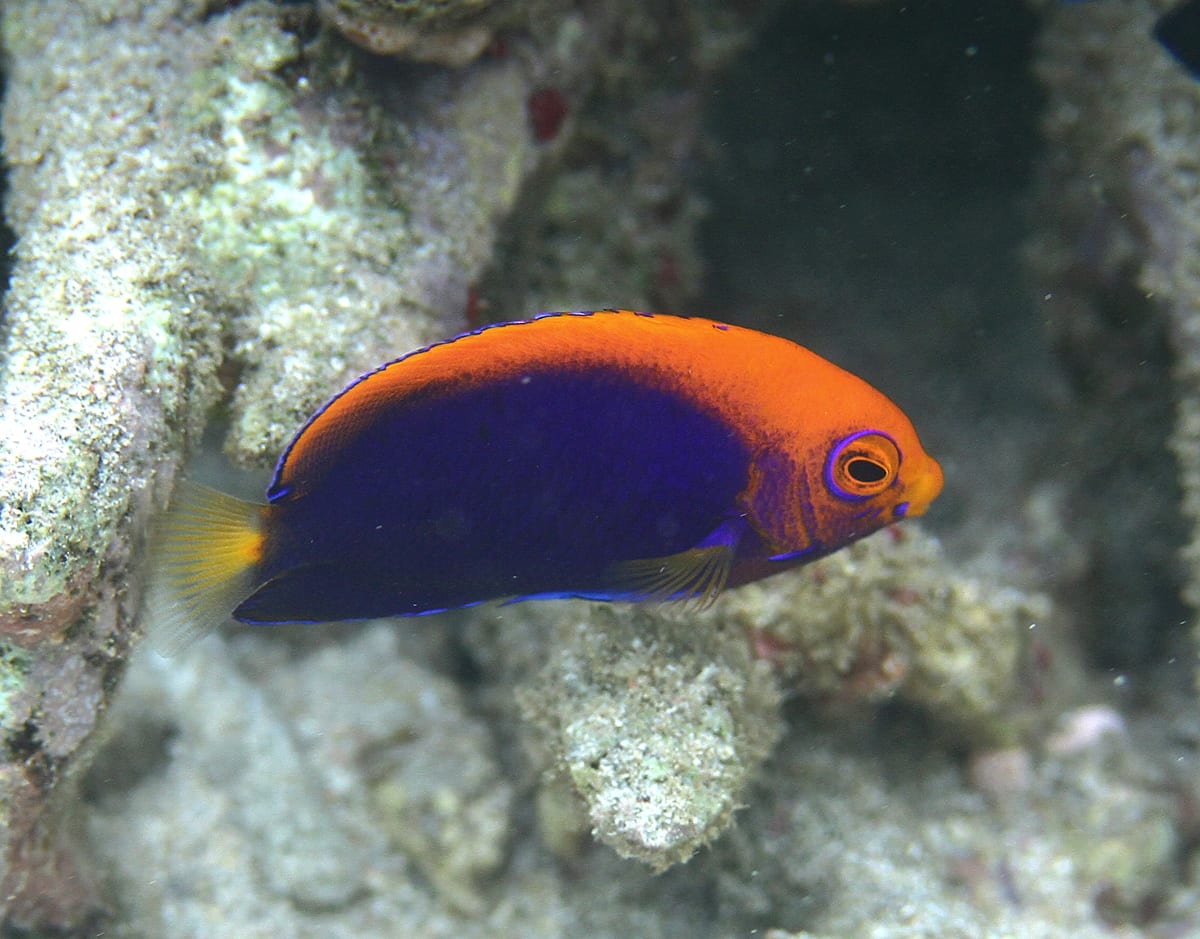
African pygmy angelfish
The African pygmy angelfish is a small dwarf angel of the genus Centropyge, with a blue body and an orange-yellow band running from the head to the dorsal fin. It grows to a maximum of 8 cm in total length, so you can enjoy the look of an angelfish even in a compact aquarium. Its tail fin is pale yellow to translucent, which helps you tell it apart from the similar Brazilian flameback angelfish. It tends to be shy and likes to hide, and its care level is intermediate. It suits aquarists who can provide plenty of rockwork and stable water conditions.
View African pygmy angelfish encyclopedia →0% commission on your first sales!Register by September 30, 2026 and your first 2 sales are commission-free!
Breeder Wanted!
List on BreederDirect and sell directly to customers nationwide!
BreederDirect's 6 Transparency Promises
Every Marine Fish listing shows Breeder's full disclosure. No wild-caught. Captive-bred priority, tank size guidance, temperament details—transparent aquaculture.
- Captive-bred
- WYSIWYG
- Reef-safe
- Care Info Included
- Origin Disclosed
- Temperament Listed
Browse all 215 breeds
Care Difficulty
Reef-safe
Temperament
Verified breeders wanted for Marine Fish
Breeders are signing up now ahead of launch. Subscribe to be notified when new listings go live.
Getting alerts is free with a member account. When new listings match your saved search, we'll notify you by email and in-app.
Browse other categories
Verified breeders (preview)
Are you raising marine fish?
Register as a breeder and connect with buyers directly.
Apply as a breederAfrican pygmy angelfish key facts
- Care level
- Intermediate
- Lifespan
- Little data available
- Size
- Up to 8 cm TL (FishBase)
- Temperature
- 22〜27℃
- Diet
- Omnivore (algae and small invertebrates)
- Water Temperature & Quality
- 22-27°C (Saltcorner).
- Container & Tank
- At least about 190 L (50 gallons), with plenty of live rock to graze and places to hide. It becomes aggressive in small tanks.
- Tank Mates & Compatibility
- One Centropyge species per tank.
- Reef Compatibility
- Underfed fish may nip clams, anemones, LPS corals and zoanthids, so it is reef-safe only with caution.
- Diet & Feeding
- It grazes filamentous algae readily. Feed spirulina-based foods and frozen brine shrimp and mysis about twice a day.
- Health & Cautions
- It hides at first, then becomes territorial. Check the pale yellow to transparent tail to tell it from look-alikes.
About African pygmy angelfish
The African pygmy angelfish is a small Centropyge dwarf angel, up to 8 cm, with a blue body and an orange-yellow band. Learn how to tell it from the flameback and what to know before bringing one home.
7 things to know before welcoming a African pygmy angelfish
1Intermediate care level
Its care level is intermediate. It can be sensitive to changes in water quality and to stress, so it is best added once you are comfortable keeping saltwater fish. Get the tank stable before the fish arrives.
2A small angel, up to 8 cm
It reaches a maximum of 8 cm in total length, which is small for an angelfish. Even so, it can be territorial, so choose a tank based on whether it leaves enough swimming room and hiding places.
3Telling it from the flameback
The best way to separate it from the similar Brazilian flameback is the tail fin. The African pygmy angelfish has a pale yellow to translucent tail. Check the tail color carefully before you bring one home.
4Rockwork for hiding
It can be shy, so plenty of crevices and cave-like hiding spots help it settle in. You may also see it picking at algae growing on the rock. Plan the layout so it always has somewhere to retreat when chased.
5Choose tank mates carefully
It may clash with fish of a similar shape or territorial habits, such as other Centropyge species. On the other hand, large or aggressive tank mates can leave it hiding and struggling to get enough food.
6Be careful with corals
Fish of the genus Centropyge are said to nip at corals and clams at times, and how much they do varies by individual. If you add one to a reef tank, watch its behavior closely for a while after introduction.
7Quarantine and feeding
After arrival, acclimate it slowly and, if possible, observe it in a separate quarantine tank. Move it to the main tank once you have confirmed it is eating, including foods that contain plant matter such as algae. Diseases like white spot are common in saltwater fish, so keep an eye out for changes on the body surface.
Frequently asked questions about African pygmy angelfish
- Q.Can beginners keep the African pygmy angelfish?
- A.Its care level is intermediate. It suits aquarists who already have some saltwater experience and can manage water quality and provide good hiding places. If you are new to the hobby, focus first on setting up and stabilizing your tank.
- Q.How large does it grow?
- A.It reaches a maximum total length of 8 cm (FishBase). Sizes vary between individuals, so prepare a tank with its full-grown size in mind, even if the fish is small when you get it.
- Q.How is it different from the flameback?
- A.The two look very much alike, but the African pygmy angelfish has a pale yellow to translucent tail fin, which sets it apart. The flameback is the species from Brazil.
- Q.How long does it live?
- A.There is little reliable information, so a clear lifespan cannot be given. Plan to keep it for the long term and keep its water quality and environment stable.
- Q.Is it safe to keep in a reef tank?
- A.Fish of the genus Centropyge are said to nip at corals at times, and this varies by individual. If you have corals you care about, watch the fish for a while after introduction and be ready to act if it becomes a problem.
Useful tools for African pygmy angelfish care
Learn more about African pygmy angelfish in the encyclopedia
View African pygmy angelfish encyclopedia entry →
Care difficulty, lifespan, size and diet — all basics covered.
More in this category
Can't find the one you're looking for?
Post your wishes for free and breeders with matching animals will contact you with introductions.