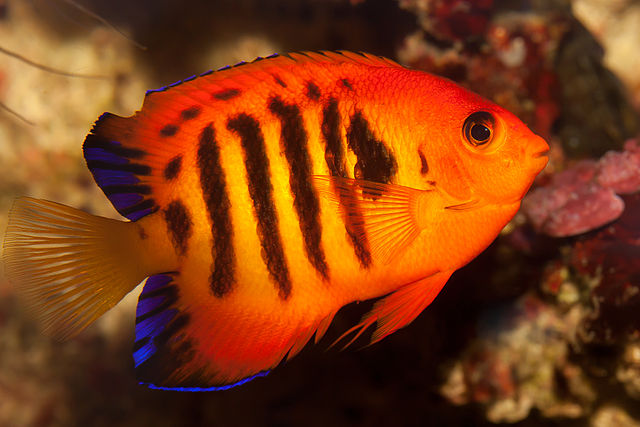
 © Andreas März from Darmstadt, Germany / CC BY 2.0
Flame Angelfish
The Flame Angelfish is one of the most popular small angelfish in the marine aquarium hobby, prized for its fiery orange-red body marked with bold black vertical stripes. Reaching about 8 to 10 cm as an adult, it stays compact enough to suit a range of tank setups while still commanding attention. Active and always on the move, it responds well to feeding, though some individuals can be territorial toward similarly shaped or colored angelfish. Because it can be sensitive to shifts in water quality, this species is generally considered better suited to intermediate aquarists. With a lifespan of roughly 5 to 10 years, it can be a long-term companion in a well-maintained tank.
View Flame Angelfish encyclopedia →0% commission on your first sales!Register by September 30, 2026 and your first 2 sales are commission-free!
Breeder Wanted!
List on BreederDirect and sell directly to customers nationwide!
BreederDirect's 6 Transparency Promises
Every Marine Fish listing shows Breeder's full disclosure. No wild-caught. Captive-bred priority, tank size guidance, temperament details—transparent aquaculture.
- Captive-bred
- WYSIWYG
- Reef-safe
- Care Info Included
- Origin Disclosed
- Temperament Listed
Browse all 175 breeds
Care Difficulty
Reef-safe
Temperament
Verified breeders wanted for Marine Fish
Breeders are signing up now ahead of launch. Subscribe to be notified when new listings go live.
Getting alerts is free with a member account. When new listings match your saved search, we'll notify you by email and in-app.
Browse other categories
Verified breeders (preview)
Are you raising marine fish?
Register as a breeder and connect with buyers directly.
Apply as a breederAbout Flame Angelfish
Flame Angelfish: a fiery orange-red dwarf angelfish with black stripes, growing to 8–10 cm and living 5–10 years. Key traits, care basics, and buyer FAQs at a glance.
7 things to know before welcoming a Flame Angelfish
1Provide Hiding Spaces
Flame Angelfish naturally like to retreat into crevices, so provide plenty of live rock with hiding spots. A secure environment helps reduce stress and keeps their vivid coloring at its best.
2Best Kept Alone
Flame Angelfish can be territorial toward their own kind and similarly shaped or colored angelfish, sometimes leading to conflict when kept together. As a general rule, keep one per tank, and watch behavior closely if combining with other fish.
3Reef Compatibility Caution
Some individuals are known to nip at LPS corals or the mantles of clams. If adding one to a reef tank, watch its behavior closely after introduction and be prepared to separate it if problems arise.
4Needs a Mature Tank
Because this species can be sensitive to shifts in water quality, avoid adding it to a newly set-up, unstable tank — introduce it once biological filtration has stabilized. Take your time with a gradual acclimation process.
5Omnivorous Diet Needs
In the wild, this species also grazes on algae, making it an omnivore. Combining prepared foods with marine algae-based and frozen foods helps maintain a well-rounded diet.
6Prepare Before Bringing Home
Before bringing one home, arrange live rock for hiding spots, have water testing equipment ready, and confirm your tank is stable. If possible, consider a quarantine period of several weeks before introducing it to the main tank.
7Watch for Stress Signs
Clamped fins, dulling color, or a reduced response to feeding can be early signs of stress or illness. Knowing your fish's normal swimming pattern and appetite makes it easier to notice changes.
Frequently asked questions about Flame Angelfish
- Q.Can beginners keep a Flame Angelfish?
- A.This species is generally considered suitable for intermediate aquarists, so it's best to have some experience managing water quality before getting one. Starting in a well-established, stable tank helps it settle in more easily.
- Q.Can it be kept with other fish?
- A.It's generally safest to keep one Flame Angelfish per tank, since it can be territorial toward its own kind or similarly shaped angelfish. If mixing with other species, introduce them gradually and monitor behavior closely.
- Q.Can it live in a reef tank with corals?
- A.Some individuals may nip at LPS corals or clam mantles, and compatibility varies by individual. If adding one to a reef tank, keep a close eye on its behavior after introduction.
- Q.How big a tank does it need?
- A.Adults reach about 8 to 10 cm and are active swimmers, so a tank with enough room for live rock hiding spots is well suited. Kept singly, it's a manageable size for most home aquariums.
- Q.How long does a Flame Angelfish live?
- A.With proper care, it can live around 5 to 10 years. Maintaining stable water quality is key to a long lifespan.
Useful tools for Flame Angelfish care
Learn more about Flame Angelfish in the encyclopedia
View Flame Angelfish encyclopedia entry →
Care difficulty, lifespan, size and diet — all basics covered.
Flame Angelfish related articles
Dwarf Angelfish (Centropyge) Compatibility Guide | Species Compatibility and Successful Combinations
Mixing guide for Centropyge (Dwarf Angelfish). Compare the temperament and reef-safety of popular species like Coral Beauty, Flame Angelfish, and Lemonpeel, and learn how to successfully set up mixed tanks.
Flame Angelfish Care Guide | Tank Mates, Feeding, Tank Setup
Complete care guide for the Flame Angelfish (Centropyge loricula). Learn about housing requirements, tank mate compatibility, feeding techniques, tank setup, and common diseases for this stunning small dwarf angelfish with brilliant red and orange coloring.
Pygmy Angelfish (Centropyge) Care Guide | Species, Care Methods, and Precautions
A comprehensive guide on how to care for Pygmy Angelfish (Centropyge), also known as dwarf angelfish. Covers the characteristics of popular species like Coral Beauty and Flame Angelfish, plus important considerations for keeping them in reef tanks.
More in this category
Can't find the one you're looking for?
Post your wishes for free and breeders with matching animals will contact you with introductions.