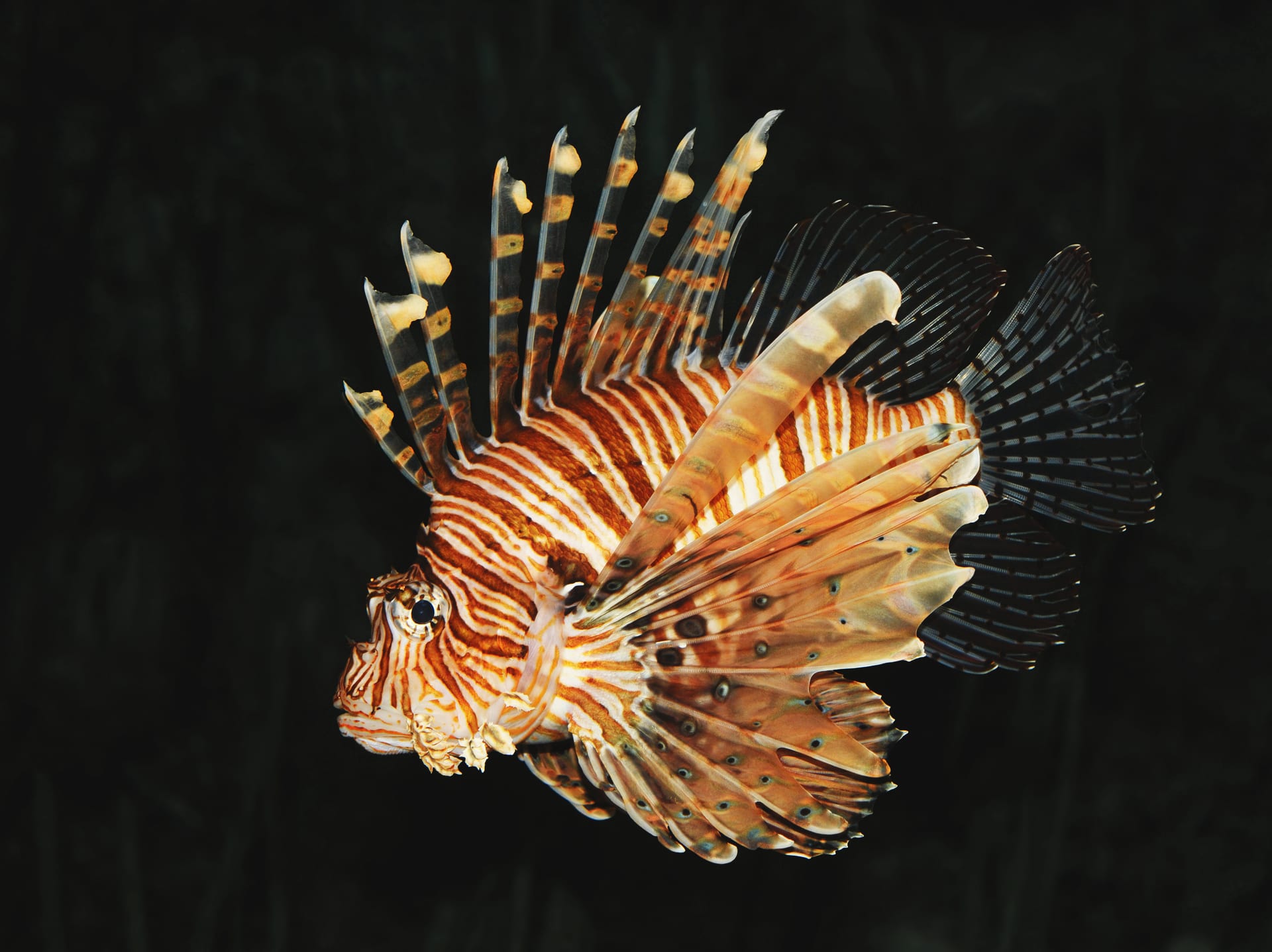
 © Michael Gäbler / CC BY 3.0
Red Lionfish
The Red Lionfish is one of the most iconic lionfish species, instantly recognizable by its reddish-brown and white banding, dramatically fanned pectoral fins, and long, trailing dorsal spines. It is a nocturnal predator that tends to stay tucked among rocks or reef crevices during the day, patiently waiting for prey to pass rather than actively hunting it down. Its movements are slow and deliberate, and the way it drifts through the water with fins spread wide makes it a striking centerpiece in any tank. The spines on its dorsal, pelvic, and anal fins are venomous and require careful handling, but this distinctive look and calm demeanor have made it a long-standing favorite among marine aquarium keepers.
View Red Lionfish encyclopedia →0% commission on your first sales!Register by September 30, 2026 and your first 2 sales are commission-free!
Breeder Wanted!
List on BreederDirect and sell directly to customers nationwide!
BreederDirect's 6 Transparency Promises
Every Marine Fish listing shows Breeder's full disclosure. No wild-caught. Captive-bred priority, tank size guidance, temperament details—transparent aquaculture.
- Captive-bred
- WYSIWYG
- Reef-safe
- Care Info Included
- Origin Disclosed
- Temperament Listed
Browse all 175 breeds
Care Difficulty
Reef-safe
Temperament
Verified breeders wanted for Marine Fish
Breeders are signing up now ahead of launch. Subscribe to be notified when new listings go live.
Getting alerts is free with a member account. When new listings match your saved search, we'll notify you by email and in-app.
Browse other categories
Verified breeders (preview)
Are you raising marine fish?
Register as a breeder and connect with buyers directly.
Apply as a breederAbout Red Lionfish
A striking lionfish with red-brown and white bands, fan-like pectoral fins, and long dorsal spines. Nocturnal and carnivorous, with venomous spines, growing up to 45.7cm.
7 things to know before welcoming a Red Lionfish
1Venomous dorsal spines
The spines on its dorsal, pelvic, and anal fins carry venom. When cleaning the tank, rearranging decor, or netting the fish, keep a safe distance and use tools or thick gloves rather than bare hands.
2Watch tankmate size
It is a strong predator and will eat smaller fish or crustaceans that fit in its mouth. When choosing tankmates, pick fish of a similar size or larger to avoid predation.
3Nocturnal with low daytime activity
During the day it tends to stay hidden among rocks or live rock crevices and is rarely seen swimming actively. Activity typically increases at night and during feeding.
4Feeding often starts with live food
When newly introduced, it may only accept live shrimp or small fish, and switching to frozen or pellet food can require patient, gradual feeding training.
5Needs room to move comfortably
Since it can grow up to 45.7cm, it's best to provide a tank large enough for it to swim comfortably without its widely fanned fins feeling cramped.
6Suited to intermediate keepers
This species is rated for intermediate keepers. Because venomous spine handling, feeding training, and tankmate selection all require attention, it's best introduced after gaining some marine aquarium experience.
7Plan for a roughly 10-year lifespan
With a lifespan of around 10 years, this is a long-term commitment. Before bringing one home, it's wise to plan ahead for its adult size and ongoing care needs.
Frequently asked questions about Red Lionfish
- Q.How dangerous is its venom?
- A.The spines on its dorsal, pelvic, and anal fins are venomous. Always handle it with tools and keep a safe distance rather than touching it directly. If you experience any adverse reaction, seek medical attention promptly.
- Q.What fish can it live with?
- A.Fish that are too large to fit in its mouth and have a sturdy body size tend to be suitable tankmates. Small fish and crustaceans are likely to be preyed upon, so avoid pairing it with significantly smaller species.
- Q.Can beginners keep this fish?
- A.This species is rated for intermediate keepers. Given the care needed around venomous spines and feeding, it's best kept by those with some marine aquarium experience already.
- Q.How large a tank does it need?
- A.Since it can grow up to 45.7cm, a tank that gives it enough room to swim without cramping its widely fanned fins is recommended.
- Q.What does it eat?
- A.It is a nocturnal carnivore that feeds on small fish and shrimp. Newly introduced individuals may only accept live food, and training them onto frozen or pellet food can take patience.
Useful tools for Red Lionfish care
Learn more about Red Lionfish in the encyclopedia
View Red Lionfish encyclopedia entry →
Care difficulty, lifespan, size and diet — all basics covered.
More in this category
Can't find the one you're looking for?
Post your wishes for free and breeders with matching animals will contact you with introductions.