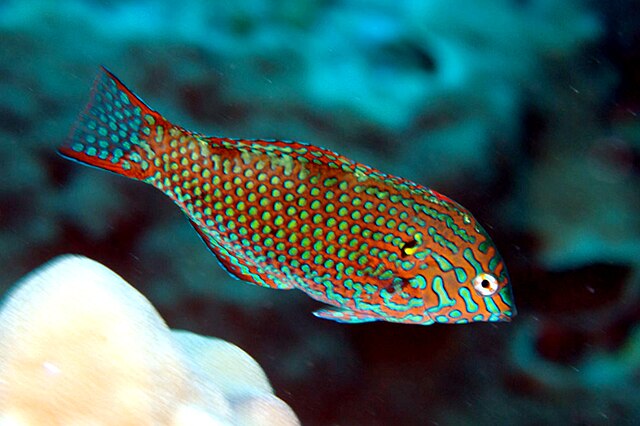
Leopard Wrasse
The Leopard Wrasse is prized for the striking leopard-spot pattern that covers its body, a defining feature among saltwater wrasses. During the day it swims actively around the reef, but at night it buries itself in the sand to sleep, a distinctive rhythm that's fascinating to watch in a home aquarium. Generally calm and best kept singly, this fish has a delicate side, and feeding and stable water quality both need close attention. Since it relies mainly on frozen foods rather than pellets, it takes a bit more care to keep, but the reward is a uniquely patterned wrasse that rewards attentive keepers.
View Leopard Wrasse encyclopedia →0% commission on your first sales!Register by September 30, 2026 and your first 2 sales are commission-free!
Breeder Wanted!
List on BreederDirect and sell directly to customers nationwide!
BreederDirect's 6 Transparency Promises
Every Marine Fish listing shows Breeder's full disclosure. No wild-caught. Captive-bred priority, tank size guidance, temperament details—transparent aquaculture.
- Captive-bred
- WYSIWYG
- Reef-safe
- Care Info Included
- Origin Disclosed
- Temperament Listed
Browse all 175 breeds
Care Difficulty
Reef-safe
Temperament
Verified breeders wanted for Marine Fish
Breeders are signing up now ahead of launch. Subscribe to be notified when new listings go live.
Getting alerts is free with a member account. When new listings match your saved search, we'll notify you by email and in-app.
Browse other categories
Verified breeders (preview)
Are you raising marine fish?
Register as a breeder and connect with buyers directly.
Apply as a breederAbout Leopard Wrasse
Leopard Wrasse is a saltwater wrasse known for its striking leopard-spot pattern and its habit of burying in sand to sleep. A delicate species suited to experienced keepers, reaching 10-15cm with a 5-8 year lifespan.
7 things to know before welcoming a Leopard Wrasse
1Frozen Food Is Essential
Leopard Wrasses rarely take to pellet food and rely mainly on frozen foods. Newly introduced fish may refuse to eat at first, so patience and close monitoring of feeding are needed.
2Sleeps Buried in Sand
At night, this wrasse buries itself in fine sand to sleep, a distinctive habit among reef fish. A deep bed of soft, sand-like substrate is essential for its wellbeing.
3Best Kept Alone
Conflicts can arise between individuals of the same species or similarly patterned fish, so it's best to keep only one per tank. Choose calm tankmates to house alongside it.
4Watch for Jumping
This fish can leap suddenly when startled. A secure, well-fitted lid is essential to prevent it from jumping out of the tank.
5Prefers a Mature Tank
It thrives in a stable, well-established aquarium with plenty of live rock and hiding spots. Introducing it to a newly set-up tank is best avoided.
6Suited to Experienced Keepers
Due to the risk of refusing food and the challenge of feeding, this species is best suited to experienced aquarists. Research feeding methods and tank setup thoroughly before bringing one home.
7Check Feeding Status Beforehand
Before welcoming one home, it helps to confirm whether the individual is already eating well. Fish that have stopped eating can be difficult to recover once at home.
Frequently asked questions about Leopard Wrasse
- Q.Is the Leopard Wrasse suitable for beginners?
- A.The Leopard Wrasse is generally considered a fish for experienced keepers. Feeding mainly frozen foods and managing the risk of food refusal both require some hobbyist experience.
- Q.Will it eat pellet food?
- A.It rarely takes well to pellet food and is mainly fed frozen foods instead. How readily an individual accepts food can vary.
- Q.Can it be kept with other fish?
- A.It tends to conflict with the same species or similarly patterned fish, so keeping just one per tank is recommended. Choose calm tankmates for company.
- Q.How big does it grow?
- A.Adults typically reach about 10-15cm in length.
- Q.What is its lifespan?
- A.In captivity, it typically lives around 5-8 years.
Useful tools for Leopard Wrasse care
Learn more about Leopard Wrasse in the encyclopedia
View Leopard Wrasse encyclopedia entry →
Care difficulty, lifespan, size and diet — all basics covered.
More in this category
Can't find the one you're looking for?
Post your wishes for free and breeders with matching animals will contact you with introductions.