Source: Wikimedia Commons
Leopard Wrasse
AdvancedMacropharyngodon meleagris
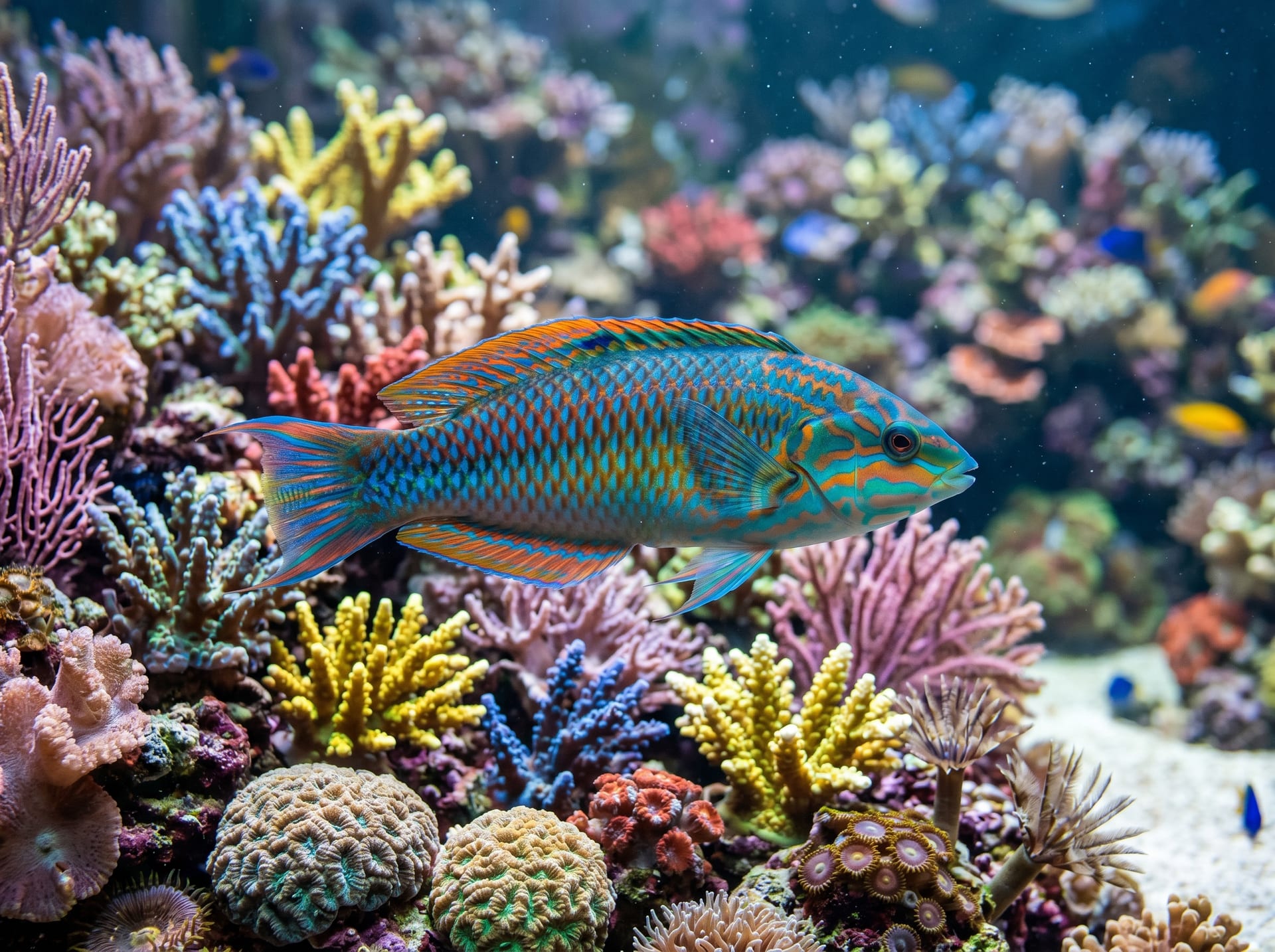
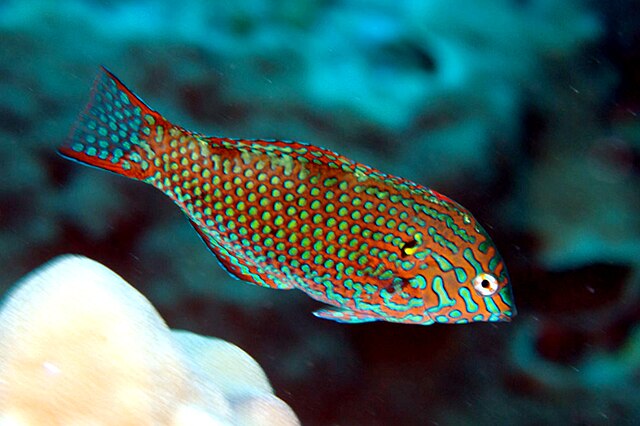
A wrasse with beautiful leopard pattern. Delicate fish with habit of sleeping buried in sand.
Difficulty
Advanced
Temperature
24〜26℃
Lifespan
5-8 years
Size
10-15cm
Diet
Frozen food
About
The leopard wrasse (Macropharyngodon meleagris) is a western Pacific reef wrasse named for the dark spots scattered over a pale body; males and females are patterned differently. Adults reach 10-15 cm. Like most wrasses it buries itself in sand to sleep, so a fine sand bed of 5 cm or more is essential. It is among the harder wrasses to wean: in the wild it feeds on live copepods and tiny crustaceans, so freshly imported fish often refuse prepared foods and waste away. Success depends on putting a healthy specimen into a mature tank whose live rock is already producing a steady supply of micro-fauna. Once feeding it is hardy, but this is not a beginner's fish.
Source: Wikipedia (CC BY-SA 4.0)
Lifespan of the Leopard Wrasse
The Leopard Wrasse lives 5-8 years.
Size of the Leopard Wrasse
The Leopard Wrasse grows to 10-15cm.
Temperature & humidity for the Leopard Wrasse
The ideal temperature for the Leopard Wrasse is 24〜26℃.
Basic Info
Origin
the eastern Indian Ocean and the Pacific Ocean
Lifespan
5-8 years
Size
10-15cm
Care Specifications
- pH
- 8.1–8.4
- Water Temp.
- 24–26℃
- Specific Gravity
- 1.02–1.025
- Salinity
- 33–35 ppt
- Min. Tank
- 341 L
PeacefulReef safe
Sources: LiveAquaria
References & Sources
Edited & verified by: BreederDirect editorial team
The taxonomic, regulatory, and husbandry data on this page are compiled and verified against the authoritative primary sources below.
Taxonomy & Authority
Regulations & Conservation Status
Not CITES-listed
Sources: CITES Appendices (species not listed) / Ministry of the Environment Specified Animal List / Ministry of the Environment: List of Designated Invasive Species
Regulations may change. Always verify the latest information with the relevant authorities.
Leopard Wrasse Listings
Loading latest listingsFind listings for this species