Source: Wikimedia Commons
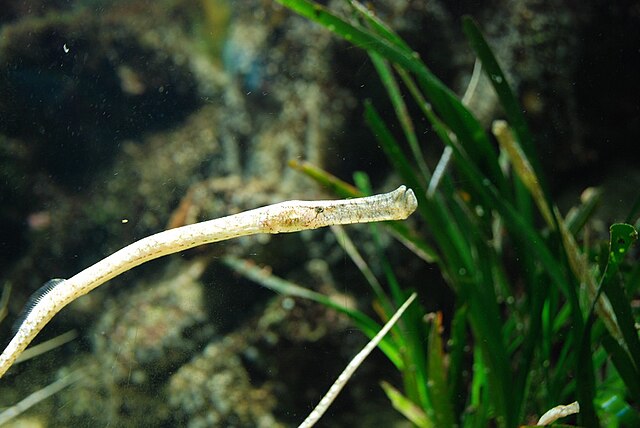
Pipefish
AdvancedA relative of seahorses with an elongated body. Distinctive swimming style and delicate form are attractive.
Difficulty
Advanced
Temperature
23〜26℃
Lifespan
3-5 years
Size
10-20cm
Diet
Frozen brine shrimp
About
Pipefishes (subfamily Syngnathinae, family Syngnathidae) are close relatives of seahorses, sharing the same family and distinguished by their elongated, pipe-like body form. They inhabit shallow marine environments — seagrass beds, mangroves, and coral reefs — worldwide. Their tube-like, fused jaws function like pipettes, creating powerful suction to capture plankton and micro-crustaceans. Like seahorses, males carry and incubate eggs in a brood pouch or on the ventral surface. Husbandry is challenging: their slow, deliberate feeding style makes them highly vulnerable to food competition from faster tankmates, so species-specific or calm, bottom-dwelling communities are recommended. Live brine shrimp and copepods are dietary staples. Gentle water flow is essential to prevent the animal from being swept by current.
Source: Wikipedia (CC BY-SA 4.0)
Basic Info
Origin
Shallow marine environments, seagrass beds, and coral reefs worldwide
Lifespan
3-5 years
Size
10-20cm
Temperature
23〜26℃
Diet
Frozen brine shrimp
Care Guide
Feeding
餌付けが難しく生き餌が必要なことも
References & Sources
Edited & verified by: br-choku editorial team
The taxonomic, regulatory, and husbandry data on this page are compiled and verified against the authoritative primary sources below.
Primary sources
Pipefish Listings
Loading latest listingsFind listings for this species