Sex Change and Harem Society in Wrasse | Practical Guide to Behavior Management and Male-Female Breeding in Aquariums
Wrasse fish are famous for "protogyny (female-first maturity)," a type of sex change from female to male. This practical guide covers the mechanics of harem society in aquariums, triggers for sex change, managing dominance relationships among multiple individuals, and the characteristics of representative species such as Thick-lipped Wrasse and Coris, enabling you to deeply understand and keep wrasse.
Key Takeaways
Wrasse fish are famous for "protogyny (female-first maturity)," a type of sex change from female to male. This practical guide covers the mechanics of harem society in aquariums, triggers for sex change, managing dominance relationships among multiple individuals, and the characteristics of representative species such as Thick-lipped Wrasse and Coris, enabling you to deeply understand and keep wrasse.
The Labridae family is one of the most species-diverse groups among marine fish, with approximately 600 species known. Its most distinctive characteristic is the sex-change ability called "protogyny (female-first maturity)." Opposite to the clownfish, wrasse undergo sex change in the "female-to-male" direction. Understanding and managing this trait correctly in the aquarium is the key to successful wrasse care.
✍️
BreederDirect Editorial
The BreederDirect editorial team specializes in care information for animals, covering veterinary care and breeding to deliver beginner-friendly guides.
Find Marine Fish on BreederDirect
Buy directly from verified breeders
Browse Related Listings
Find Marine Fish listings related to this article on BreederDirect. Buy directly from verified breeders.
Related Tools
Related Articles
Browse by Category
🪸Coral
🐠Marine Fish
🐟Tropical Fish
🐡Goldfish
🐟Medaka
🦎Reptiles
Share
How Protogyny Works
Wrasse in the wild live in a social structure called a "harem." One male (terminal phase male, abbreviated TM) manages multiple females and guards its territory. When the TM dies or disappears, the strongest female in the group undergoes sex change into a male. This process is completed in a few days to several weeks, and its appearance (body color) also changes to the vibrant coloration unique to males.
The trigger for sex change is "the absence of the TM (dominant male)." The same applies in aquariums: when the male individual is removed, females may attempt to undergo sex change.
Behavioral Characteristics Observed in Aquariums
Territorial behavior: Wrasse are generally highly territorial and aggressive toward conspecifics or related species (especially those with similar coloration or size). Multiple individuals in small aquariums often result in intense chasing.
Sand-burrowing: Many wrasse species (Coris, Dragon Wrasse, and others) have a habit of burrowing into the substrate at night or when threatened. The substrate must be at least 5 cm deep (10 cm recommended).
Color changes: Body color changes gradually from the juvenile phase (juvenile phase) → female (intermediate phase) → male (terminal phase). The same species can appear completely different, and beginners sometimes misidentify them as different species.
Jumping risk: Wrasse are active and swim near the water surface, making them prone to jumping out of uncovered tanks. Always use a lid with no gaps.
Characteristics of Representative Species
Species
Characteristics
Sickle-line Wrasse (small, sparrow-like)
About 8 cm in length. It swims through the crevices of live rock and also has a cleaner-like role, preying on parasites (copepods). Curious and easily tamed, it is an easy species for beginners to handle. Multiple individuals can be kept in large tanks, but single specimens are safer in small tanks.
Coris Wrasse (Dragon Wrasse)
Juveniles are beautiful aquarium fish with red and white daruma patterns, but they grow to over 30 cm and prey on crustaceans and small fish. If keeping from the juvenile stage, a large tank (180 cm or larger recommended) is needed to accommodate adult size.
Keel-spot Wrasse (Napoleon Wrasse)
A giant species that can reach up to 2 m. Not suitable for typical home aquarium keeping, but can be seen in aquariums.
Fairy Wrasse (Cirrhilabrus genus)
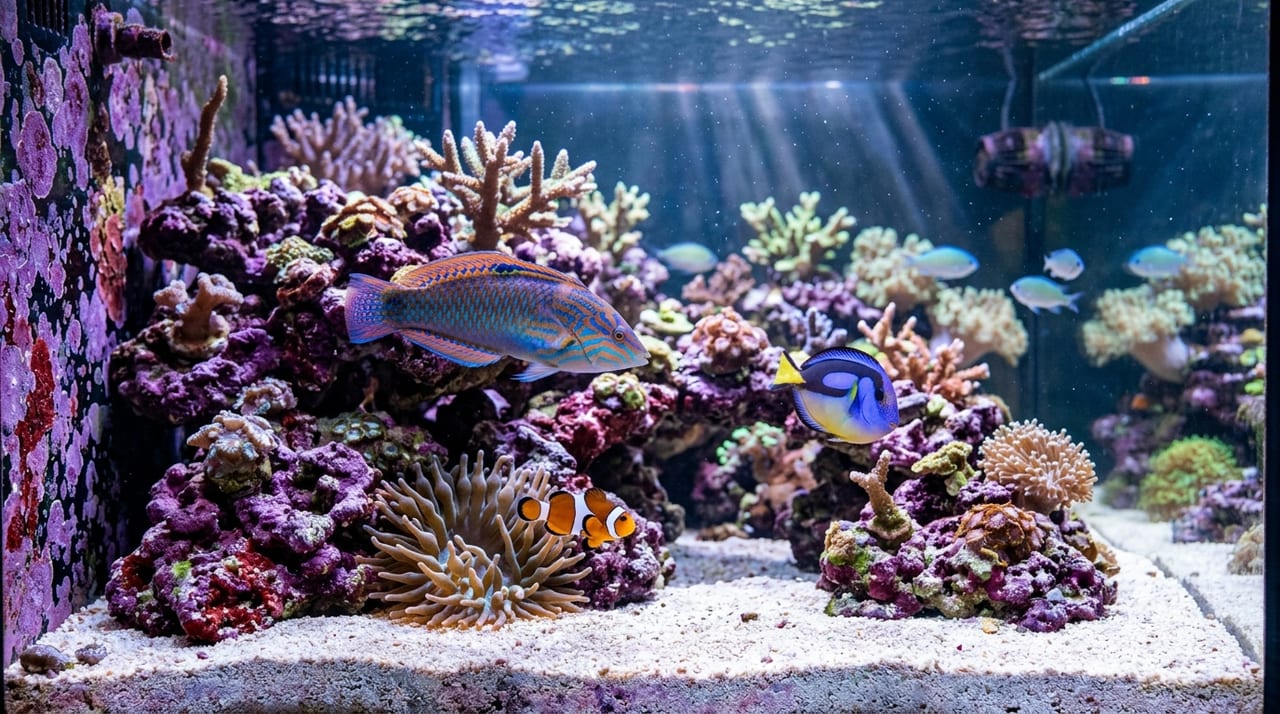
A small species about 5-10 cm in length, with males displaying particularly vibrant coloration. The ideal setup in a large reef tank is one male with multiple females.
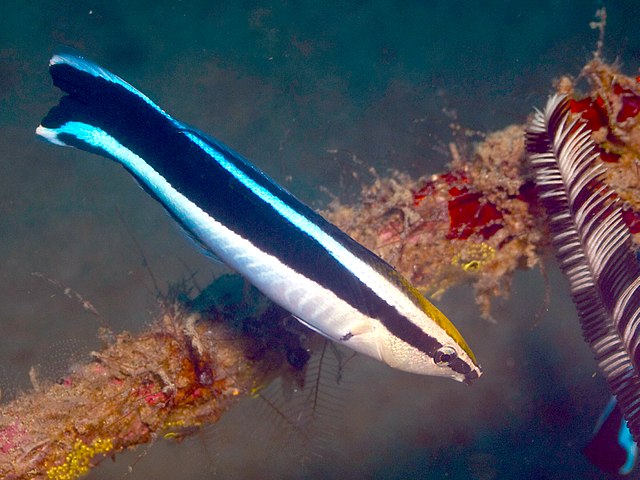
Cleaner Wrasse (Bicolor)
Forms cleaning stations and removes external parasites from other fish. An extremely specialized species whose cleaning behavior can be observed in the aquarium. However, sufficient quarantine treatment (white-spot disease prevention) should be completed before introducing to the main tank.
Practical Sex Management
Start with females: Male individuals have aggressive temperaments and are hostile to conspecifics or related species. Starting with females (intermediate phase) and allowing them to acclimate to the tank before waiting for sex change can reduce problems in some cases. However, individuals undergoing sex change may temporarily increase aggression.
Only one TM (male): Introducing multiple TMs of similar size will cause intense conflict. The basic rule is to keep only one male in the tank, keeping other individuals as females (or juveniles).
Size differences: When multiple wrasse must cohabitate, a size difference of 5 cm or more in body length can help establish dominance relationships more easily and sometimes avoid intense conflict.
Live rock layout: By providing multiple hiding places that obstruct the line of sight (behind live rock, cave-like structures), subordinate individuals gain refuge where they can escape, reducing stress.
Care Precautions
When keeping species with sand-burrowing habits, the substrate bed must be sufficiently deep. If the substrate is too shallow, the fish cannot burrow and experience stress, leading to loss of appetite and disease. Additionally, organic matter tends to accumulate in the substrate, so it is important to regularly siphon out debris from the sand.
Diet varies by species, but most wrasse prey on crustaceans (shrimp, crabs) and mollusks (shellfish). Species such as Fairy Wrasse prefer small plankton food (copepods, small shrimp). Adaptation to artificial feed is relatively easy, typically starting with frozen bloodworms or frozen shrimp and gradually transitioning to pellets.
By understanding sex change and social behavior in wrasse, behavior observation in the aquarium becomes more deeply enjoyable. By paying attention to changes in relationships among multiple individuals while raising them, you can experience the pleasure of recreating the social ecology of natural coral reefs in your tank.