Genicanthus (Swallowtail Angelfish) Overview
Genicanthus (Genicanthus genus) is a group of marine fish renowned as the most reef-safe genus within the angelfish family (Pomacanthidae). In Japan, they are distributed under the names "Swallowtail Angelfish" and "Genicanthus."
While other angelfish (Centropygae, Holacanthus, Pomacanthus, etc.) tend to nip at corals, Genicanthus species essentially do not pick at corals, making this their defining characteristic. As one of the few angelfish genera that can be kept with corals in a tank, they are highly favored by reef tank enthusiasts.
Genus Overview
- Family: Pomacanthidae
- Genus: Genicanthus
- Species count: Approximately 10-12 species
- Distribution: Indian Ocean and Western Pacific (with some related species in the Caribbean)
- Body length: 15-22 cm (varies by species)
Main Species and Characteristics
1. Genicanthus melanospilos (Blackspot Angelfish)
- Scientific name: Genicanthus melanospilos
- Common name: Zebra Angelfish
- Characteristics: Females are white with yellow horizontal stripes, while males are white with black spot patterns. One of the species with the most pronounced sexual dimorphism.
- Availability: High availability due to substantial import volume
2. Genicanthus watanabei (Watanabe's Angelfish)
- Scientific name: Genicanthus watanabei
- Characteristics: Females are pale blue-white with black horizontal stripes, while males display black vertical stripes. Found in Japanese waters as well.
- Availability: Relatively available as some specimens are collected domestically
3. Genicanthus lamarck (Lamarck's Angelfish)
- Scientific name: Genicanthus lamarck
- Characteristics: Characterized by white coloration with vertical black stripes. Both sexes have striping, but the arrangement differs. They have a rounded body shape and a gentle temperament.
- Availability: Readily available due to good import volume
4. Genicanthus bellus (Bellus Angelfish)
- Scientific name: Genicanthus bellus
- Common name: Ornamented Angelfish
- Characteristics: Beautiful contrast between pale blue and white. As a deep-water species, care difficulty is somewhat higher.
- Availability: Limited availability with higher pricing
Why They Are Reef-Safe
The reason Genicanthus do not pick at corals lies in their different feeding habits.
While other angelfish tend to feed heavily on benthos (bottom-dwelling organisms), coral polyps, and sponges, Genicanthus are planktivores. They prey on zooplankton that swim through the water column (copepods, mysids, brine shrimp, etc.), and therefore have virtually no habit of biting sessile coral polyps.
However, they are not "absolutely reef-safe," and it has been reported that individual specimens may occasionally nip corals under starvation conditions. Regular feeding and proper tank maintenance are essential prerequisites.
Required Tank Environment
Tank Size
Since Genicanthus are active mid-sized fish, a minimum 120 cm tank is recommended.
| Species | Minimum Recommended Tank |
|---|
| Small species (Watanabei, etc.) | 120 cm (300+ liters) |
| Medium-large species (Lamarck, etc.) | 150 cm (400+ liters) |
| Pair or group keeping (2+ individuals) | 180 cm (600+ liters) |
Since they also swim vertically, a depth of 50 cm or more allows for a larger activity range and reduces stress.
Water Parameters
| Parameter | Recommended Value |
|---|
| Temperature | 24-26°C |
| Specific gravity | 1.025-1.026 |
| pH | 8.1-8.3 |
| Ammonia/Nitrite | Undetectable |
| Nitrate | ≤20 mg/L |
Hiding Spaces and Water Flow
Genicanthus utilize gaps and caves in live rock for rest. Providing several live rock overhangs and caves increases their sense of security. Moderate water flow (10-20 times tank volume per hour) is sufficient.
Mechanisms of Sex Reversal
One of the most fascinating aspects of Genicanthus biology is protogynous sex reversal (female-first).
All individuals are born as females, and some mature individuals undergo sex reversal to become males. This is the opposite pattern from protandry in anemonefish (clownfish).
Sex Reversal in Captivity
When kept in groups (3+ individuals), the dominant female at the apex of social hierarchy may undergo sex reversal to become male. In such cases:
- Transformation to male progresses gradually over weeks to months
- Coloration changes dramatically, adopting a distinct male morph
- The sex-reversed male exhibits dominant behavior but usually maintains relatively low aggression
Sex reversal to male can occur in solitary or pair setups as well, but natural sex reversal is more readily observed in group settings.
Tank Mate Compatibility
Genicanthus have a relatively peaceful temperament and can be housed with most marine fish and corals.
Compatible Fish
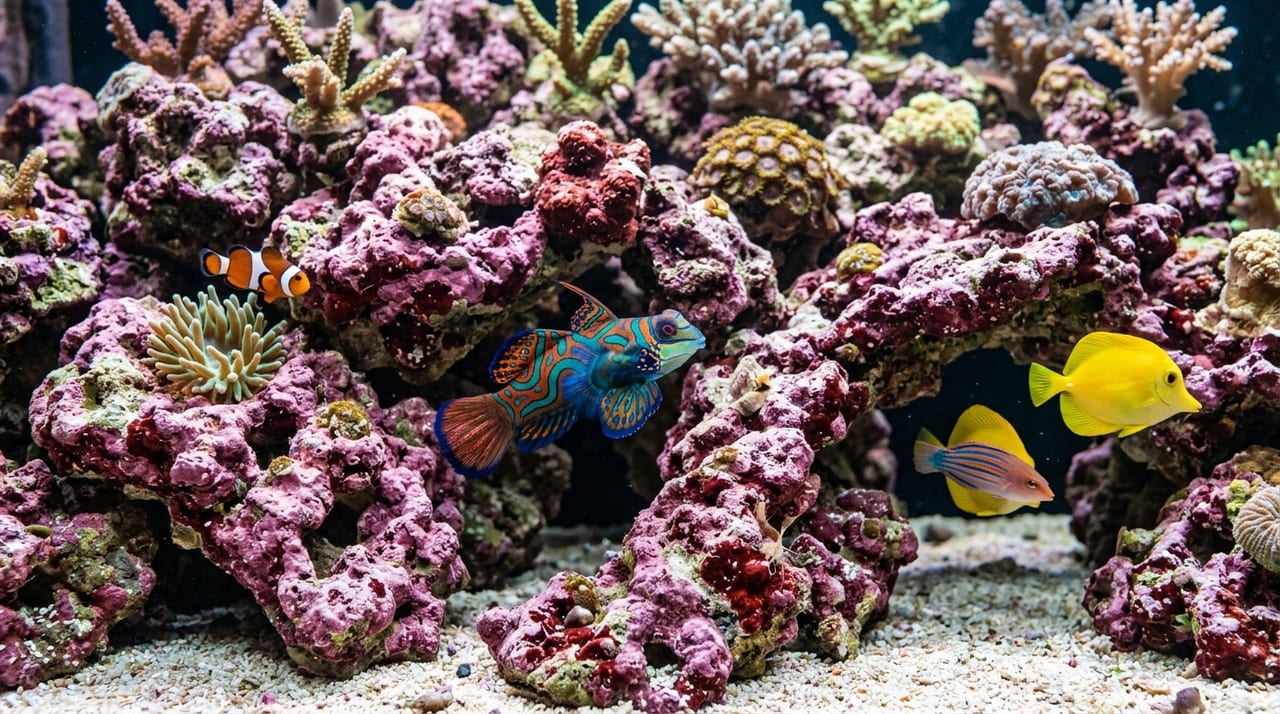
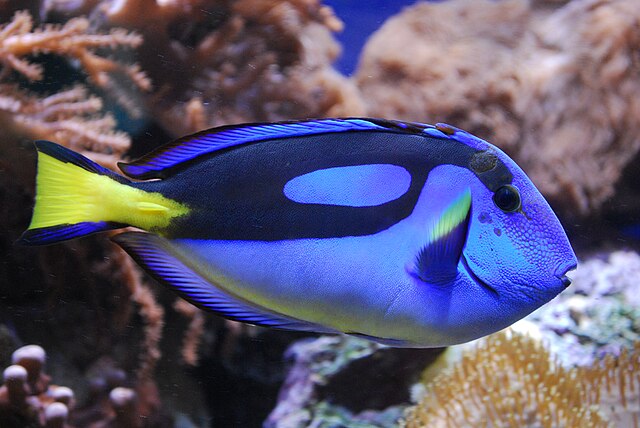
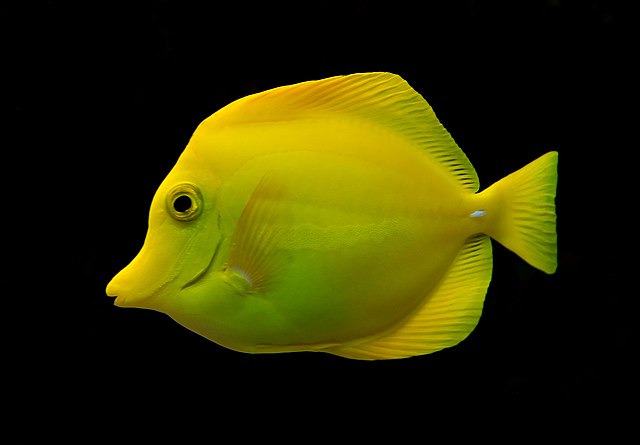
- Tangs: Yellow Tang, Blue Tang, etc.
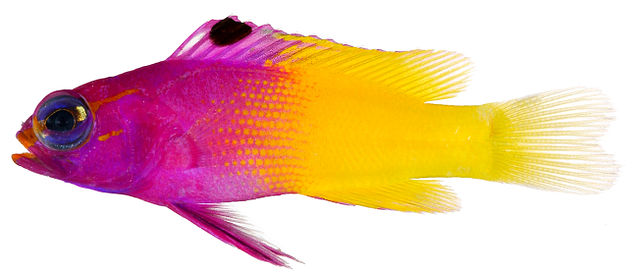
- Basslets & Grammas: Royal Dottyback, etc.
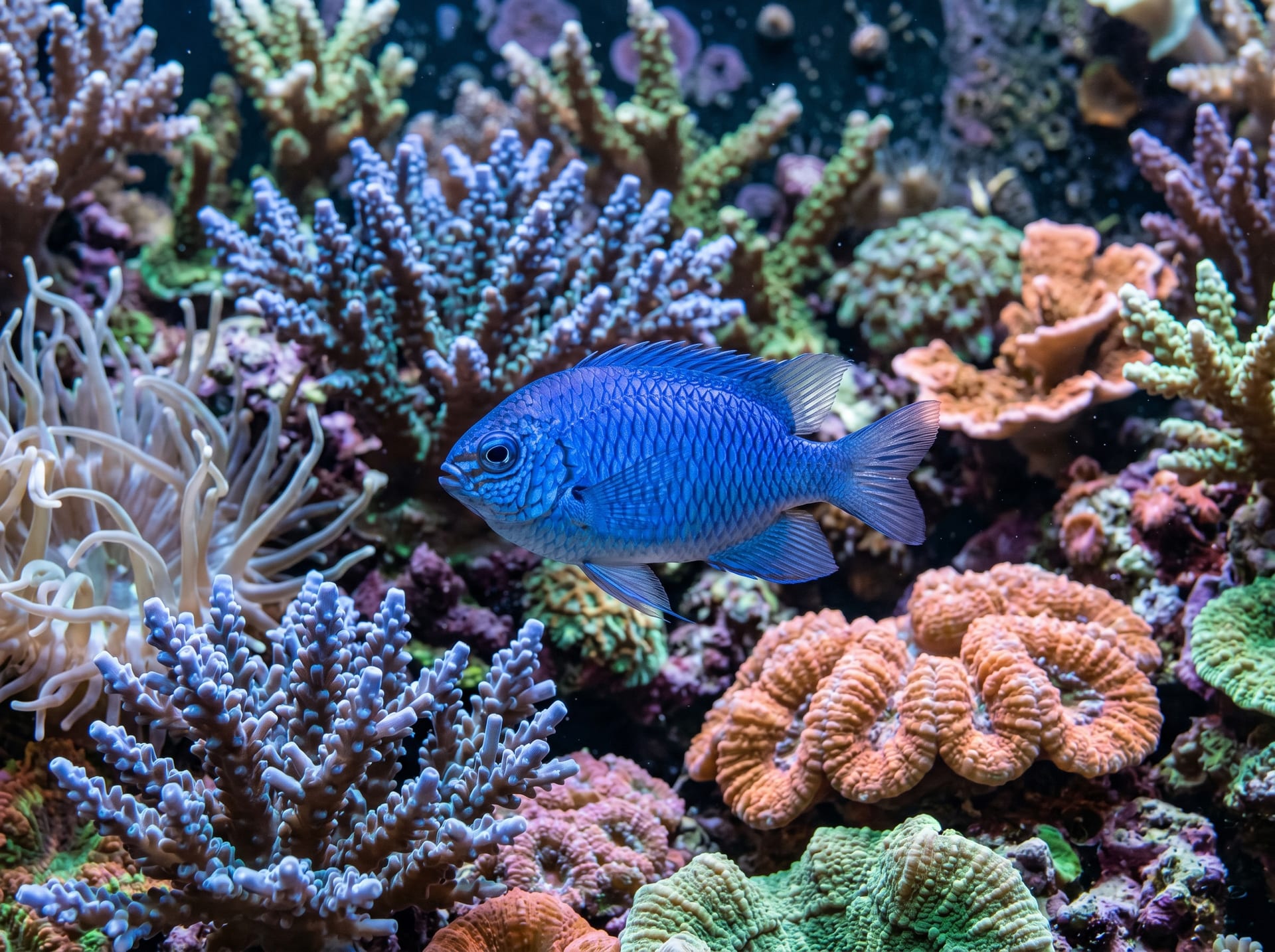
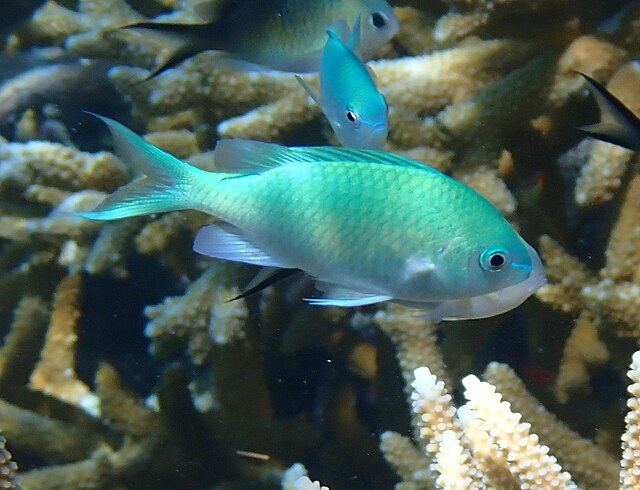
- Chromis: Small and peaceful
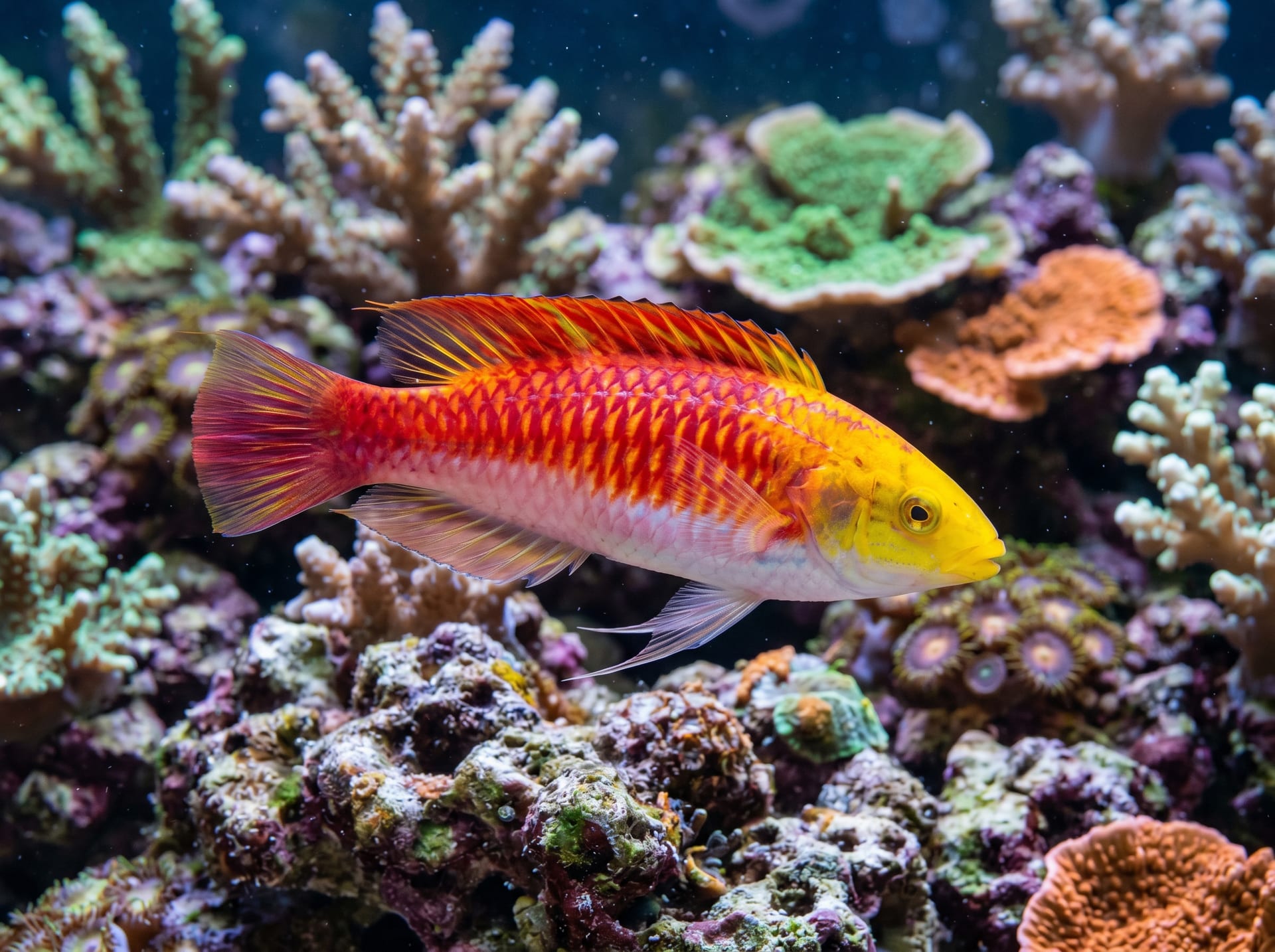
- Wrasses: Peaceful species like Flame Wrasses
Tank Mates Requiring Caution
- Multiple males of the same species: Strong territorial conflicts. Keep only one male per species per tank as a rule
- Large aggressive species: Groupers and large triggers can be problematic in undersized tanks
Harem Keeping
Keeping one male with multiple females in a "harem" configuration may result in observation of breeding behavior (courtship dancing, spawning). However, larval rearing is extremely difficult, and captive breeding typically remains observational.
Feeding Management
Since Genicanthus are planktivores, they respond enthusiastically to suspended foods.
Recommended Foods
| Food Type | Characteristics |
|---|
| Frozen Mysis Shrimp | High nutritional value and highly palatable |
| Frozen Brine Shrimp | Convenient standard food, ready to feed after thawing |
| Frozen Copepods | Small zooplankton matching natural feeding habits |
| Pellets (floating type) | May require extended acclimation to prepared foods |
Feeding Frequency and Quantity
- 2-3 times daily is ideal. Feed small amounts to avoid uneaten food
- Starvation is forbidden: Risk of coral-picking increases significantly
- Vitamin supplements (Selco, etc.) enhance frozen foods, improving immunity and coloration
Introduction Guidelines
Quarantine
Genicanthus are susceptible to ich (Cryptocaryon irritans). Quarantine newly acquired specimens for 4-6 weeks in a separate tank for treatment.
- Hyposalinity (low specific gravity treatment: 1.009-1.011) is most common
- Copper ion treatment is also effective but requires detailed protocols
- Transfer to the display tank only after confirming stable conditions during quarantine
Transport Stress and Initial Acclimation
Newly transported Genicanthus may lose color and rest on the bottom. This is usually transport-related stress and typically recovers within 2-3 days of rest. During this period, reduce lighting and minimize disturbance.
Health Management and Disease Prevention
Common Diseases
| Disease | Symptoms | Treatment |
|---|
| Ich (Cryptocaryon) | Small white spots on body, scratching behavior | Hyposalinity, copper treatment (in quarantine) |
| Marine velvet (Oodineum) | Gold dust-like coating, rapid breathing | Copper treatment (immediate quarantine essential) |
| Lymphocystis | White nodules on fins and body | Immune support, usually self-resolves |
Daily Monitoring Checklist
- Monitor feeding daily (loss of appetite is the first sign)
- Observe body for wounds and color changes
- Check for white spots and fine marks (especially on ventral and caudal fins)
- Watch for swimming abnormalities (resting on bottom, unsteadiness)
Summary: Genicanthus as Ideal Reef Tank Swimmers
Genicanthus (Swallowtail Angelfish) are ideal choices for adding color and activity to reef tanks due to these characteristics:
- Reef-safe diet: Virtually no coral-picking behavior
- Beautiful sexual dimorphism: Distinct coloration between sexes enhances aesthetic appeal
- The mystery of sex reversal: Female-to-male transformation observable in captivity
- Peaceful temperament: Compatible with most marine fish and corals
- Active swimming: Central water column activity brings vitality to the display
However, understand their susceptibility to ich and the need for large tanks before committing to their care. With proper preparation and diligent management, they are excellent reef fish that reward you with years of beautiful swimming behavior.