Care Guide for Koran Angelfish | Color Change from Juvenile to Adult, Tank Size, Feeding, and Tank Mates
Complete care guide for the Koran Angelfish (Pomacanthus semicirculatus). Covers the dramatic color transformation from juvenile striped patterns to the dignified coloration of adults, explains why tanks of 150 cm or larger are necessary, fish-only (FO) tank mate management, and prevention of white spot disease and lymphocystis.
Key Takeaways
Complete care guide for the Koran Angelfish (Pomacanthus semicirculatus). Covers the dramatic color transformation from juvenile striped patterns to the dignified coloration of adults, explains why tanks of 150 cm or larger are necessary, fish-only (FO) tank mate management, and prevention of white spot disease and lymphocystis.
Related Species
About the Koran Angelfish
The Koran Angelfish (Pomacanthus semicirculatus) is a large angelfish of the Pomacanthidae family distributed in coral reef zones of the Indian Ocean and Western Pacific. Known by its English name "Koran Angelfish," its most distinctive feature is the dramatic color transformation it undergoes between the juvenile and adult stages.
Juveniles (5–10 cm): Feature beautiful alternating semi-circular and arc-shaped stripes of white and light blue on a black body. The English name originates from the resemblance of these patterns to Arabic script.
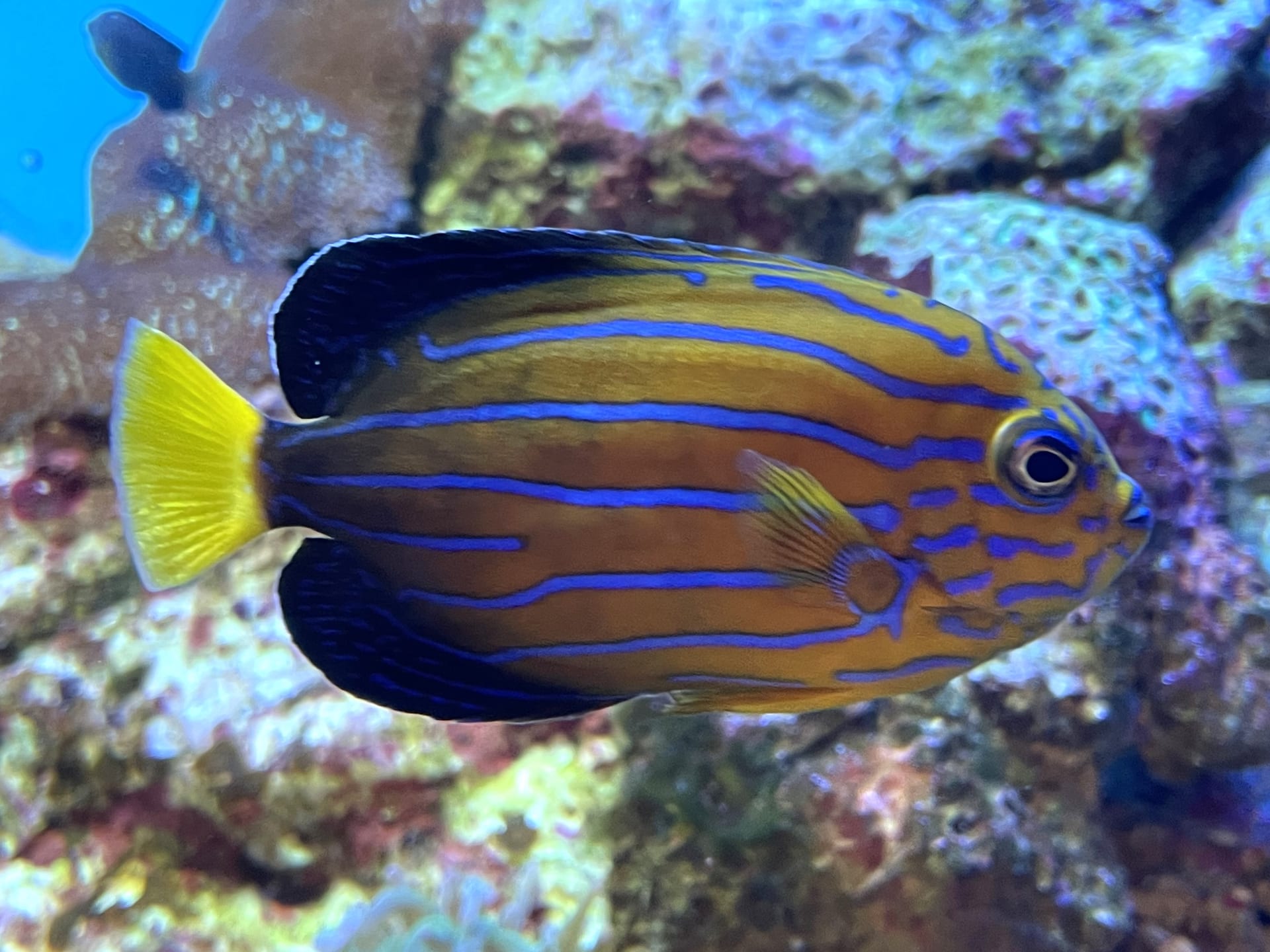
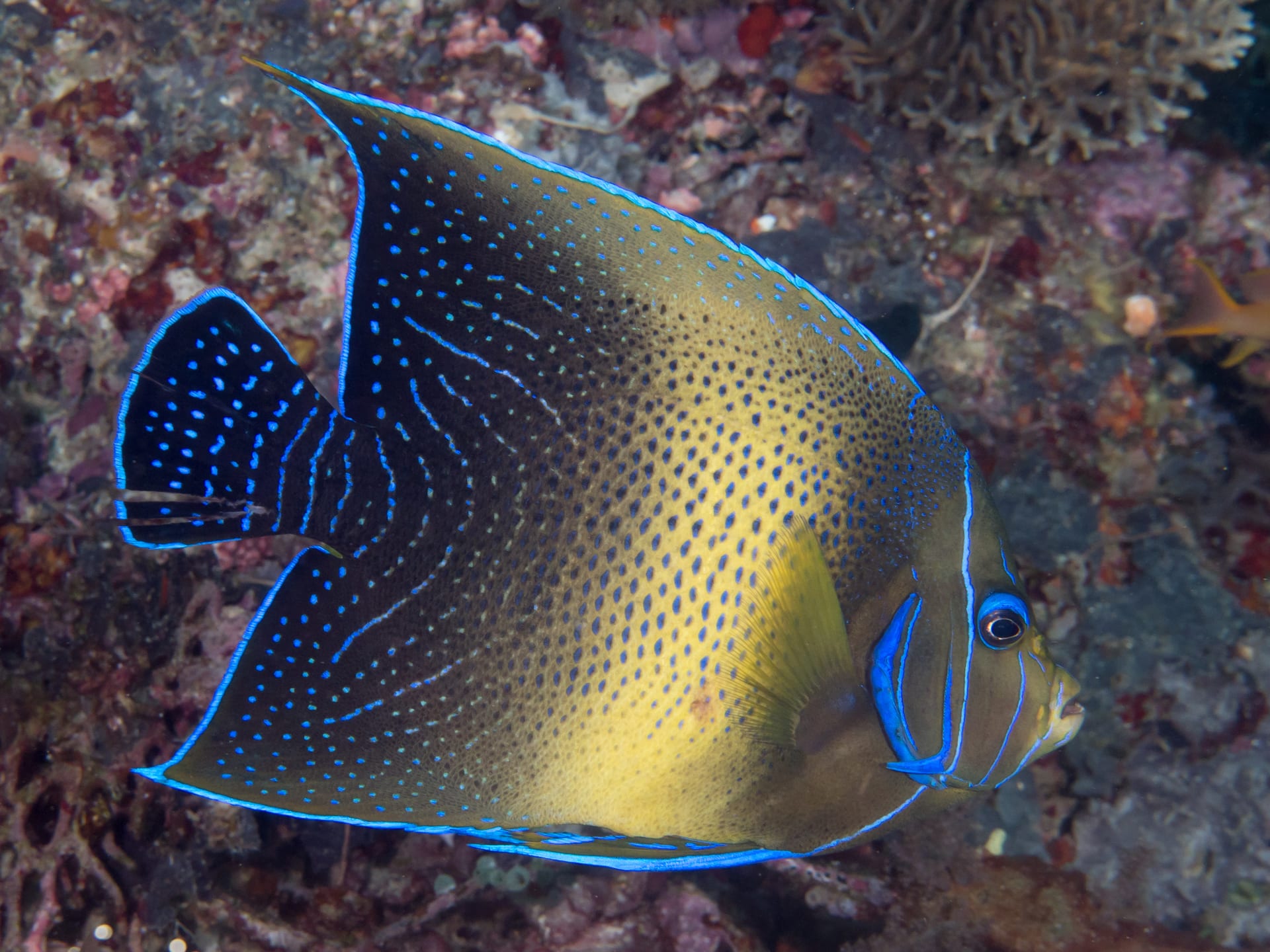
Adults (20–35 cm): The body transforms to a greenish-gray to brownish coloration, with black edges along each scale. The caudal fin is rimmed in yellow, and the dorsal and anal fins display vivid blue lines. The appearance differs dramatically from the juvenile stage.
Koran Angelfish Basic Data
| Item | Details |
|---|---|
| Scientific Name | Pomacanthus semicirculatus |
| English Name | Koran Angelfish / Semicircle Angelfish |
| Distribution | Indian Ocean and Western Pacific (Japan: South of Izu Peninsula to Okinawa) |
| Maximum Size | Approximately 35–40 cm (around 30 cm in aquariums) |
| Diet | Omnivorous (sponges, algae, coral polyps, small crustaceans) |
| Care Level | Intermediate to Advanced |
| Lifespan | 10–15 years or more |
Required Tank and Equipment
Tank Size
The Koran Angelfish is a large species that reaches over 30 cm as an adult.
- Juveniles to young fish (15 cm or less): 120 cm tank (200+ liters)
- Adults (20 cm or more): 150–180 cm tank or larger (400+ liters recommended)
It is advisable to plan for a large tank from the start, taking into account future growth.
Filtration
Powerful biological filtration is required.
- Sump-style overflow tank + protein skimmer (for large species)
- Substrate (sand bed) should be 5–8 cm thick to establish beneficial bacteria
- Regular replacement of activated carbon and absorbents to maintain water quality
Target Water Parameters
| Parameter | Recommended Value |
|---|---|
| Temperature | 24–26°C |
| Specific Gravity | 1.023–1.025 |
| pH | 8.1–8.4 |
| Ammonia / Nitrite | 0 |
| Nitrate | ≤30 mg/L |
Feeding and Diet Management
Foods to Feed
The Koran Angelfish is highly omnivorous and is relatively easier to feed than butterflyfish.
Recommended Foods
| Food | Description |
|---|---|
| Frozen Mysis | Nutrient-rich with high palatability |
| Frozen Krill (Euphausia) | Easy to use as a primary diet |
| Algae pellets / Spirulina | Plant-based nutrition (important for color maintenance) |
| Frozen brine shrimp | High palatability for young fish |
| Live sea squirts / clams | Effective for stimulating appetite |
Feeding Frequency: Twice daily (amount consumed in 2–3 minutes per feeding)
Compatibility with Corals
The Koran Angelfish is not reef-safe. It preys on soft coral polyps, LPS, SPS polyps, and sponges. Care should be in a fish-only (FO) system rather than a reef tank.
Observing Color Transformation
The color transformation of the Koran Angelfish progresses gradually over 10–20 cm of growth (typically 1–3 years).
- Juvenile (5–8 cm): Beautiful semi-circular striped pattern
- Young fish (10–15 cm): Stripes begin to break up; adult coloration starts to appear
- Sub-adult (15–25 cm): Transition phase (base color changes, stripes fade)
- Adult (25 cm and above): Adult coloration fully established
This transformation is observable in aquarium settings and is one of the joys of keeping this species.
Tank Mate Compatibility Notes
Same Species and Related Species Compatibility
Large angelfish are highly territorial with same or closely related species.
- Multiple individuals of the same species: Extremely dangerous. Generally keep 1 fish per tank (except pairs)
- Other Pomacanthus species: Species with similar size to Koran Angelfish are prone to compatibility issues
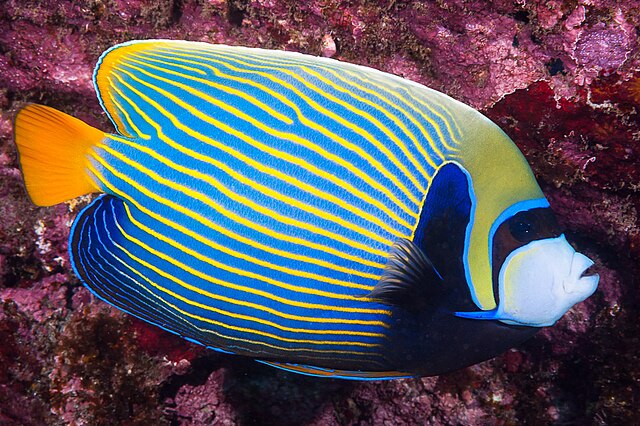
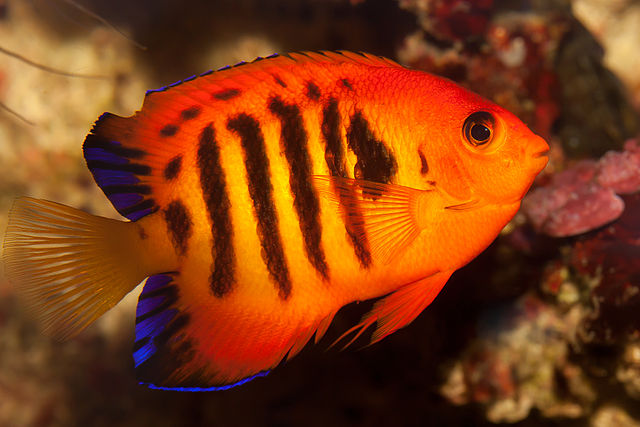
- Small angelfish such as Flame Angelfish or Twospotted Angelfish: Risk of aggression
Compatible Fish Species
- Large tangs (Sailfin Tang, Powder Blue Tang)
- Large wrasses (Clown Wrasse, etc.)
- Medium to large damselfish (though aggressive damselfish may also be problematic)
Diseases to Watch For
Lymphocystis
- Symptoms: White nodular or cauliflower-like protrusions on the body or fins
- Cause: Lymphocystis virus (may self-heal)
- Treatment: Water quality improvement and immune support (vitamin supplementation). Isolate in severe cases.
Marine White Spot Disease (Cryptocaryon)
Large angelfish are susceptible to white spot disease. Quarantine in a treatment tank for 4 weeks upon introduction is essential.
Keys to Long-Term Care
With proper care conditions, the Koran Angelfish is a hardy large angelfish capable of living 10+ years.
- Provide a sufficiently large tank (plan with adult size in mind)
- Keep only 1 individual of the same species per tank as a rule
- Maintain a fish-only setup with live rock that provides hiding spots while leaving ample open swimming space
- Continue regular water quality testing and partial water changes (1–2 times per week)
- Enjoy the transformation from the beautiful juvenile stripes to the dignified adult coloration
As a large angelfish with impressive presence and dramatic color transformation from juvenile to adult, the Koran Angelfish offers the ultimate experience in marine aquarium keeping.