Porcupinefish (Diodon hystrix) Care Guide | Tank Size, Feeding, Inflation Behavior & Health Management
Comprehensive guide to porcupinefish (Diodon hystrix) care. Covers large tank requirements, crustacean-based feeding plans, understanding tetrodotoxin, and creating husbandry conditions that minimize inflation behavior.
Key Takeaways
Comprehensive guide to porcupinefish (Diodon hystrix) care. Covers large tank requirements, crustacean-based feeding plans, understanding tetrodotoxin, and creating husbandry conditions that minimize inflation behavior.
About the Porcupinefish
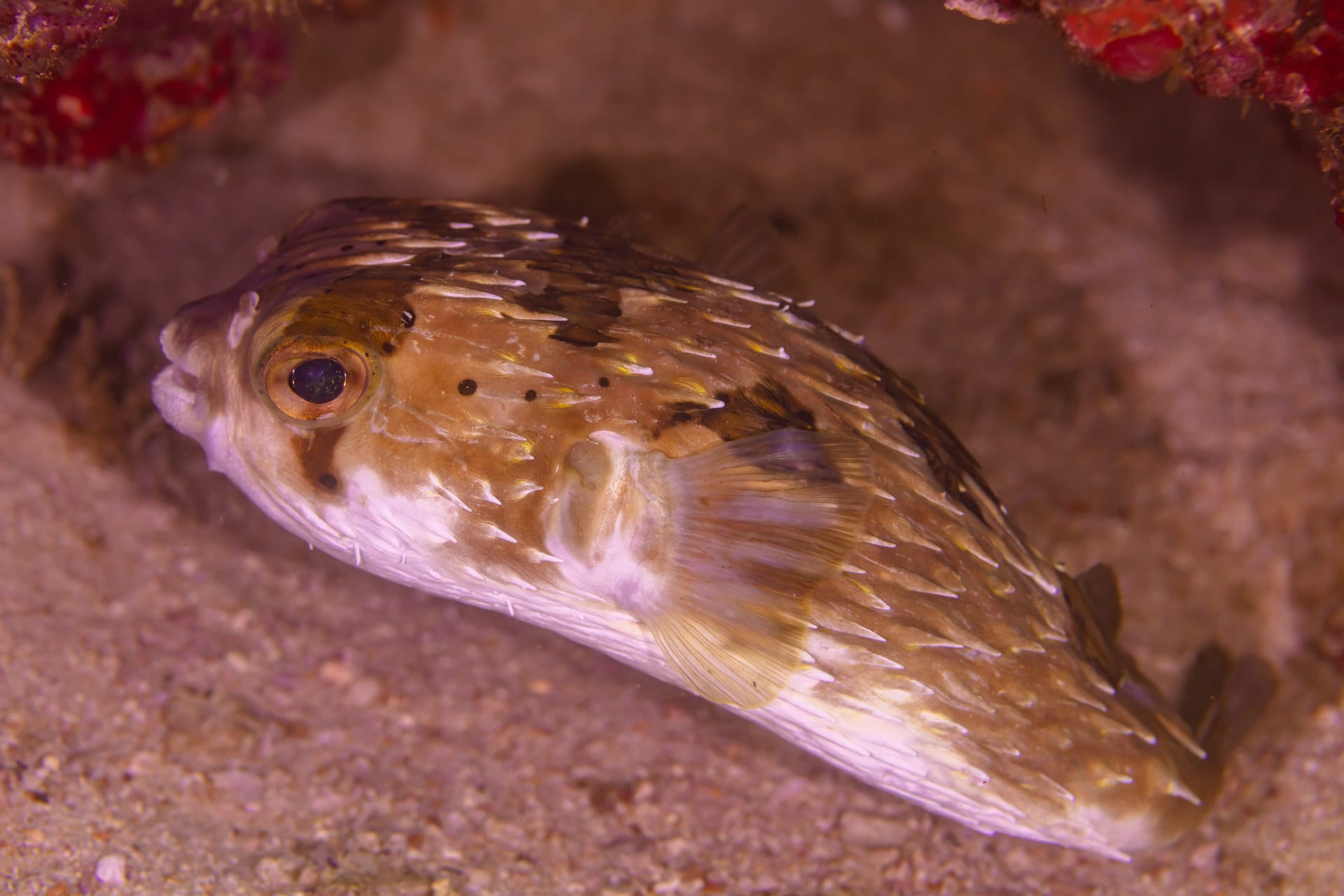
The porcupinefish (scientific name: Diodon hystrix) is a marine fish of the order Tetraodontiformes, family Diodontidae, renowned for its sharp spines covering its entire body (approximately 700 in total) and its defensive inflation behavior. Its English names are Porcupinefish or Spotted Porcupinefish. It is widely distributed throughout tropical and subtropical waters of the Indian, Pacific, and Atlantic oceans, inhabiting rocky and coral reef habitats.
✍️
BreederDirect Editorial
The BreederDirect editorial team specializes in care information for animals, covering veterinary care and breeding to deliver beginner-friendly guides.
Find Marine Fish on BreederDirect
Buy directly from verified breeders
Browse Related Listings
Find Marine Fish listings related to this article on BreederDirect. Buy directly from verified breeders.
Related Tools
Related Articles
Browse by Category
🪸Coral
🐠Marine Fish
🐟Tropical Fish
🐡Goldfish
🐟Medaka
🦎Reptiles
Share
Adult fish reach lengths of 50–90 cm, but specimens available in the aquarium trade typically range from 10–20 cm (juveniles or young adults). They are popular in aquariums for their endearing facial features and inquisitive temperament, but successful husbandry requires understanding their large adult size, omnivorous diet, and the presence of tetrodotoxin.
Required Tank Size and Equipment
Tank Size
Even if you begin with juveniles (10–15 cm), you must plan for their eventual growth to 50 cm or larger. Minimum tank volumes are 150+ liters for juveniles and 300+ liters (equivalent to a 180 cm aquarium) for adults. Because they are not strong swimmers relative to their body size and spend much time near rocks and the substrate, a tank with good depth is ideal.
Filtration
They are voracious feeders that consume whole crustaceans, producing substantial waste and easily polluting the water. A combination of external filter, sump, and protein skimmer is essential. Weekly 20–25% water changes will help maintain stable water quality.
Substrate and Décor
To protect their spines from damage, fine sand (coral sand) or a bare bottom is suitable. Rockwork is necessary, but avoid creating gaps where they could become wedged.
Diet and Feeding Management
Porcupinefish possess powerful beaks (jaws with fused tooth plates) and in the wild feed primarily on crustaceans and mollusks such as clams, sea urchins, crabs, and shrimp. Appropriate foods for aquarium feeding are as follows:
Frozen crustaceans: Frozen shrimp, crab legs, mussels, and clams as primary foods
Live shrimp and crabs: Occasional live foods encourage natural predatory behavior
Cut foods: Small pieces of octopus, squid, or white fish
Commercial marine pellets: Can be used as supplemental food (though many individuals refuse them)
Feed once or twice daily, only amounts that will be consumed completely. Always remove any uneaten food. Adults eat large quantities per meal, so feeding whole large food items reduces water pollution compared to broken pieces.
About Tetrodotoxin (TTX)
Although porcupinefish belong to a different family than pufferfish, some individuals accumulate tetrodotoxin (TTX) in their organs, skin, and spines. However, the fish does not produce TTX itself; rather, it accumulates TTX produced by bacteria such as Vibrio through the food chain. Captive-bred individuals typically accumulate less TTX than wild specimens, but avoid bare-handed contact, especially when the fish is inflated, as the skin and spines require careful handling.
Inflation Behavior and Proper Management
When threatened, porcupinefish inhale water or air to inflate into a sphere. While this is a natural defense mechanism against predators, frequent inflation in captivity causes stress and compromises health.
Primary causes of inflation behavior:
Rapid water quality changes (especially sudden shifts in salinity or temperature)
Excessive stress during netting
Harassment from aggressive tankmates
Sudden movements by the aquarist
After inflation, quickly return the fish underwater; if inflated with air, gently push it underwater to release the air (prolonged air inflation can be fatal). Acclimated individuals lose fear of their keeper and will rarely inflate.
Tankmate Considerations
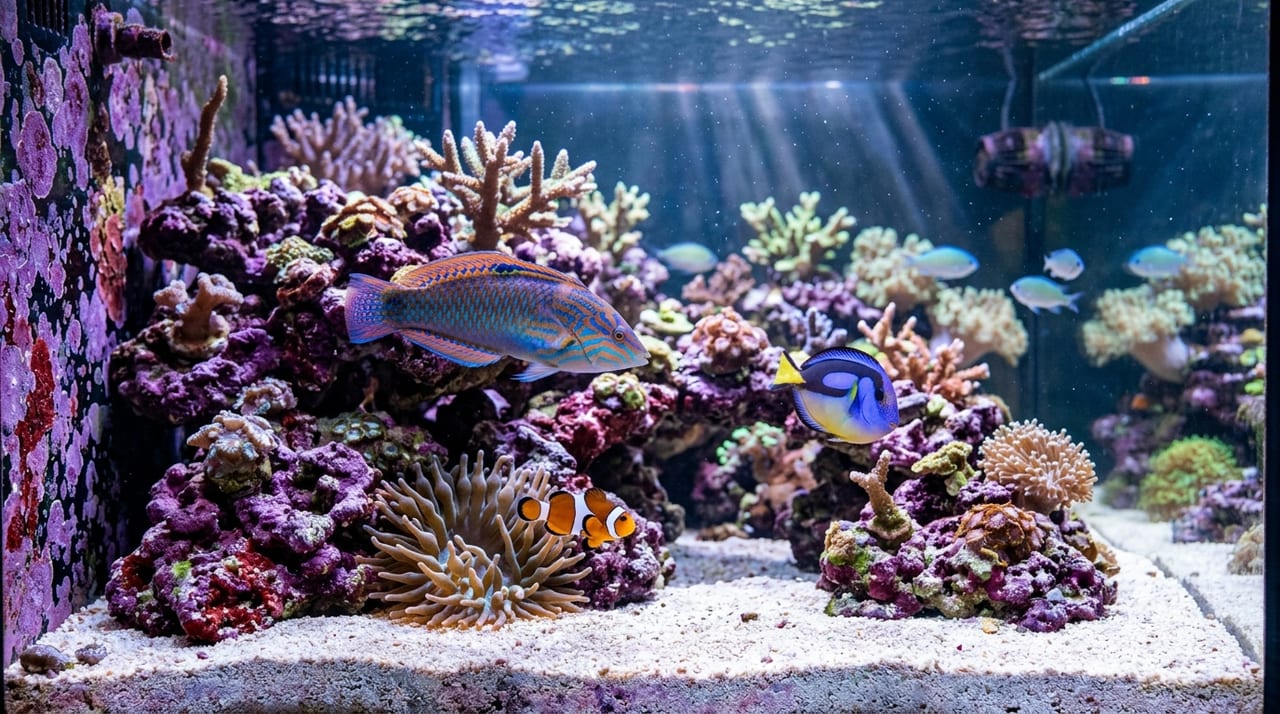
Incompatible with reef aquariums: Porcupinefish consume corals, sea cucumbers, sea urchins, and hermit crabs, making coexistence with reef tanks impossible. Fish-only aquariums are essential for their care.
Compatible species: Large, peaceful marine fish of equal or larger size (such as groupers, rockfish, and large angelfish) can often coexist successfully.
Incompatible species: Small fish such as clownfish and damselfish will be predated upon. Aggressive fish may bite the porcupinefish, and damage to the base of spines can lead to infection.
Common Diseases and Treatment
Ich (Cryptocaryon irritans)
Like pufferfish, porcupinefish have few scales and thin skin, making them susceptible to ich (Cryptocaryon irritans). However, they are highly sensitive to copper-based treatments and can be poisoned even at standard doses. Treatment should employ hyposalinity (reducing salinity to approximately 1.009) or ultraviolet sterilization; avoid copper-based medications or use them at minimal concentrations only.
Dermatitis and Spine Base Infections
Bacterial infection can occur at the base of spines damaged by netting or contact with other fish. If damage is observed, immediately isolate the fish and maintain pristine water conditions while considering antibacterial treatments such as malachite green or similar remedies.
Summary
Porcupinefish are personable and distinctive marine aquarium inhabitants, but successful husbandry requires understanding their large adult size, voracious feeding habits, and presence of toxins. Adequate tank volume, high-performance filtration, balanced crustacean-centered diet, and a calm environment that minimizes inflation behavior are key to long-term success. For well-prepared aquarists, they become wonderful companions for 15+ years.