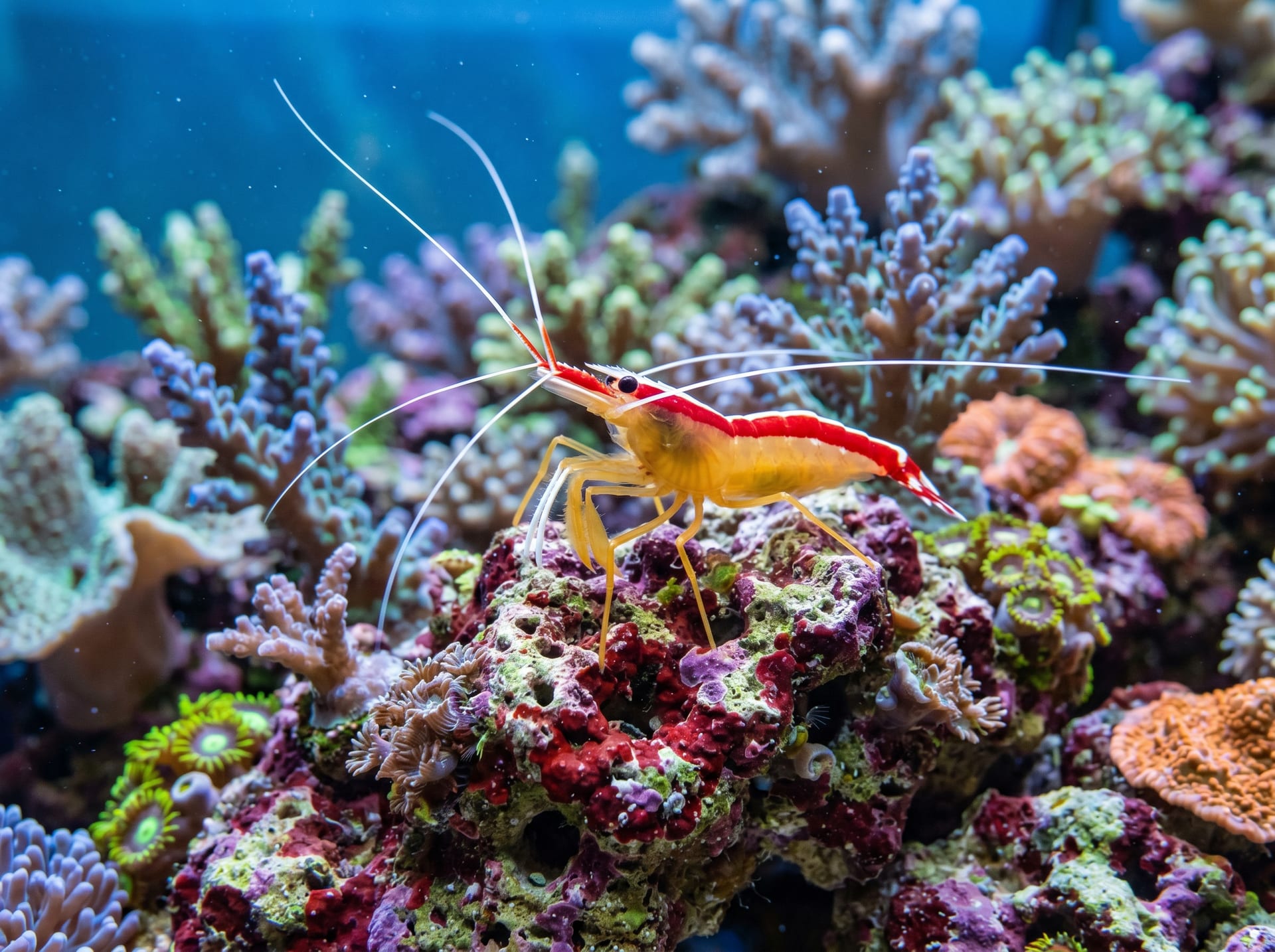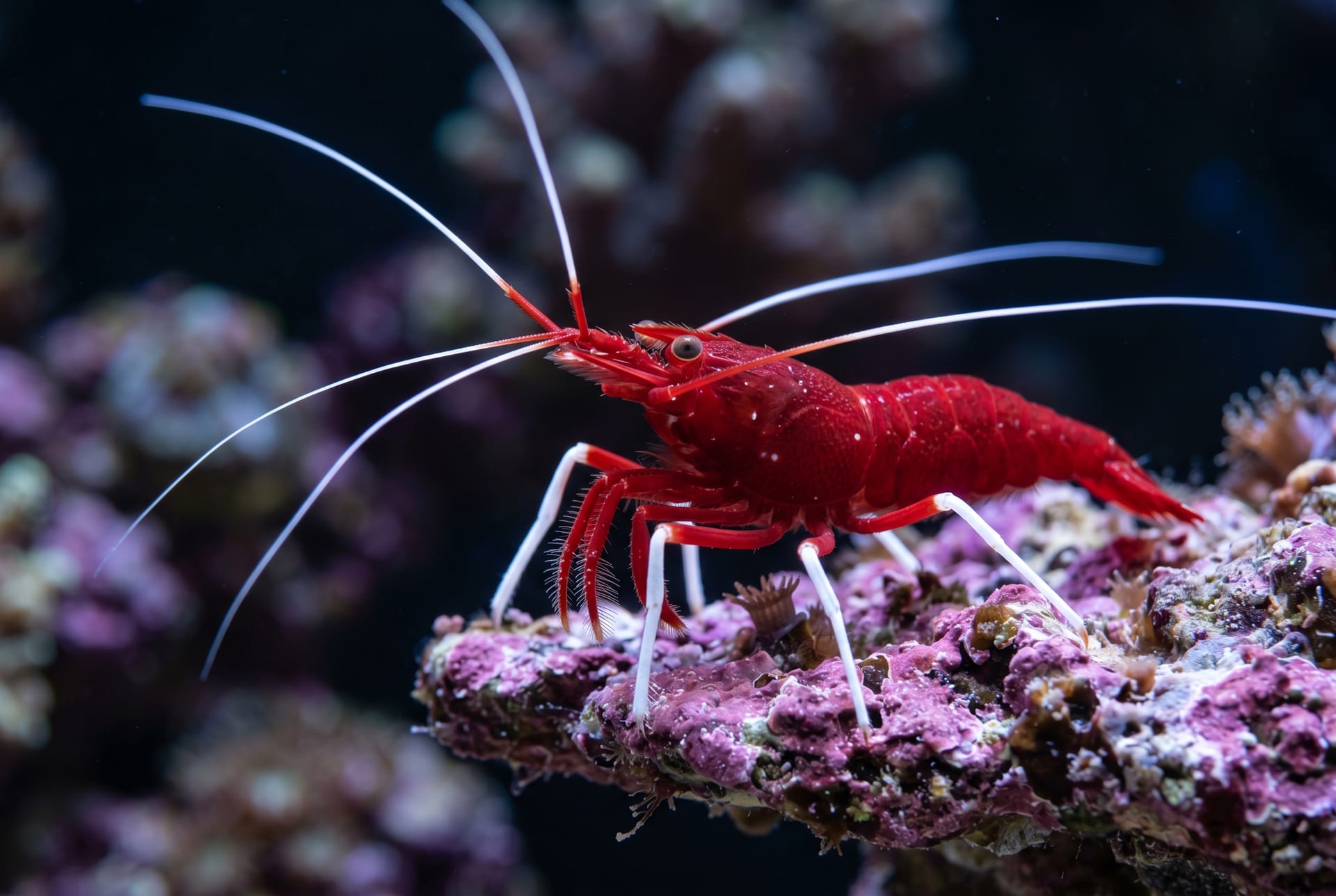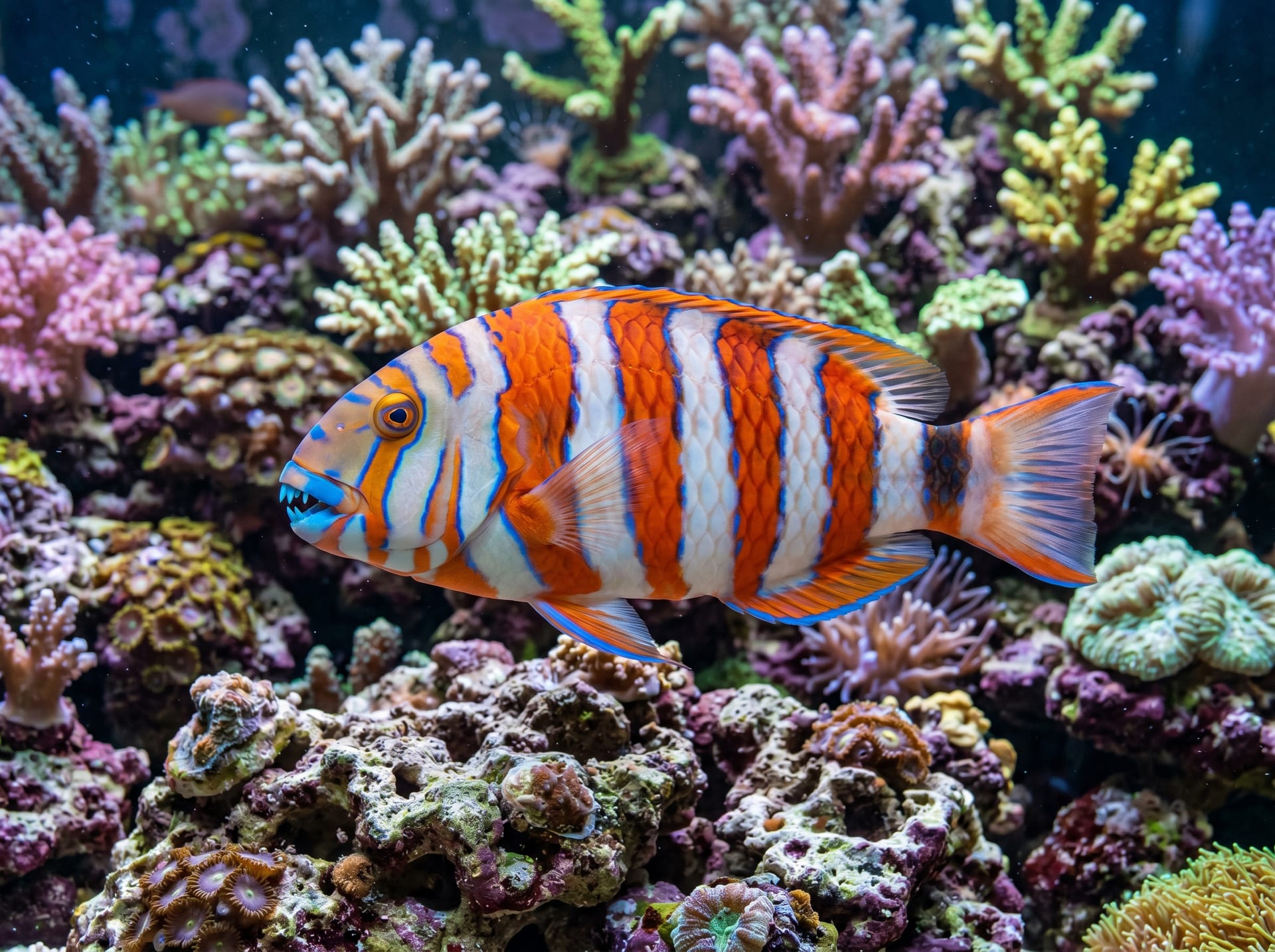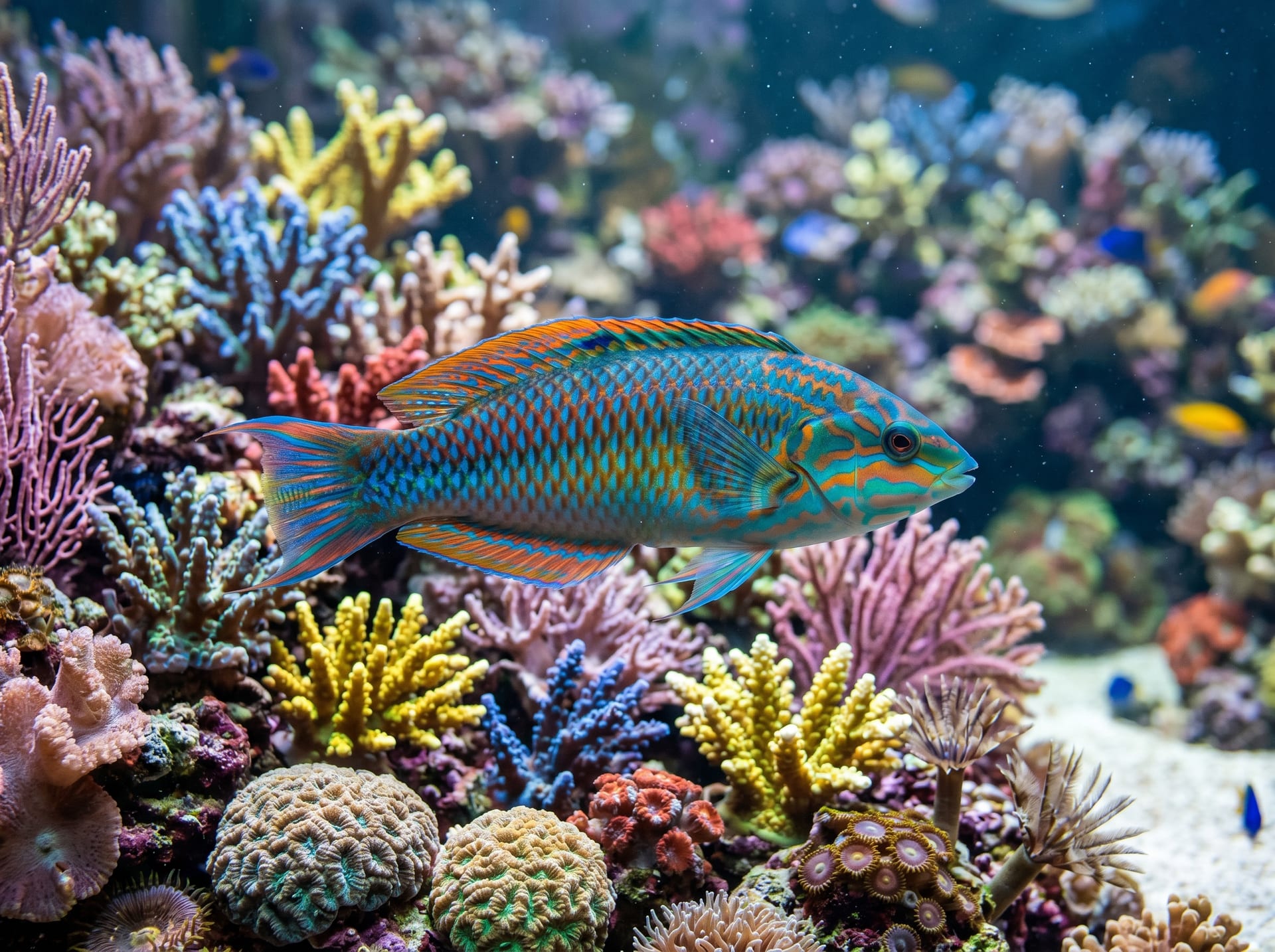
AI-generated image
Wrasse
BeginnerA colorful and diverse marine fish group. Sleeps buried in sand and also serves as a tank cleaner.
Difficulty
Beginner
Temperature
23〜26℃
Lifespan
5-10 years
Size
8-20cm
Diet
Frozen food, Artificial feed
About
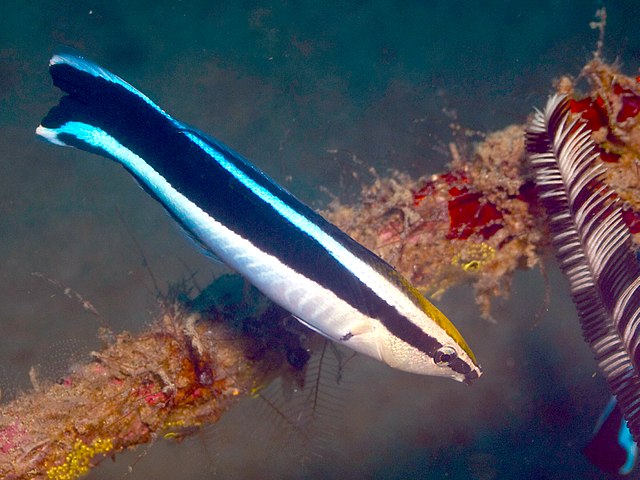
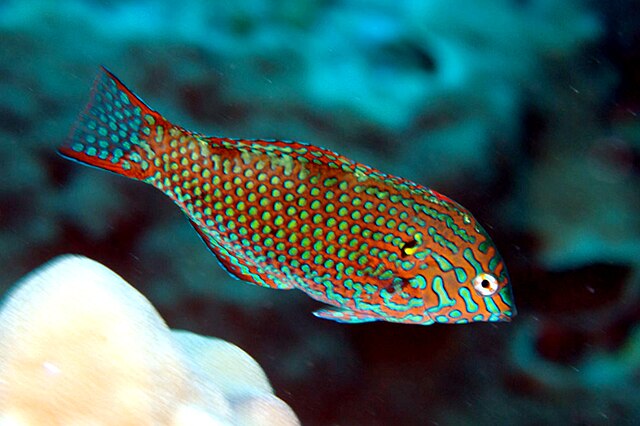
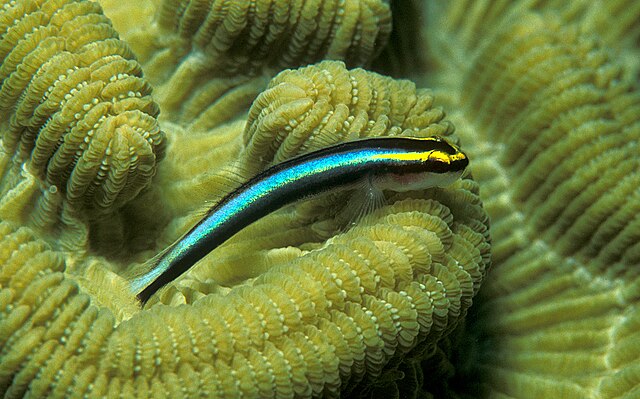
The wrasses (family Labridae) are one of the largest groups of marine fish, and many reach the aquarium trade — cleaner wrasse, yellow coris, melanurus and leopard wrasse among them. Adults range from 8 to 20 cm by species. Most are active swimmers by day and at night either bury in sand or spin a mucus cocoon to rest, which makes a fine sand bed of 5 cm or more a basic requirement. Many Halichoeres and Coris species earn their place as clean-up crew, eating flatworms, bristle worms and coral-eating snails. The same appetite extends to small shrimp and juvenile snails, and as strong swimmers they jump readily, so a lid is essential. Difficulty varies enormously between species, so check the individual species' diet before buying.
Source: Wikipedia (CC BY-SA 4.0)
Lifespan of the Wrasse
The Wrasse lives 5-10 years.
Size of the Wrasse
The Wrasse grows to 8-20cm.
Basic Info
Lifespan
5-10 years
Size
8-20cm
Temperature
23〜26℃
Diet
Frozen food, Artificial feed
Care Guide
References & Sources
Edited & verified by: BreederDirect editorial team
The taxonomic, regulatory, and husbandry data on this page are compiled and verified against the authoritative primary sources below.
Primary sources
Wrasse Listings
Loading latest listingsFind listings for this species