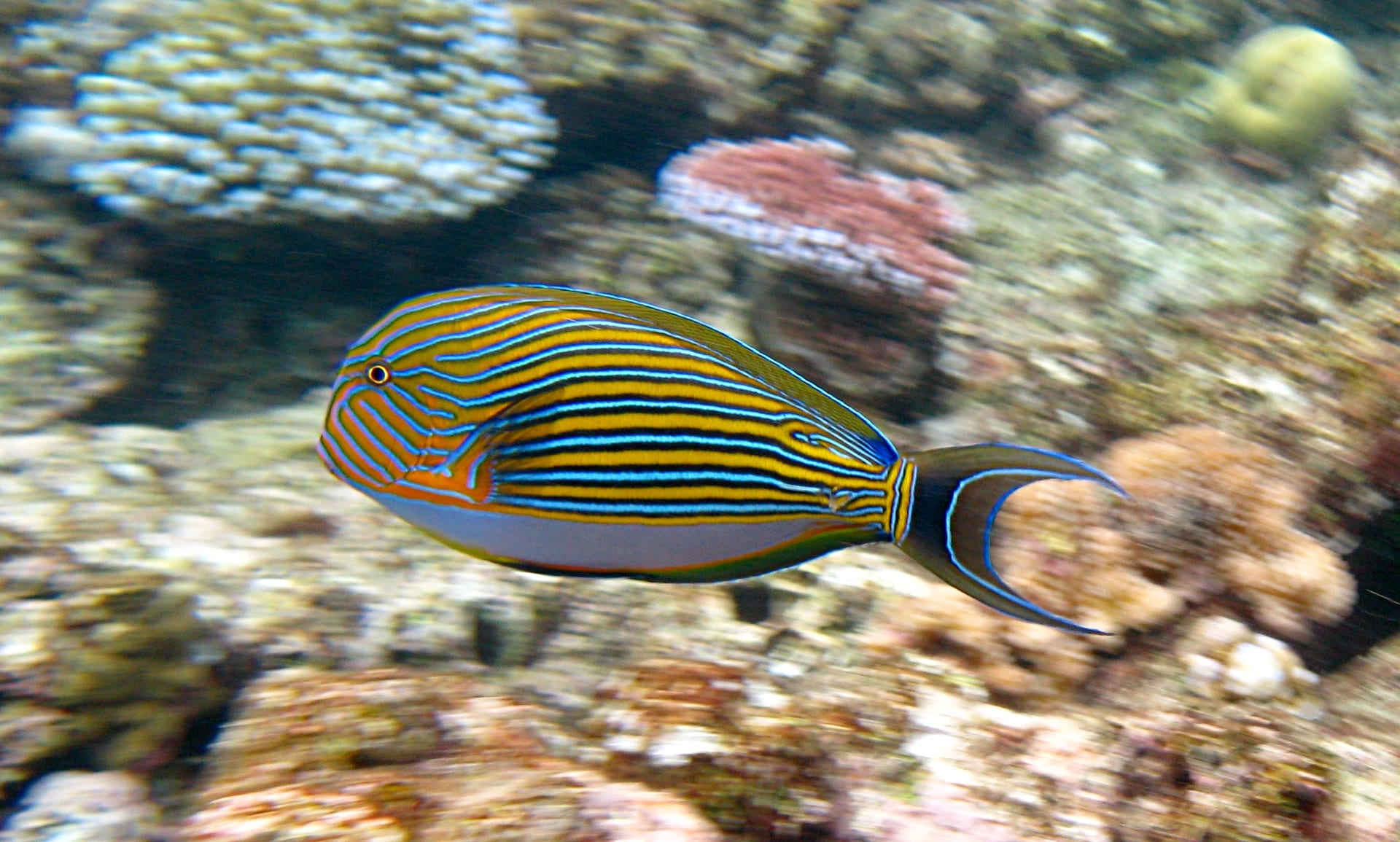
 © Toby Hudson / CC BY-SA 3.0
Clown Tang
The Clown Tang is one of the most strikingly colored surgeonfish in the hobby, with vivid blue lines edged in black running along a bright yellow body. This bold pattern makes it an instant showpiece in any tank, though its temperament is equally bold — it can be territorial, especially toward similarly shaped fish. Like other tangs, it carries a venomous spine near the base of its tail that calls for careful handling. Thriving requires pristine, oxygen-rich water with strong current and plenty of open swimming room, making this a fish best suited to experienced aquarists with a large, well-established system.
View Clown Tang encyclopedia →0% commission on your first sales!Register by September 30, 2026 and your first 2 sales are commission-free!
Breeder Wanted!
List on BreederDirect and sell directly to customers nationwide!
BreederDirect's 6 Transparency Promises
Every Marine Fish listing shows Breeder's full disclosure. No wild-caught. Captive-bred priority, tank size guidance, temperament details—transparent aquaculture.
- Captive-bred
- WYSIWYG
- Reef-safe
- Care Info Included
- Origin Disclosed
- Temperament Listed
Browse all 175 breeds
Care Difficulty
Reef-safe
Temperament
Verified breeders wanted for Marine Fish
Breeders are signing up now ahead of launch. Subscribe to be notified when new listings go live.
Getting alerts is free with a member account. When new listings match your saved search, we'll notify you by email and in-app.
Browse other categories
Verified breeders (preview)
Are you raising marine fish?
Register as a breeder and connect with buyers directly.
Apply as a breederAbout Clown Tang
The Clown Tang is a vividly colored surgeonfish with blue lines on a yellow body. Suited to experienced keepers, it needs a 950L+ tank, strong flow, and pristine water, and carries a venomous tail spine.
7 things to know before welcoming a Clown Tang
1Needs a Large Tank
Clown Tangs can reach up to 38cm and are strong swimmers, so a tank of at least 950 liters is recommended. Cramped quarters can lead to stress, poor coloration, or loss of appetite.
2Strong Flow and High Oxygen
This species comes from reef edges exposed to surge, so it needs strong water movement and pristine, oxygen-rich water. Size your pump and filtration with extra capacity to spare.
3Venomous Tail Spine
Like other surgeonfish, Clown Tangs carry a venomous spine near the base of the tail that can cause injury if handled carelessly. Take care when netting the fish or rearranging the tank.
4Territorial Temperament
This fish can be aggressive toward its own kind and similarly shaped tankmates, so tankmate selection matters. Adding it later in the stocking order can help reduce territorial conflicts.
5Prefers a Plant-Based Diet
In the wild, Clown Tangs feed mainly on algae. In captivity, offer dried seaweed and herbivore-formulated foods regularly to help keep them in good condition.
6Sensitive to Water Changes
Sudden shifts in water parameters can stress this fish and affect its health. Regular water changes and stable water quality go a long way toward keeping it healthy.
7Prepare Your Setup First
Before bringing home a Clown Tang, make sure you have a sufficiently large tank, strong filtration and pumps, and rockwork for cover. Since this is a long-term commitment, set everything up in advance.
Frequently asked questions about Clown Tang
- Q.Is the Clown Tang suitable for beginners?
- A.The Clown Tang is generally considered a fish for experienced aquarists. It requires a large tank, strong water flow, and pristine water quality, so it's best to gain some saltwater experience first.
- Q.Can it be kept with other fish?
- A.This species can be territorial and may fight with its own kind or similarly shaped tankmates. If mixing with other fish, provide a spacious tank with plenty of hiding spots.
- Q.How large a tank does it need?
- A.Clown Tangs can grow up to 38cm and are strong swimmers, so a tank of at least 950 liters is generally recommended. Give it plenty of open space to swim.
- Q.How long do Clown Tangs live?
- A.In the wild, one has been recorded living around 46 years. Lifespan in captivity depends on care conditions, so it's worth planning for a long-term commitment.
- Q.What should I feed it?
- A.In the wild, Clown Tangs feed mainly on algae, reflecting a strongly herbivorous diet. In captivity, offer dried seaweed and herbivore-formulated foods as the core of its diet.
Useful tools for Clown Tang care
Learn more about Clown Tang in the encyclopedia
View Clown Tang encyclopedia entry →
Care difficulty, lifespan, size and diet — all basics covered.
More in this category
Can't find the one you're looking for?
Post your wishes for free and breeders with matching animals will contact you with introductions.