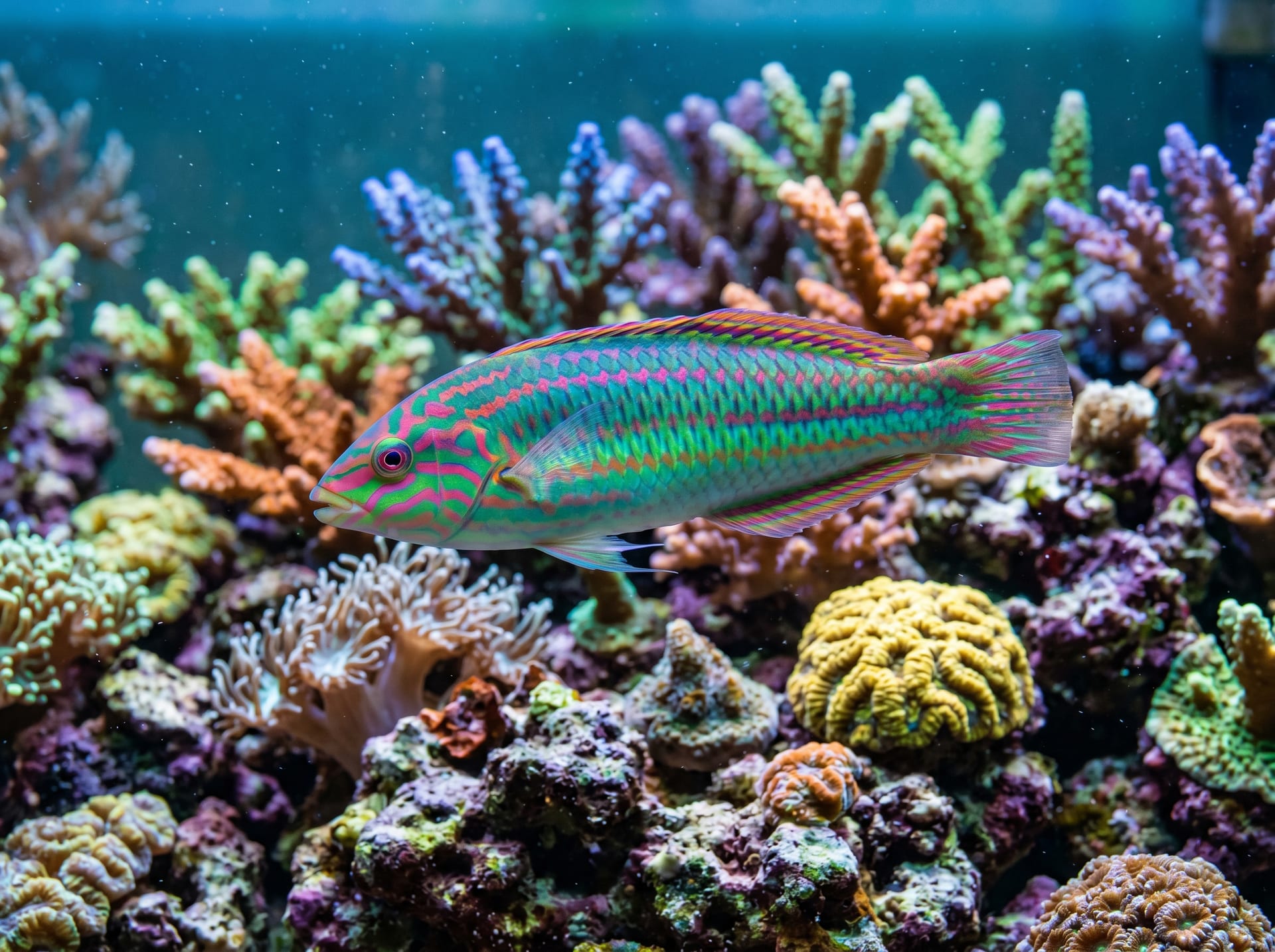
Melanurus Wrasse
The Melanurus Wrasse is a strikingly colored reef fish, its body streaked with vivid blue and green bands that make it stand out in any tank. Known for its calm, easygoing temperament, it's widely considered a great choice for beginner marine aquarists. It's also prized as a natural pest controller, readily hunting down flatworms and bristleworms that can otherwise become a nuisance in a reef system. Staying compact at around 10 to 12 cm as an adult, it adapts well to frozen and prepared foods, making feeding fairly straightforward. With a typical lifespan of five to eight years, it can be a long-term companion in your aquarium.
View Melanurus Wrasse encyclopedia →0% commission on your first sales!Register by September 30, 2026 and your first 2 sales are commission-free!
Breeder Wanted!
List on BreederDirect and sell directly to customers nationwide!
BreederDirect's 6 Transparency Promises
Every Marine Fish listing shows Breeder's full disclosure. No wild-caught. Captive-bred priority, tank size guidance, temperament details—transparent aquaculture.
- Captive-bred
- WYSIWYG
- Reef-safe
- Care Info Included
- Origin Disclosed
- Temperament Listed
Browse all 175 breeds
Care Difficulty
Reef-safe
Temperament
Verified breeders wanted for Marine Fish
Breeders are signing up now ahead of launch. Subscribe to be notified when new listings go live.
Getting alerts is free with a member account. When new listings match your saved search, we'll notify you by email and in-app.
Browse other categories
Verified breeders (preview)
Are you raising marine fish?
Register as a breeder and connect with buyers directly.
Apply as a breederMelanurus Wrasse key facts
- Care level
- Beginner-friendly
- Lifespan
- 5-8 years
- Size
- 10-12cm
- Temperature
- 24〜26℃
- Diet
- Frozen food, Pellets
- Water Temperature & Quality
- Keep stable seawater conditions at 24-26°C and specific gravity 1.023-1.025. Hardy, but avoid sudden changes.
- Housing
- It buries itself in sand at night or when startled, so lay at least 5cm of fine sand. An active swimmer, so leave open swimming room too.
- Diet & Feeding
- Feeds readily on frozen and prepared foods. It also eats coral pests such as flatworms, bristleworms and small snails.
- Tank Mates & Compatibility
- Generally peaceful but avoid keeping with its own kind. Small shrimp and juvenile snails may be eaten, so take care with invertebrates.
- Health & Cautions
- Prone to jumping out, so always fit a gap-free lid. Its colors intensify with age, so aim for long-term care.
About Melanurus Wrasse
Melanurus Wrasse: a striking blue-and-green reef fish that hunts flatworms and bristleworms. Beginner-friendly, growing to 10-12cm with a 5-8 year lifespan, and easily takes to frozen and prepared foods.
7 things to know before welcoming a Melanurus Wrasse
1Loves to Burrow in Sand
Melanurus Wrasses dive into the sand at night or when startled, so a deep enough bed of fine sand is essential. Make sure your substrate is soft and deep enough for this natural burrowing behavior.
2Strong Jumper — Watch Out
This species is a notably strong jumper and can easily leap out of an open tank. A secure lid or covered gaps are strongly recommended to prevent jumping accidents.
3Calm but Territorial
Melanurus Wrasses are generally peaceful and mix well with other fish, but they can become territorial toward their own kind or similarly patterned wrasses. Keep this in mind if you plan to house more than one in the same tank.
4Natural Pest Control
They actively hunt flatworms and bristleworms, two common nuisances in reef tanks. Many keepers add this wrasse specifically to help manage these pests.
5Risk to Small Tankmates
While great at pest control, they may also prey on small crustaceans and snails. Check compatibility carefully if your tank relies on shrimp or snails.
6Takes to Prepared Foods
Melanurus Wrasses adapt fairly easily to frozen and prepared foods. They may hide at first after introduction, but their appetite typically stabilizes as they settle in.
7Shy at First
Right after introduction, it's common for this wrasse to burrow into the sand or hide among rockwork out of caution. Give it a few days to a few weeks to fully adjust to its new environment.
Frequently asked questions about Melanurus Wrasse
- Q.Is it safe to keep in a reef tank?
- A.They generally don't eat coral itself. However, they may prey on small crustaceans or snails, so check compatibility if you keep shrimp or similar tankmates.
- Q.Can it be kept with other fish?
- A.Yes, its calm temperament makes it compatible with many tankmates. Just be cautious about housing it with its own species or similarly patterned wrasses, as territorial disputes can occur.
- Q.Is a sand bed absolutely necessary?
- A.Yes — this wrasse dives into the sand at night or when startled, so a deep enough sand bed is recommended. Without a place to burrow, it can become stressed.
- Q.What should I feed it?
- A.Frozen and prepared foods make up the core of its diet. It also happily eats flatworms and bristleworms found in the tank.
- Q.Is this a good fish for beginners?
- A.Yes, it's generally considered a beginner-friendly species that's hardy and takes to prepared foods easily. With basic care — good water quality and a secure lid to prevent jumping — it's a solid choice for first-time marine keepers.
Useful tools for Melanurus Wrasse care
Learn more about Melanurus Wrasse in the encyclopedia
View Melanurus Wrasse encyclopedia entry →
Care difficulty, lifespan, size and diet — all basics covered.
More in this category
Can't find the one you're looking for?
Post your wishes for free and breeders with matching animals will contact you with introductions.