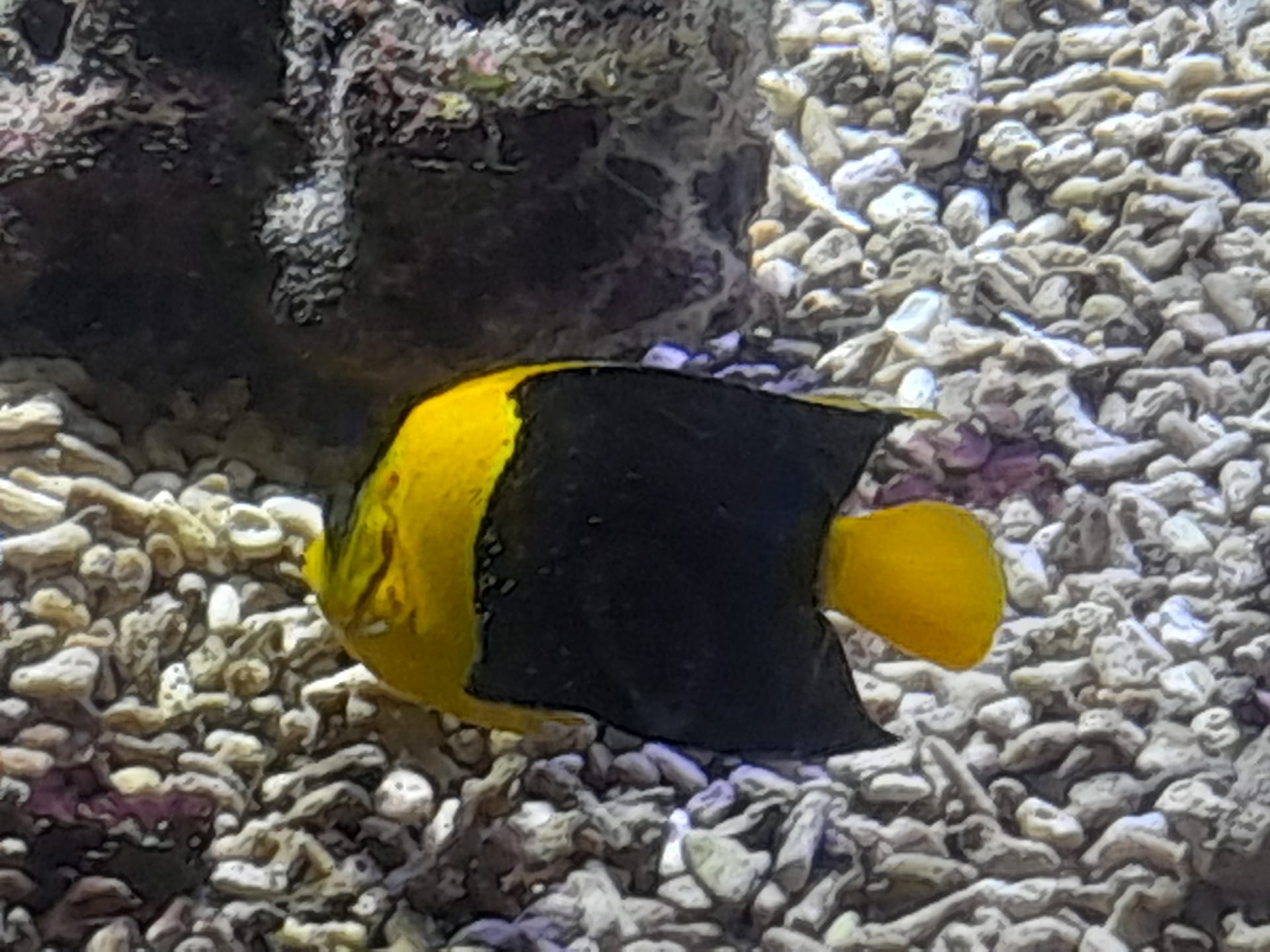
 © Etrusko25 / CC BY-SA 4.0
Purplemask Angelfish
The Purplemask Angelfish is a small, strikingly colored angelfish, its lower body glowing yellow while deep blue-purple sweeps across the head, dorsal fin, and tail. Found on reefs from the Ryukyu Islands to the Izu Islands, it has a distinctive wild habit of resting upside down beneath cave ceilings and rocky overhangs. Reaching only about 12cm at most, it's compact yet carries a striking presence in any tank. That said, it's notoriously reluctant to accept prepared foods, placing it firmly among the angelfish best suited to experienced marine aquarists.
View Purplemask Angelfish encyclopedia →0% commission on your first sales!Register by September 30, 2026 and your first 2 sales are commission-free!
Breeder Wanted!
List on BreederDirect and sell directly to customers nationwide!
BreederDirect's 6 Transparency Promises
Every Marine Fish listing shows Breeder's full disclosure. No wild-caught. Captive-bred priority, tank size guidance, temperament details—transparent aquaculture.
- Captive-bred
- WYSIWYG
- Reef-safe
- Care Info Included
- Origin Disclosed
- Temperament Listed
Browse all 175 breeds
Care Difficulty
Reef-safe
Temperament
Verified breeders wanted for Marine Fish
Breeders are signing up now ahead of launch. Subscribe to be notified when new listings go live.
Getting alerts is free with a member account. When new listings match your saved search, we'll notify you by email and in-app.
Browse other categories
Verified breeders (preview)
Are you raising marine fish?
Register as a breeder and connect with buyers directly.
Apply as a breederPurplemask Angelfish key facts
- Care level
- Advanced
- Lifespan
- 5-10 years
- Size
- Up to about 12cm
- Temperature
- 22〜26℃
- Diet
- Live foods at first, then frozen mysis and shrimp, spirulina and marine algae, pellets
- Notes
- Often accepts only live food at first. Choose a feeding specimen; captive-bred fish are preferable when available.
- Container & Tank
- 265L or larger with many cave-like hiding places for the shy settling-in period.
- Water Temperature & Quality
- 22-26C, pH 8.1-8.4, SG 1.020-1.025.
- Diet & Feeding
- Start with live foods and step down to frozen mysis and shrimp, spirulina, algae and pellets.
- Tank Mates & Compatibility
- Becomes assertive toward similar-shaped fish as it grows. May nip invertebrates and clams; use caution in reef tanks.
About Purplemask Angelfish
The Purplemask Angelfish is a small, vividly colored angelfish found from the Ryukyu to Izu Islands, growing to about 12cm at most. Notoriously picky eaters, they're best suited to experienced marine aquarists.
7 things to know before welcoming a Purplemask Angelfish
1Feeding Can Be Tricky
Purplemask Angelfish are notoriously reluctant to accept prepared foods, which is why they're considered a fish for experienced keepers. Have a few backup options ready, such as live and frozen foods, and expect a slow, patient acclimation process rather than quick results.
2Needs Caves and Overhangs
In the wild, this species rests upside down beneath cave ceilings and rocky overhangs, and it looks for similar shelter in a tank. Build plenty of live rock crevices and overhangs into the aquascape so it has somewhere to retreat and feel secure.
3Compact Size, Real Space Needs
At a maximum of about 12cm, it's one of the smaller angelfish, but it still needs a tank large enough to combine open swimming room with hiding spots. Keeping it as the sole angelfish in the tank is generally the safer approach.
4Watch Tankmate Choices
Angelfish can be territorial toward similarly shaped or colored fish, including their own relatives. When adding tankmates, provide multiple hiding spots and introduce new fish gradually while watching how they interact.
5Stable Water Quality Matters
A fish that's already struggling to eat well has less reserve to cope with fluctuating water conditions. Introduce it into an established, stable tank rather than a newly cycled one, and keep up with regular water changes and monitoring.
6Prepare Before You Bring One Home
Set up hiding places and line up a few different food options before your Purplemask Angelfish arrives, so it settles in with less stress. Watch closely for how it swims and whether it's eating in the first days, so you can catch any issues early.
7Native Range and Habits
This species is found on reefs from the Ryukyu Islands to the Izu Islands in Japanese waters, typically living alone or in pairs. Its distinctive coloring and behavior have made it a popular fish among marine aquarists.
Frequently asked questions about Purplemask Angelfish
- Q.Is this a good fish for beginners?
- A.Purplemask Angelfish are considered a fish for experienced keepers because they can be difficult to get eating prepared foods. They suit aquarists who already have marine fishkeeping experience and are ready to put extra effort into feeding and water quality.
- Q.What should I feed a Purplemask Angelfish?
- A.Because they can be slow to accept prepared foods, it's best to try a few different options, including live and frozen foods, when first bringing one home. Give it time to adjust rather than expecting it to eat readily right away.
- Q.How big does this species get?
- A.It reaches a maximum size of about 12cm as an adult. That makes it one of the more compact angelfish, easier to accommodate than larger relatives.
- Q.Can it be kept with other fish?
- A.Angelfish can be territorial toward relatives or similarly colored fish, so compatibility depends on the individual and the setup. If adding tankmates, provide multiple hiding spots and introduce them gradually while watching how they get along.
- Q.Are there any legal restrictions on keeping this fish?
- A.The Purplemask Angelfish is not subject to CITES.
Useful tools for Purplemask Angelfish care
Learn more about Purplemask Angelfish in the encyclopedia
View Purplemask Angelfish encyclopedia entry →
Care difficulty, lifespan, size and diet — all basics covered.
More in this category
Can't find the one you're looking for?
Post your wishes for free and breeders with matching animals will contact you with introductions.