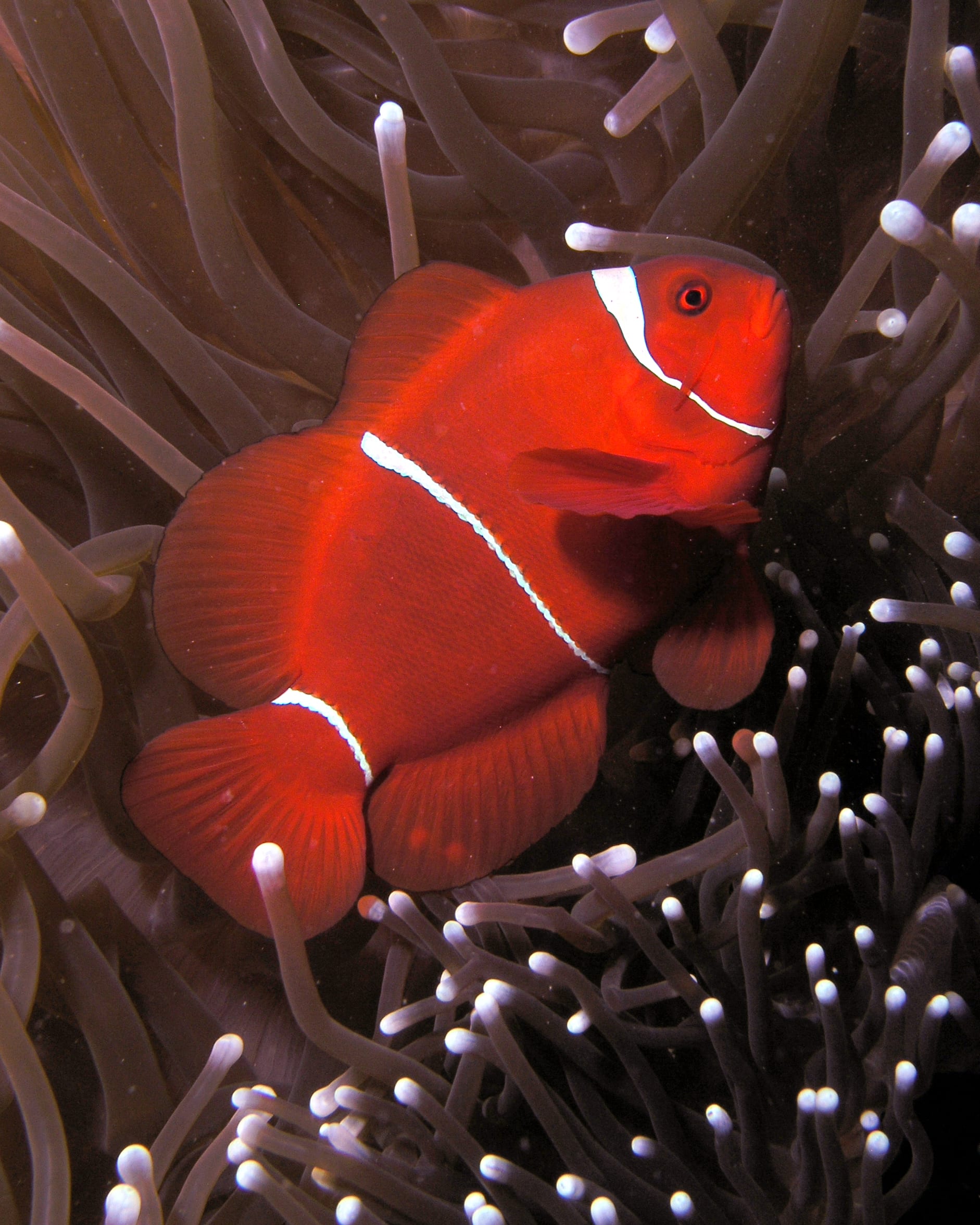
 © Nick Hobgood (Nhobgood) / CC BY-SA 3.0
Maroon Clownfish
The Maroon Clownfish is one of the largest clownfish species, with a deep red to maroon-brown body marked by three white bands and a distinctive pair of cheek spines. Females can grow to about 17cm, far larger than males. Known for a notably feisty temperament, this species cannot be kept with other clownfish besides a same-species male partner, so tankmate planning takes some care. On the plus side, it's hardy and adaptable, making it a popular choice for beginner saltwater aquarists. Watching it nestle into a host anemone and carry itself with such a bold presence is part of what makes this fish so rewarding to keep.
View Maroon Clownfish encyclopedia →0% commission on your first sales!Register by September 30, 2026 and your first 2 sales are commission-free!
Breeder Wanted!
List on BreederDirect and sell directly to customers nationwide!
BreederDirect's 6 Transparency Promises
Every Marine Fish listing shows Breeder's full disclosure. No wild-caught. Captive-bred priority, tank size guidance, temperament details—transparent aquaculture.
- Captive-bred
- WYSIWYG
- Reef-safe
- Care Info Included
- Origin Disclosed
- Temperament Listed
Browse all 175 breeds
Care Difficulty
Reef-safe
Temperament
Verified breeders wanted for Marine Fish
Breeders are signing up now ahead of launch. Subscribe to be notified when new listings go live.
Getting alerts is free with a member account. When new listings match your saved search, we'll notify you by email and in-app.
Browse other categories
Verified breeders (preview)

Are you raising marine fish?
Register as a breeder and connect with buyers directly.
Apply as a breederMaroon Clownfish key facts
- Care level
- Beginner-friendly
- Lifespan
- 8-15 years
- Size
- Up to 17cm (commonly around 13cm)
- Temperature
- 22〜26℃
- Diet
- Pellets, frozen food, algae-based food (omnivore)
- Notes
- The most aggressive clownfish. Females grow large and relentlessly attack other clownfish and peaceful fish. Handle with a net, mindful of the cheek spines.
- Container & Tank
- 114 L (30 gallons) or larger. A bubble-tip anemone helps it settle but is not required.
- Water Temperature & Quality
- 22-26°C, specific gravity 1.020-1.025. Hardy and fairly tolerant of water quality swings.
- Diet & Feeding
- Omnivore. Pellets and frozen food plus algae-based food once or twice daily.
- Tank Mates & Compatibility
- One pair per tank, never with other clownfish. Limit tank mates to robust mid-sized fish. Safe with corals and invertebrates.
About Maroon Clownfish
Meet the Maroon Clownfish: the largest clownfish species, with a deep red body, three white bands, and cheek spines. Females reach 17cm and can be feisty, yet this hardy fish suits beginner saltwater keepers.
7 things to know before welcoming a Maroon Clownfish
1Choosing Tankmates Carefully
Maroon Clownfish are extremely aggressive and cannot be housed with other clownfish, except a same-species male partner. If pairing with other saltwater fish, choose species of similar temperament and size, and think carefully about the order in which fish are added.
2Plan for a Large Adult Size
Females can reach up to 17cm, growing far larger than males, making this one of the biggest clownfish species. Set up a tank with enough room to accommodate their full adult size.
3Anemone Symbiosis
Like other clownfish, Maroon Clownfish often form a symbiotic relationship with a host anemone. It's not required for their care, but if you want to see this behavior, introduce a compatible anemone slowly and monitor how they adjust.
4Managing Strong Territoriality
This species is highly territorial and can become quite aggressive. Providing hiding spots and visual breaks in the tank layout helps reduce conflicts, even when keeping it alone.
5Beginner-Friendly Care
Maroon Clownfish are considered suitable for beginners and adapt reasonably well to changes in water conditions. With basic saltwater aquarium knowledge, most keepers can get started without major issues.
6Enjoying Individual Coloration
Its deep red to maroon-brown body, three white bands, and cheek spines give it a distinctive look, and coloring and band width can vary between individuals. Picking out a favorite is part of the fun.
7Preparing the Tank in Advance
Before bringing one home, make sure your tank is fully cycled with stable filtration. Given its territorial nature, setting up live rock and hiding places ahead of time helps it settle in calmly.
Frequently asked questions about Maroon Clownfish
- Q.Can it be kept with other clownfish?
- A.Generally, no. Maroon Clownfish are extremely aggressive and cannot be housed with other clownfish except a same-species male partner. If you want to mix species, pair it with non-clownfish tankmates and introduce them carefully.
- Q.How large does it grow?
- A.Females can reach up to about 17cm, growing far larger than males. Many individuals settle around 13cm, though size varies by individual.
- Q.Is it suitable for beginners?
- A.Yes, this species is generally considered beginner-friendly and tolerates changes in water conditions reasonably well. That said, its aggressive temperament means tankmate choices need extra care.
- Q.Does it need a host anemone?
- A.No, an anemone isn't required and it can be kept perfectly well without one. Like other clownfish, though, it may form a symbiotic relationship with a host anemone if one is introduced carefully.
- Q.How can you tell males from females?
- A.There aren't many clear external differences, but females grow noticeably larger than males as they mature. This size difference becomes easier to spot as the fish ages.
Useful tools for Maroon Clownfish care
Learn more about Maroon Clownfish in the encyclopedia
View Maroon Clownfish encyclopedia entry →
Care difficulty, lifespan, size and diet — all basics covered.
More in this category
Can't find the one you're looking for?
Post your wishes for free and breeders with matching animals will contact you with introductions.