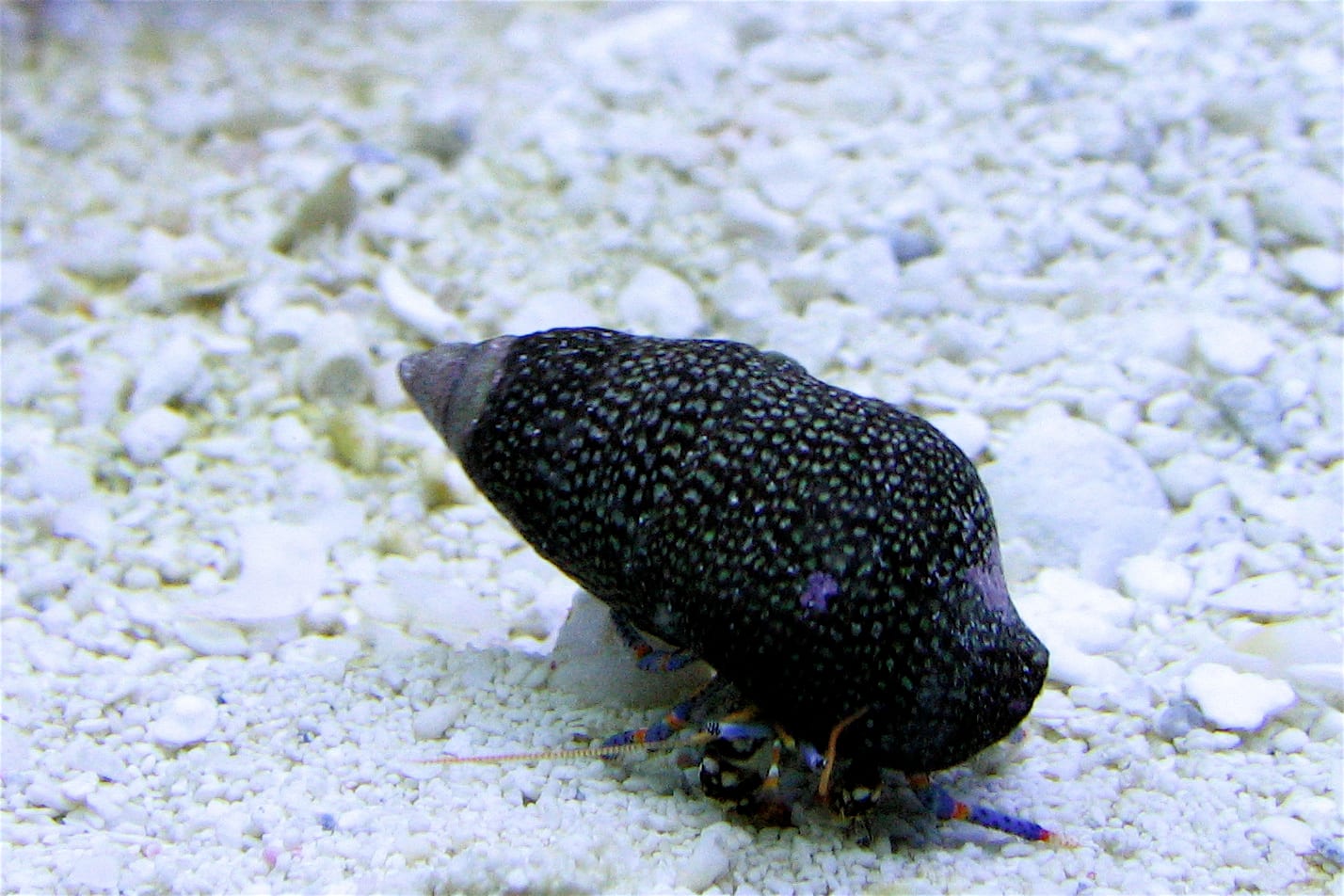
 © Nat Tarbox / CC BY 2.0
Blue Leg Hermit Crab
The Blue Leg Hermit Crab is a small, easygoing scavenger prized in marine aquariums for its bright blue legs banded with reddish-orange. It readily grazes on hair algae and cyanobacteria, making it a popular natural cleanup crew member for reef and fish-only tanks alike. Docile and easy to keep, it gets along well with most tankmates and adapts readily to captive life. One thing to watch for: as it grows, it needs progressively larger empty shells to move into — if none are available, it may attack and evict living snails to claim their shells, so keeping a few spare shells on hand is a simple precaution.
View Blue Leg Hermit Crab encyclopedia →0% commission on your first sales!Register by September 30, 2026 and your first 2 sales are commission-free!
Breeder Wanted!
List on BreederDirect and sell directly to customers nationwide!
BreederDirect's 6 Transparency Promises
Every Marine Fish listing shows Breeder's full disclosure. No wild-caught. Captive-bred priority, tank size guidance, temperament details—transparent aquaculture.
- Captive-bred
- WYSIWYG
- Reef-safe
- Care Info Included
- Origin Disclosed
- Temperament Listed
Browse all 175 breeds
Care Difficulty
Reef-safe
Temperament
Verified breeders wanted for Marine Fish
Breeders are signing up now ahead of launch. Subscribe to be notified when new listings go live.
Getting alerts is free with a member account. When new listings match your saved search, we'll notify you by email and in-app.
Browse other categories
Verified breeders (preview)
Are you raising marine fish?
Register as a breeder and connect with buyers directly.
Apply as a breederAbout Blue Leg Hermit Crab
The Blue Leg Hermit Crab is a small hermit crab with blue legs and orange-red banding, popular as an easy-care, beginner-friendly algae-eating cleanup crew member for marine tanks.
7 things to know before welcoming a Blue Leg Hermit Crab
1Natural Algae Cleaner
Blue Leg Hermit Crabs actively graze on hair algae and cyanobacteria, helping keep tank surfaces clean. They rarely compete aggressively with other animals for food, making them easy additions to a cleanup crew.
2Calm Temperament
They are peaceful and generally coexist well with fish, corals, and other crustaceans. When startled, they simply retreat into their shell rather than becoming aggressive.
3Keep Spare Shells Ready
As they grow, hermit crabs need larger shells to move into. Without empty shells available in the tank, they may evict living snails to take over their shells, so keep a variety of spare shell sizes on hand.
4Stays Small — Up to 2.5cm
Adults reach a maximum body length of about 2.5cm, so they take up little space in the tank. Their small size makes them easy to plan around when stocking tankmates.
5Adapts to Standard Reef Water
They generally do fine in typical marine fish and reef tank water conditions. As with any new arrival, acclimate them slowly and carefully when introducing them to the tank.
6Vulnerable After Molting
As crustaceans, they molt periodically as they grow. Right after molting their shell is soft and they're especially vulnerable, so avoid startling or handling them during this time.
7Fine to Keep in Groups
Their docile nature makes it feasible to keep several together in one tank. To avoid competition over shells, make sure there are enough spare shells for the whole group.
Frequently asked questions about Blue Leg Hermit Crab
- Q.Will it attack other tank inhabitants?
- A.Blue Leg Hermit Crabs are generally peaceful and don't actively attack other animals. However, if empty shells run short, they may attack living snails to take over their shells.
- Q.How big do they get?
- A.Adults reach a maximum body length of about 2.5cm, making them a relatively small species. They're unlikely to take up much space in your tank.
- Q.Are they suitable for beginners?
- A.Yes, they're generally considered beginner-friendly. As long as basic marine tank conditions are maintained, they're easy to start keeping without special equipment.
- Q.What do they eat?
- A.They readily feed on hair algae and cyanobacteria growing in the tank. If algae is scarce, supplementing with prepared foods is a good idea.
- Q.Why do they need spare shells?
- A.Hermit crabs move into larger shells as they grow to match their body size. Without spare shells in the tank, they may take over the shells of living snails, so it's recommended to keep several shell sizes available.
Useful tools for Blue Leg Hermit Crab care
Learn more about Blue Leg Hermit Crab in the encyclopedia
View Blue Leg Hermit Crab encyclopedia entry →
Care difficulty, lifespan, size and diet — all basics covered.
More in this category
Can't find the one you're looking for?
Post your wishes for free and breeders with matching animals will contact you with introductions.