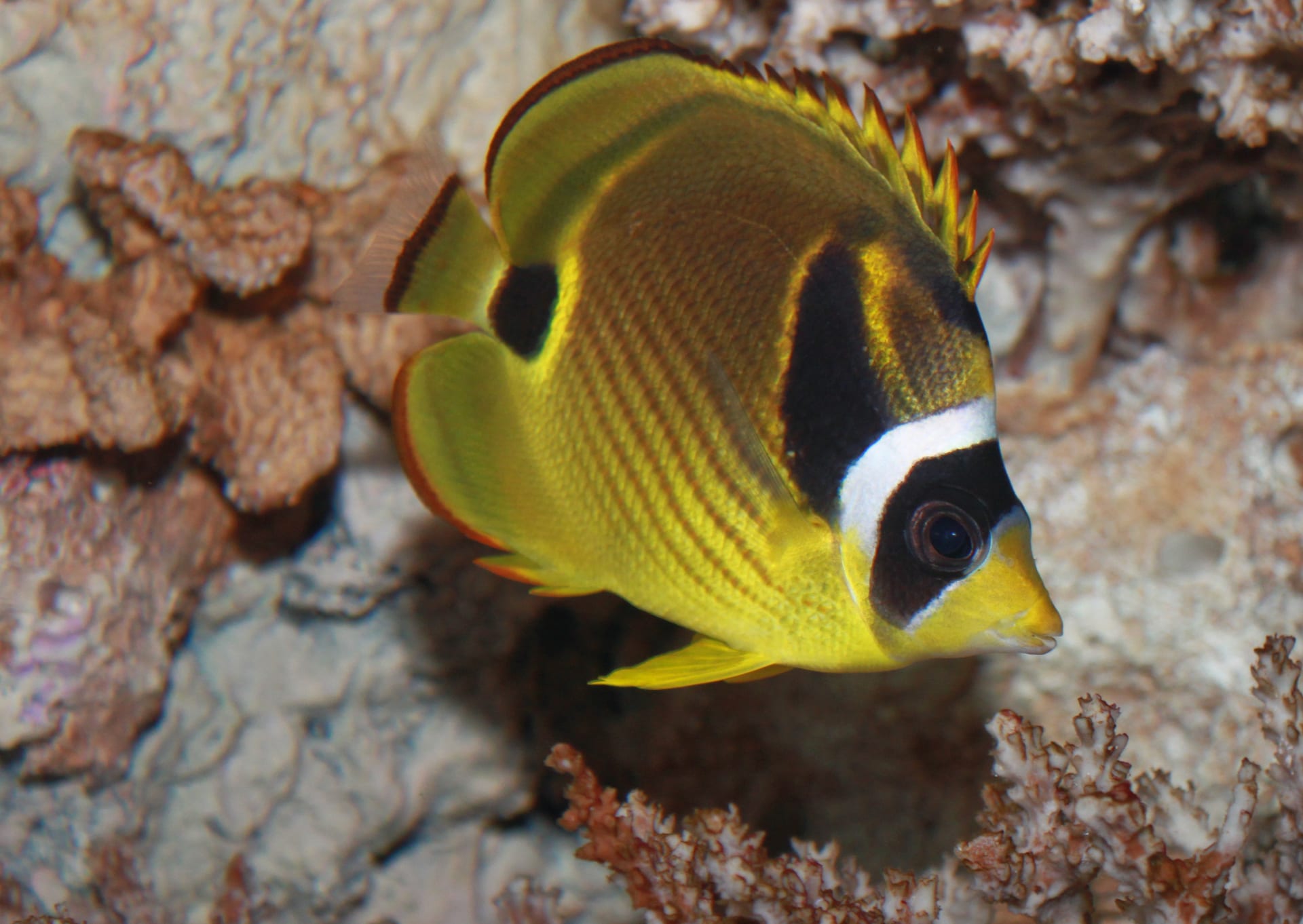
 © Brian Gratwicke / CC BY 2.0
Raccoon Butterflyfish
The Raccoon Butterflyfish gets its English name from the bold black band circling its eyes and the white band trailing behind it, which together resemble a raccoon's masked face set against a striking yellow-orange body. Unlike most butterflyfish, it's nocturnal, tending to hide during the day and becoming active at night. It's a hardy fish that readily accepts prepared foods, making it one of the more beginner-friendly butterflyfish. It can grow up to about 20cm, giving it a noticeable presence in the tank. Because it feeds on coral and invertebrates, though, it isn't suitable for reef tanks.
View Raccoon Butterflyfish encyclopedia →Breeder Wanted!
List on BreederDirect and sell directly to customers nationwide!
BreederDirect's 6 Transparency Commitments
Every Marine Fish listing shows Breeder's full disclosure. No wild-caught. Captive-bred priority, tank size guidance, temperament details—transparent aquaculture.
- Captive-bred
- WYSIWYG
- Reef-safe
- Care Info Included
- Origin Disclosed
- Temperament Listed
Browse all 215 breeds
Care Difficulty
Reef-safe
Temperament
Verified breeders wanted for Marine Fish
Breeders are signing up now ahead of launch. Subscribe to be notified when new listings go live.
Getting alerts is free with a member account. When new listings match your saved search, we'll notify you by email and in-app.
Browse other categories
Verified breeders (preview)
Are you raising marine fish?
Register as a breeder and connect with buyers directly.
Apply as a breederRaccoon Butterflyfish key facts
- Care level
- Beginner-friendly
- Lifespan
- 5-8 years
- Size
- Up to 20cm
- Temperature
- 22〜26℃
- Diet
- Frozen foods (mysis, crustaceans), fish flesh, pellets
- Notes
- Nocturnal and may hide by day after introduction. Tempt a reluctant feeder with a small anemone. Watch for marine ich.
- Container & Tank
- A fish-only tank of 470L or more is recommended, with live rock for shelter.
- Water Temperature & Quality
- 22-26C, pH 8.1-8.4, specific gravity 1.020-1.025. Keep water stable.
- Diet & Feeding
- Feed meaty frozen foods, crustaceans, mysis and pellets several times a day.
- Tank Mates & Compatibility
- Peaceful and can live with other butterflyfish. Eats corals and invertebrates, so not for reef tanks.
About Raccoon Butterflyfish
A yellow-orange butterflyfish with a raccoon-like black-and-white face pattern. Hardy, nocturnal, and easy to feed, making it a good choice for beginners, but not reef-safe since it eats coral.
7 things to know before welcoming a Raccoon Butterflyfish
1A Nocturnal Rhythm
Unlike many butterflyfish, the Raccoon Butterflyfish tends to be more active at night, often hiding among rocks and live rock crevices during the day. Don't worry if it's out of sight in daylight — it typically becomes more visible after the lights go down.
2Not Reef-Safe
Because it feeds on coral and invertebrates, the Raccoon Butterflyfish isn't suitable for reef tanks. If you're planning tankmates, consider a fish-only setup or a live-rock-based layout instead of a coral reef display.
3Hardy and Easy to Feed
This species is considered hardy among marine fish and generally adapts well to prepared foods. That said, appetite can dip while it settles into a new tank, so it helps to offer a variety of foods early on and watch how it responds.
4Grows Up to 20cm
This fish can grow up to about 20cm, making it one of the larger butterflyfish species. Plan ahead for its adult size by choosing a tank with enough swimming space to accommodate it comfortably.
5A Distinctive Masked Face
The black band around the eyes paired with a white band behind it resembles a raccoon's face, which is where the English name comes from. The species name refers to the white band behind the eye, likened to a new moon. The pattern contrasts strikingly with its yellow-orange body, making it a real standout in the tank.
6Compatibility with Tankmates
It has a peaceful temperament and can live with other butterflyfish in a fish-focused tank of 470L or more. Because it eats coral and other invertebrates, don't keep it with corals or anemones. Provide plenty of live rock for hiding spots as well.
7Before You Bring One Home
Set up plenty of live rock and rockwork for hiding spots, and make sure the tank's water quality is stable before bringing one home. It tends to stay cautious and hide at first in a new environment, so having a calm, sheltered space ready helps it settle in.
Frequently asked questions about Raccoon Butterflyfish
- Q.Is the Raccoon Butterflyfish suitable for beginners?
- A.Yes, it's considered one of the more beginner-friendly butterflyfish thanks to its hardiness and willingness to eat prepared foods. That said, it's sensitive to sudden water quality changes, so it's best introduced to a tank that has already fully cycled and stabilized.
- Q.Can it be kept in a reef tank with corals?
- A.No — it feeds on coral and invertebrates, so it isn't suitable for reef tanks. Consider a fish-only setup or a live-rock-based layout instead of a coral-focused display.
- Q.How big does it grow?
- A.It can reach up to about 20cm as an adult, making it one of the larger butterflyfish species. Plan your tank size with its adult size in mind.
- Q.I never see it during the day — is that normal?
- A.The Raccoon Butterflyfish tends to be nocturnal and often hides among rocks or live rock crevices during daylight hours. It's common for it to become more active at night or after the lights go out, so not seeing it in the day isn't a cause for concern.
- Q.Can it be kept with other fish?
- A.It's peaceful and can live with other butterflyfish in a fish-focused tank of 470L or more. However, it eats coral and other invertebrates, so don't keep it with them. Provide live rock for hiding spots as well.
Useful tools for Raccoon Butterflyfish care
Learn more about Raccoon Butterflyfish in the encyclopedia
View Raccoon Butterflyfish encyclopedia entry →
Care difficulty, lifespan, size and diet — all basics covered.
More in this category
Can't find the one you're looking for?
Post your wishes for free and breeders with matching animals will contact you with introductions.