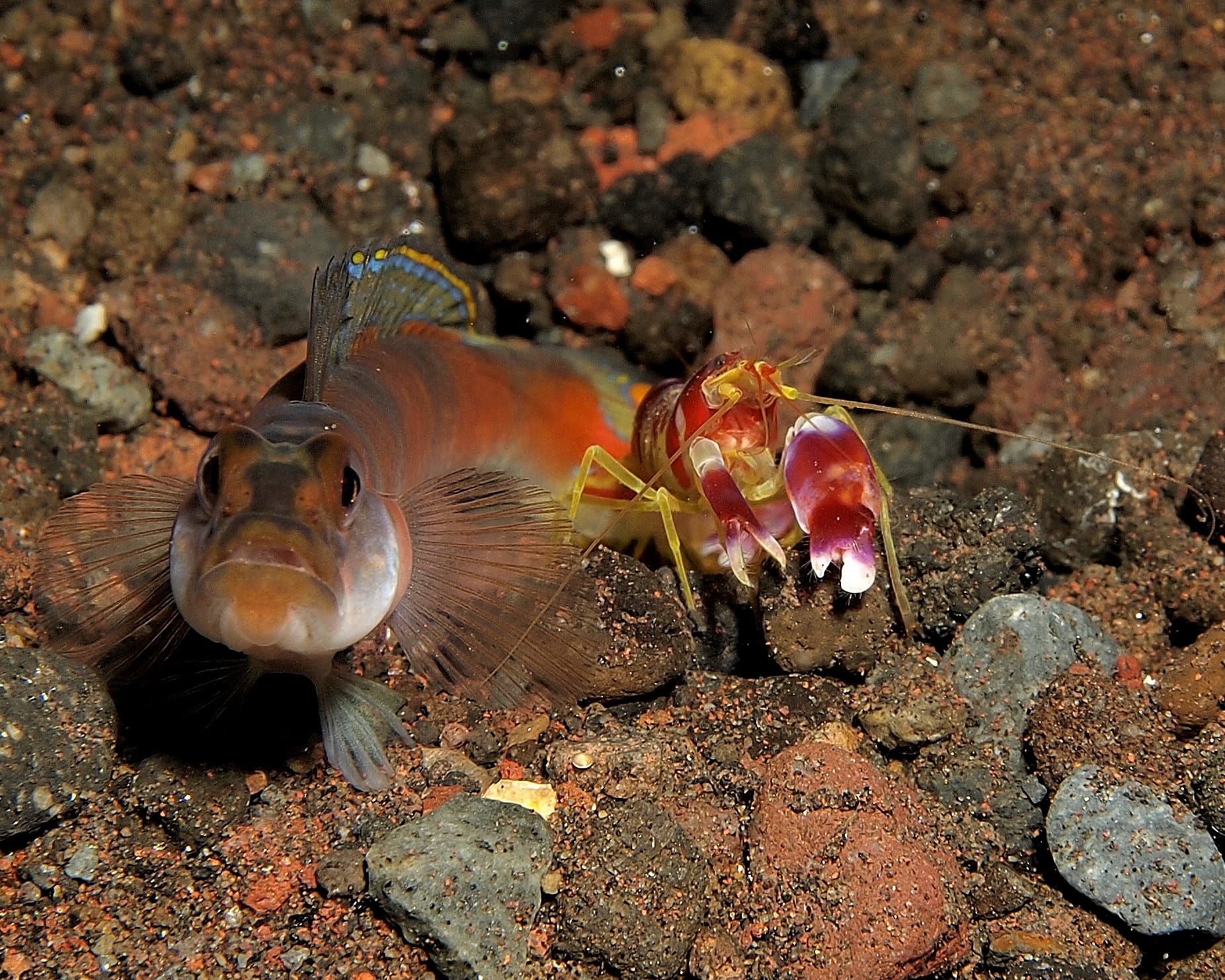
 © Steve Childs / CC BY 2.0
Yano's shrimpgoby
Yano's shrimpgoby is a symbiotic goby with a whitish body crossed by orange-brown bars and a yellow tail fin marked with diagonal red-orange and blue bands. It shares a burrow with a pistol shrimp, and watching the goby and shrimp settle together on the sand is a big part of its appeal. It reaches a standard length of up to 13 cm, so it stays compact, and its care level is rated beginner-friendly. It spends much of its time on the sand bed, which makes the partnership easy to observe in an aquarium. Little is documented about its lifespan, so plan for the long term and keep a patient eye on it.
View Yano's shrimpgoby encyclopedia →0% commission on your first sales!Register by September 30, 2026 and your first 2 sales are commission-free!
Breeder Wanted!
List on BreederDirect and sell directly to customers nationwide!
BreederDirect's 6 Transparency Commitments
Every Marine Fish listing shows Breeder's full disclosure. No wild-caught. Captive-bred priority, tank size guidance, temperament details—transparent aquaculture.
- Captive-bred
- WYSIWYG
- Reef-safe
- Care Info Included
- Origin Disclosed
- Temperament Listed
Browse all 215 breeds
Care Difficulty
Reef-safe
Temperament
Verified breeders wanted for Marine Fish
Breeders are signing up now ahead of launch. Subscribe to be notified when new listings go live.
Getting alerts is free with a member account. When new listings match your saved search, we'll notify you by email and in-app.
Browse other categories
Verified breeders (preview)
Are you raising marine fish?
Register as a breeder and connect with buyers directly.
Apply as a breederYano's shrimpgoby key facts
- Care level
- Beginner-friendly
- Lifespan
- Little data available
- Size
- Up to 13 cm SL (FishBase)
- Temperature
- 22〜27℃
- Diet
- Carnivore (small benthic invertebrates, zooplankton)
- Water Temperature & Quality
- 22-27°C, specific gravity 1.020-1.026 (Saltcorner).
- Container & Tank
- About 110 L (30 gallons) or more, with a deep bed of coarse sand (2-4 mm) mixed with rubble for burrowing. A wide, low tank suits it better than a tall one.
- Tank Mates & Compatibility
- Avoid aggressive fish such as groupers, dottybacks and triggerfish. Keep one unless a mated pair.
- Reef Compatibility
- Leaves corals alone and is reef-safe, but it may eat very small ornamental shrimp.
- Diet & Feeding
- Feed frozen mysis and chopped shrimp, fish or squid twice a day; sinking pellets also work. Start reluctant feeders on live brine shrimp.
- Health & Cautions
- It jumps, so fit a tight lid. In the wild it lives with the red-banded snapping shrimp; introduce one at the same time if you want to see the partnership.
About Yano's shrimpgoby
Yano's shrimpgoby is a symbiotic goby with orange-brown bars that shares a burrow with a pistol shrimp. It reaches 13 cm in standard length and is beginner-friendly. Learn about its traits, tank setup and what to know before bringing one home.
7 things to know before welcoming a Yano's shrimpgoby
1A shrimp partner
Yano's shrimpgoby is a symbiotic goby that shares a burrow with a pistol shrimp, Alpheus randalli. The shrimp maintains the burrow while the goby keeps watch near the entrance, a division of labor the pair is known for. If you want to enjoy this partnership in your tank, consider keeping the goby together with a shrimp.
2Sand for burrows
Because the pair builds a burrow, lay the sand bed thickly, and a mix of grain sizes is said to hold a tunnel together better. Set rockwork firmly on the tank bottom rather than on top of the sand, so digging does not bring it down.
3Prevent jumping
Gobies can leap out of the tank when startled. Use a lid and close off gaps around pipes and heaters to be safe.
4Favor floor space
Its standard length reaches up to 13 cm, so it is not a large fish, but the amount of sand available for burrowing affects how comfortable it is. Choose a tank with generous floor space rather than depth, so the goby and shrimp each have room of their own.
5Choosing tank mates
Avoid boisterous fish that chase gobies and large fish that might eat them. Conspecifics can squabble over territory, so if you keep more than one together, introduce them carefully and watch how they get along.
6Small frozen foods
Since it lives near the bottom, it may miss food that never reaches the sand. Drop small frozen foods close to the burrow and check that other fish are not getting to them first.
7After you bring it home
Acclimate it carefully after arrival and give it time to settle. It may hide in the burrow at first, so allow a few days before expecting it to show itself. Checking every day that it is eating and that its skin looks normal gives you peace of mind.
Frequently asked questions about Yano's shrimpgoby
- Q.Can beginners keep Yano's shrimpgoby?
- A.Its care level is rated beginner-friendly. Still, get the basics ready first: a tank with stable water quality, sand deep enough to burrow in, and a lid to prevent jumping.
- Q.Do I need to keep it with a pistol shrimp?
- A.In nature it shares a burrow with a pistol shrimp, and keeping them together lets you watch that partnership. Without a shrimp, nobody digs the burrow, so you will need to provide shelter on the sand bed.
- Q.How large does it grow?
- A.Its standard length reaches up to 13 cm. With its adult size in mind, it helps to prepare a tank with plenty of sand floor.
- Q.How long does it live?
- A.Little is documented about its lifespan, so no reliable figure is available. Plan for long-term care by keeping water quality stable and watching its daily behavior closely.
- Q.Can it live with other fish?
- A.Mixing is easier to plan if you avoid fish that harass gobies or large fish that could eat them. Compatibility varies from tank to tank, so watch how they behave after introduction and adjust as needed.
Useful tools for Yano's shrimpgoby care
Learn more about Yano's shrimpgoby in the encyclopedia
View Yano's shrimpgoby encyclopedia entry →
Care difficulty, lifespan, size and diet — all basics covered.
More in this category
Can't find the one you're looking for?
Post your wishes for free and breeders with matching animals will contact you with introductions.