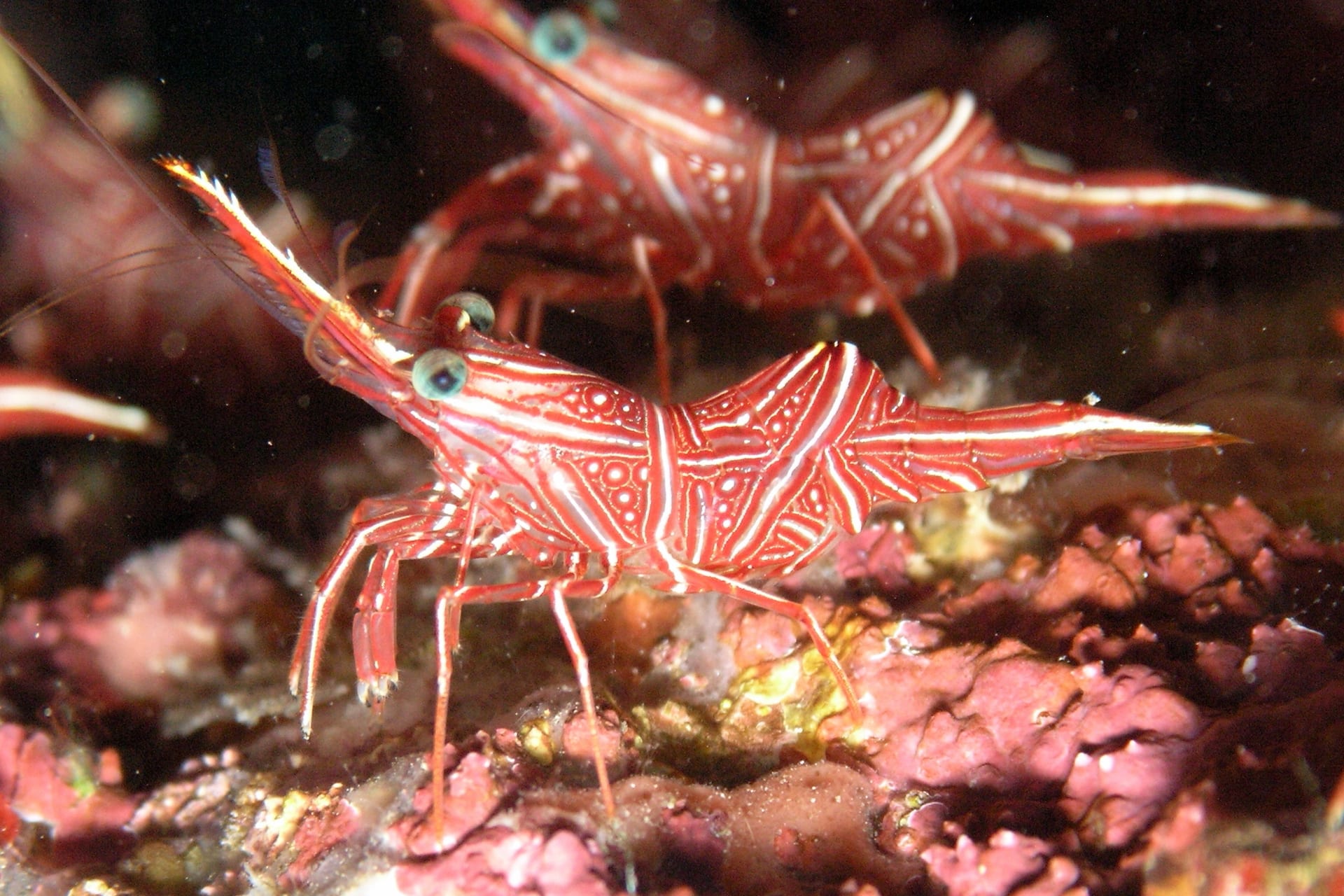
 © Jens Petersen / CC BY-SA 3.0
Camel shrimp
The camel shrimp is a translucent shrimp marked with red and white stripes and scattered white dots. Its rostrum is hinged, so it can move and curves upward. In the wild it lives in rock crevices in groups of dozens, and it tends to be more at ease in an aquarium when kept with several of its own kind. Rockwork with plenty of gaps helps it settle in. It grows to a maximum of 4 cm and is rated beginner-friendly. Because it may pick at soft corals, choose tank mates and corals with care.
View Camel shrimp encyclopedia →0% commission on your first sales!Register by September 30, 2026 and your first 2 sales are commission-free!
Breeder Wanted!
List on BreederDirect and sell directly to customers nationwide!
BreederDirect's 6 Transparency Commitments
Every Marine Fish listing shows Breeder's full disclosure. No wild-caught. Captive-bred priority, tank size guidance, temperament details—transparent aquaculture.
- Captive-bred
- WYSIWYG
- Reef-safe
- Care Info Included
- Origin Disclosed
- Temperament Listed
Browse all 215 breeds
Care Difficulty
Reef-safe
Temperament
Verified breeders wanted for Marine Fish
Breeders are signing up now ahead of launch. Subscribe to be notified when new listings go live.
Getting alerts is free with a member account. When new listings match your saved search, we'll notify you by email and in-app.
Browse other categories
Verified breeders (preview)
Are you raising marine fish?
Register as a breeder and connect with buyers directly.
Apply as a breederCamel shrimp key facts
- Care level
- Beginner-friendly
- Lifespan
- Little data available
- Size
- Up to 4 cm (SeaLifeBase)
- Temperature
- 18〜25℃
- Diet
- Omnivore
- Water Temperature & Quality
- 18-25°C, specific gravity 1.023-1.025 (LiveAquaria).
- Container & Tank
- Provide plenty of crevices, overhangs and rubble to hide in, especially for moulting. It can be kept in groups.
- Tank Mates & Compatibility
- It usually tolerates other shrimp.
- Reef Compatibility
- It may nip zoanthids, disc corals and leather corals, so it is only conditionally reef-safe. It generally leaves bubble coral and stinging anemones alone.
- Diet & Feeding
- Readily eats frozen brine shrimp, frozen or freeze-dried plankton and flakes.
- Health & Cautions
- Maintain calcium, magnesium and iodine for moulting (LiveAquaria). Check for the Y-shaped white mark on the carapace, as related species are easily confused.
About Camel shrimp
Camel shrimp: a translucent, red-and-white striped shrimp up to 4 cm that lives in groups among rocks. Beginner-friendly. Traits and what to know before you bring one home.
7 things to know before welcoming a Camel shrimp
1Small: up to 4 cm
This is a small shrimp that grows to a maximum of 4 cm, so it is easy to fit into a range of tank sizes. Because it naturally lives in groups, though, plan for rockwork and hiding places as well as water volume.
2Best kept in a group
In the wild they live in groups of dozens among rock crevices. In an aquarium they tend to settle in and show themselves more readily when kept with several companions rather than alone. Plan to bring home a group rather than a single shrimp.
3Provide rock crevices
Because they live in rock crevices in nature, provide live rock or similar structures where they can hide. Good hiding places help them feel secure, including around molting.
4Watch your soft corals
Camel shrimp may pick at soft corals. If you keep them in a reef tank, watch them closely for a while after introduction and check whether any of your corals are being bothered.
5Choose tank mates
As a shrimp of up to 4 cm, it can be preyed on by large or big-mouthed fish, so it is safer to avoid housing them together. Consider peaceful tank mates and introduce them gradually while watching how they get along.
6Stable water, slow acclimation
Although rated beginner-friendly, crustaceans such as shrimp and crabs are generally considered sensitive to sudden changes in water quality and salinity. Acclimate them slowly and carefully, and add them only once the tank is stable. If you plan to use fish medications, check beforehand how they may affect crustaceans.
7Lifespan and daily checks
Little reliable information on lifespan is available, so no clear estimate can be given. Getting into the habit of watching their movement, appetite, and color each day helps you notice changes early and care for them over the long term.
Frequently asked questions about Camel shrimp
- Q.Is it suitable for beginners?
- A.Its care difficulty is listed as beginner-friendly. Still, sudden water changes can be a concern, so add it only to a stable tank and acclimate it carefully.
- Q.How many should I keep together?
- A.In nature they live in groups of dozens, so keeping several together is generally better than keeping one alone. Choose a number that suits your tank size and the hiding places you can provide.
- Q.Can I keep it in a reef tank?
- A.It may pick at soft corals, so some care is needed. If you keep soft corals, watch the shrimp closely after introduction and think ahead about what you would do if the corals are being bothered.
- Q.Which fish can live with it?
- A.Avoid large or big-mouthed fish that eat shrimp, and consider peaceful, small fish instead. Compatibility varies with the individuals and the tank setup, so observe them closely at first.
- Q.How long does it live?
- A.Little reliable information on lifespan is available, so a specific number of years cannot be given. To enjoy them for as long as possible, keep the water stable and observe them daily.
Useful tools for Camel shrimp care
Learn more about Camel shrimp in the encyclopedia
View Camel shrimp encyclopedia entry →
Care difficulty, lifespan, size and diet — all basics covered.
More in this category
Can't find the one you're looking for?
Post your wishes for free and breeders with matching animals will contact you with introductions.