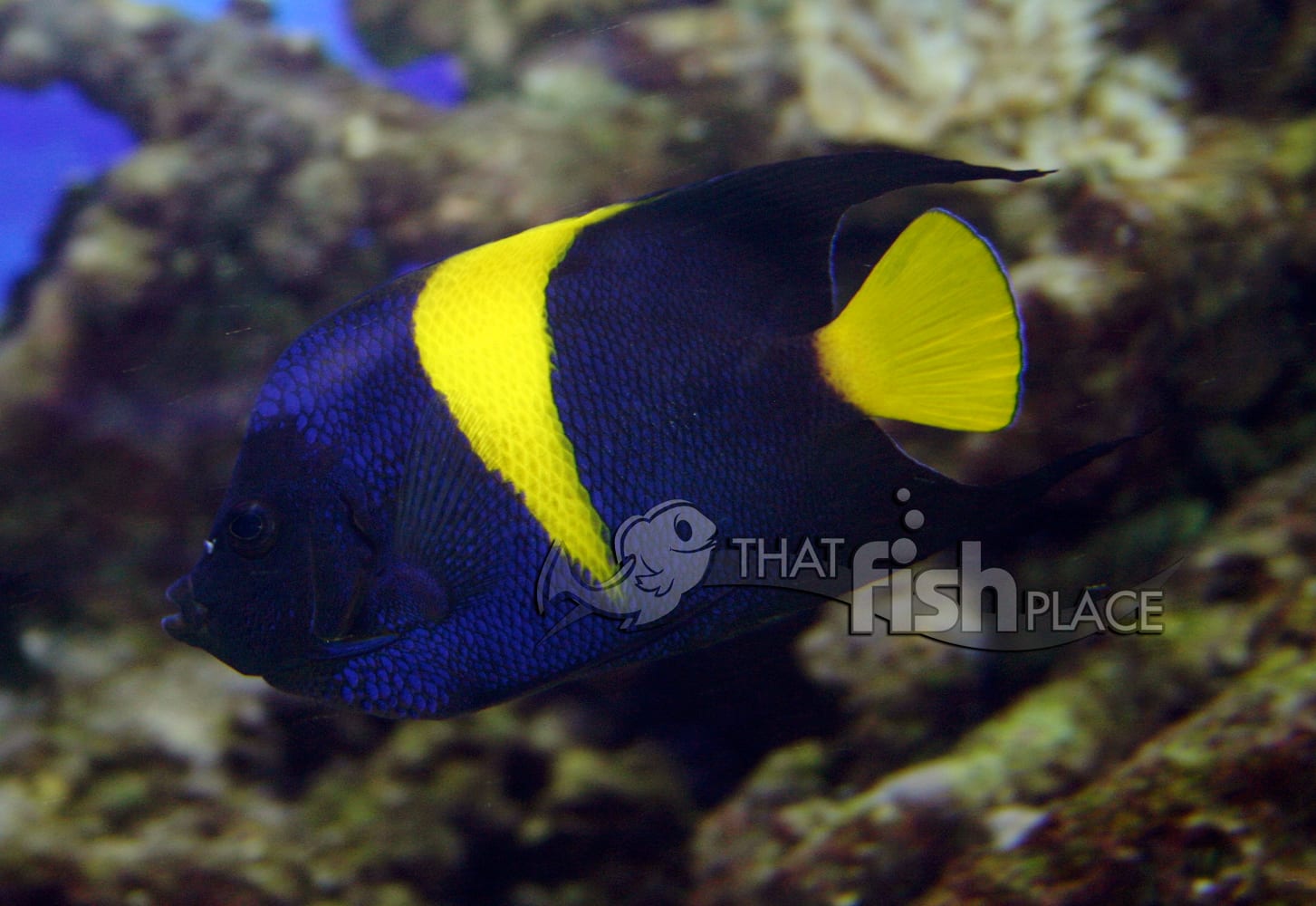
 © Thatfishplace/thatpetplace / CC BY-SA 2.0
Arabian angelfish
The Arabian angelfish is a large angelfish from the Red Sea. Its deep blue-purple body carries a yellow crescent-shaped band across the middle, and its tail fin is a vivid yellow. It can reach up to 40 cm in total length, so it pays to plan for its adult size and tank space from the start. The yellow tail is the key to telling it apart from the similar-looking Halfmoon angelfish. It is said to have a bold temperament, so choosing tank mates matters. Rated for intermediate keepers, it suits people who are comfortable with saltwater fish and can set up a tank suitable for large species. Its striking looks can make it the centerpiece of the aquarium.
View Arabian angelfish encyclopedia →0% commission on your first sales!Register by September 30, 2026 and your first 2 sales are commission-free!
Breeder Wanted!
List on BreederDirect and sell directly to customers nationwide!
BreederDirect's 6 Transparency Commitments
Every Marine Fish listing shows Breeder's full disclosure. No wild-caught. Captive-bred priority, tank size guidance, temperament details—transparent aquaculture.
- Captive-bred
- WYSIWYG
- Reef-safe
- Care Info Included
- Origin Disclosed
- Temperament Listed
Browse all 215 breeds
Care Difficulty
Reef-safe
Temperament
Verified breeders wanted for Marine Fish
Breeders are signing up now ahead of launch. Subscribe to be notified when new listings go live.
Getting alerts is free with a member account. When new listings match your saved search, we'll notify you by email and in-app.
Browse other categories
Verified breeders (preview)
Are you raising marine fish?
Register as a breeder and connect with buyers directly.
Apply as a breederArabian angelfish key facts
- Care level
- Intermediate
- Lifespan
- Little data available
- Size
- Up to 40 cm TL (FishBase)
- Temperature
- 22〜27℃
- Diet
- Omnivore (mainly sponges and tunicates)
- Water Temperature & Quality
- 22-27°C, specific gravity from 1.020 (Saltcorner).
- Container & Tank
- Adults reach 40 cm, so about 680 L (180 gallons) or more is the guideline, with cave-like rockwork and live rock.
- Tank Mates & Compatibility
- Very aggressive to its own kind unless paired, so keep one.
- Reef Compatibility
- Adults nip stony and soft corals, clams and tubeworms, so it is not reef-safe.
- Diet & Feeding
- Feed sponge-containing frozen angelfish foods, brine shrimp and mysis several times a day, with occasional spirulina-based foods.
- Health & Cautions
- Juveniles are shy at first; feed often to settle them. Check the tail colour to avoid confusion with the yellowbar angelfish.
About Arabian angelfish
The Arabian angelfish is a large Red Sea angelfish with a deep blue-purple body, a yellow crescent band and a yellow tail. It grows up to 40 cm and suits intermediate keepers.
7 things to know before welcoming a Arabian angelfish
1Plan for 40 cm
This is a large angelfish that can reach up to 40 cm in total length. Even if a young fish looks small, choose a tank and filtration that will still be comfortable at adult size. Aim for open swimming space together with rockwork where it can retreat.
2Best for Intermediate Keepers
Its care level is rated intermediate. Getting comfortable with marine water quality and feeding first makes it easier to respond calmly if the fish's condition changes. If this would be your first saltwater fish, gaining experience with easier species first is a sensible option.
3Telling It from Lookalikes
The yellow tail fin is the key to distinguishing it from the similar-looking Halfmoon angelfish. When browsing listings, check the tail color in the photos as well as the overall pattern. If you are unsure which species you are looking at, ask the breeder before deciding.
4Choose Tank Mates Carefully
Large angelfish are said to be territorial and may clash with other angelfish. If you plan a community tank, pick tank mates with a comparable size and temperament, and provide hiding spots to retreat to. The order of introduction and the tank's size can also help reduce conflict.
5Not for Reef Tanks
Adults nip at hard corals, soft corals, giant clams and fan worms, so it is not suited to a reef tank. Keep it in a fish-focused aquarium with cave-like rockwork and live rock.
6Offer a Varied Diet
Large angelfish tend to be omnivorous, so combining foods of both animal and plant origin helps keep the diet balanced. Right after arrival, ask the breeder what the fish has been eating and start with the same food. Changes in appetite or feeding behavior can also be a useful sign of how the fish is doing.
7Acclimation on Arrival
After arrival, match the temperature and salinity and acclimate the fish slowly. Observing it in a separate quarantine tank before moving it to the main display makes it easier to avoid bringing illness into the tank. Check its skin and appetite every day, and act early if anything looks off.
Frequently asked questions about Arabian angelfish
- Q.Can a beginner keep this fish?
- A.Its care level is rated intermediate. Because it can reach up to 40 cm, some experience with saltwater fish, including setting up a suitable tank and filtration, is reassuring. Beginners may prefer to gain experience with easier species first.
- Q.How large does it grow?
- A.According to FishBase, the maximum total length is 40 cm. Actual size varies between individuals, so treat this as a guide. Choose your tank with the full-grown fish in mind.
- Q.How long does it live?
- A.Reliable information on its lifespan is limited, so no clear figure is available. Plan for a long-term commitment and set up a tank where you can keep up good water quality and feeding.
- Q.How do I tell it from the Halfmoon angelfish?
- A.The two look alike in color and pattern, but the Arabian angelfish can be identified by its vivid yellow tail fin. Check the tail color in the listing photos.
- Q.Can it live with other fish or corals?
- A.It is very aggressive toward others of its kind unless they are a pair, so keep only one. Adults also nip at corals and giant clams, so it is not suited to a reef tank. Keep it in a fish-focused aquarium and choose tank mates with the tank size in mind.
Useful tools for Arabian angelfish care
Learn more about Arabian angelfish in the encyclopedia
View Arabian angelfish encyclopedia entry →
Care difficulty, lifespan, size and diet — all basics covered.
More in this category
Can't find the one you're looking for?
Post your wishes for free and breeders with matching animals will contact you with introductions.