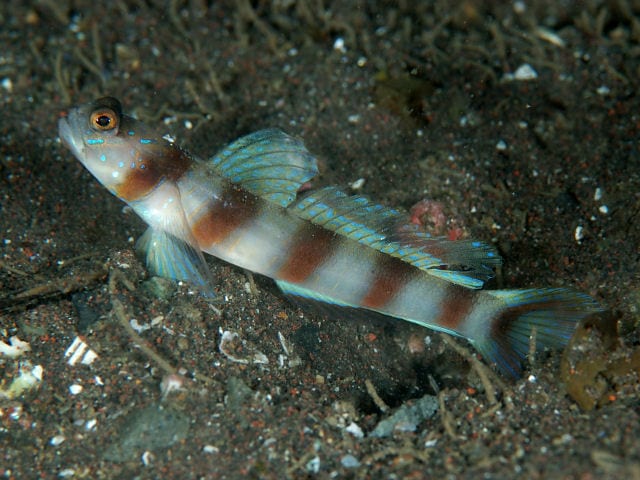
 © Izuzuki / CC BY-SA 3.0
Japanese shrimp goby
The Japanese shrimp goby is a pale yellow symbiotic goby with five dark brown vertical bands and a C-shaped brown blotch on the tail fin. It lives on shallow sand and gravel bottoms along the coasts of Japan and Taiwan, sharing a burrow with snapping shrimp. Watching the shrimp maintain the burrow while the goby stands watch near the entrance up close is a big part of its appeal. It stays small, reaching a maximum total length of 8.5 cm, and is considered peaceful. Getting it to feed and setting up a suitable sandy bottom take some care, so it is best suited to intermediate hobbyists.
View Japanese shrimp goby encyclopedia →Breeder Wanted!
List on BreederDirect and sell directly to customers nationwide!
BreederDirect's 6 Transparency Commitments
Every Marine Fish listing shows Breeder's full disclosure. No wild-caught. Captive-bred priority, tank size guidance, temperament details—transparent aquaculture.
- Captive-bred
- WYSIWYG
- Reef-safe
- Care Info Included
- Origin Disclosed
- Temperament Listed
Browse all 215 breeds
Care Difficulty
Reef-safe
Temperament
Verified breeders wanted for Marine Fish
Breeders are signing up now ahead of launch. Subscribe to be notified when new listings go live.
Getting alerts is free with a member account. When new listings match your saved search, we'll notify you by email and in-app.
Browse other categories
Verified breeders (preview)
Are you raising marine fish?
Register as a breeder and connect with buyers directly.
Apply as a breederJapanese shrimp goby key facts
- Care level
- Intermediate
- Size
- Up to 8.5 cm TL
- Diet
- Carnivore (small crustaceans, etc.)
- Water Temperature & Quality
- A temperate-to-subtropical shallow-water fish (0-5 m), so avoid prolonged high temperatures in summer.
- Container & Tank
- Lay a deep bed of mixed-grain sand and coral rubble so the burrow holds its shape, and fit a lid against jumping.
- Tank Mates & Compatibility
- Lives with snapping shrimps. Keep with peaceful fish, and be careful with numbers of its own kind or other shrimp gobies competing for burrows.
- Reef Compatibility
- Its compatibility with corals and invertebrates is unclear, but it lives alongside its partner snapping shrimp.
- Diet & Feeding
- Eats small crustaceans in the wild. Drop frozen mysis, chopped shrimp or sinking pellets near the burrow.
- Health & Cautions
- Collecting in Japan is subject to prefectural fisheries regulations. Introduce a partner such as Alpheus bellulus at the same time to see the partnership.
About Japanese shrimp goby
Japanese shrimp goby: a pale yellow symbiotic goby with five dark bands, up to 8.5 cm, that shares a burrow with snapping shrimp. Intermediate-level care guide.
7 things to know before welcoming a Japanese shrimp goby
1Partner snapping shrimp
In the wild, the Japanese shrimp goby shares a burrow with snapping shrimp. Keeping it with a shrimp lets you see the natural behavior of the goby standing watch near the burrow entrance. Ask the seller which shrimp species suits it and how well the two are likely to get along.
2Recreate a sandy bottom
In the wild it lives on shallow sand and gravel, so use a deep layer of fine sand and small gravel in the tank. Because the shrimp digs its burrow, set rockwork firmly on the tank bottom so it is less likely to collapse.
3Give it open sand
It is small, reaching a maximum total length of 8.5 cm. Since it will live alongside a burrowing shrimp, choose a tank with plenty of open sand so both animals can settle around the burrow.
4Feeding tips
As a small bottom-dwelling goby, it does best with small frozen foods or finely chopped mysis offered in small amounts. Drift the food near the burrow and remove leftovers promptly to keep the water clean. Right after arrival, check that it is actually eating.
5Choosing tank mates
Because it is peaceful, avoid pairing it with aggressive large fish or fast feeders that grab all the food. If you keep more than one goby, territorial disputes can occur, so watch their behavior and adjust as needed.
6Prevent jumping
Gobies can jump out of the water when startled. Keep the tank covered and close any gaps around plumbing or equipment.
7Keep water stable
Little is documented about its lifespan, so no clear estimate can be given. To keep it long term, hold temperature and salinity steady and avoid sudden water changes. Acclimate it carefully when it arrives and watch its appetite and movement every day.
Frequently asked questions about Japanese shrimp goby
- Q.Can beginners keep a Japanese shrimp goby?
- A.It is rated for intermediate hobbyists. Feeding, pairing with a shrimp and building a suitable sandy bottom all need attention, so it is safer to consider it once you are comfortable with marine fish.
- Q.How big does it get?
- A.Its maximum total length is 8.5 cm. It is small, but because it lives with a burrowing shrimp, prepare a tank with generous open sand.
- Q.Can it be kept without a shrimp?
- A.Whether it does well alone depends on the individual and the setup. It naturally shares a burrow with a shrimp, and some individuals settle poorly without one. If you want to enjoy the partnership, ask the seller about a suitable shrimp.
- Q.How long does it live?
- A.Little is documented about its lifespan, so no clear figure can be given. Stable water quality and daily observation are the basics of keeping it long term.
- Q.Can it live with other fish?
- A.Since it is peaceful, avoid aggressive large fish and fast feeders that outcompete it for food. If you keep several gobies together, territorial disputes can happen, so judge by watching how they behave.
Useful tools for Japanese shrimp goby care
Learn more about Japanese shrimp goby in the encyclopedia
View Japanese shrimp goby encyclopedia entry →
Care difficulty, lifespan, size and diet — all basics covered.
More in this category
Can't find the one you're looking for?
Post your wishes for free and breeders with matching animals will contact you with introductions.