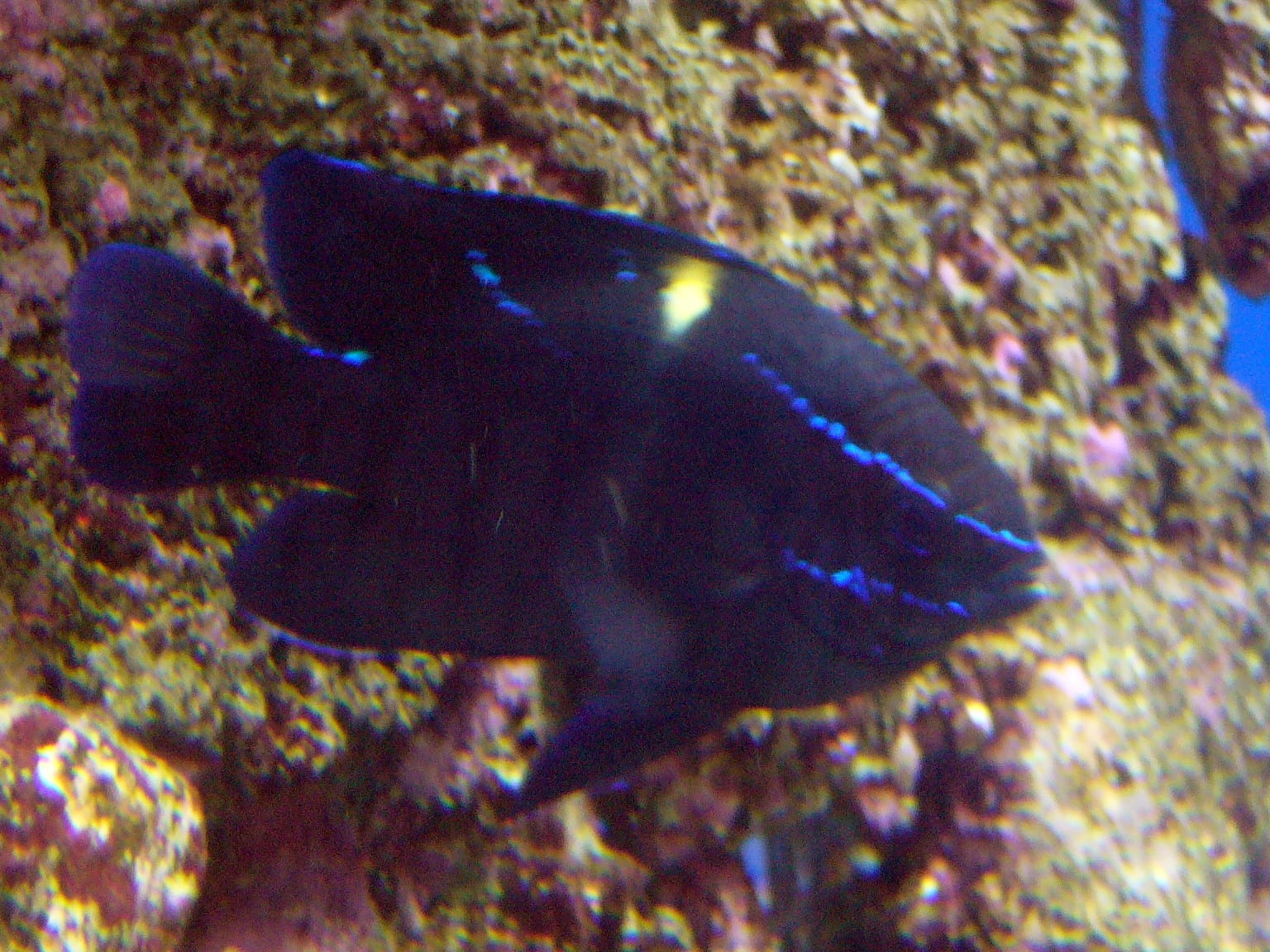
 © Drow male / CC BY-SA 4.0
Javanese damsel
The Javanese damsel is a damselfish best known for its juvenile look: thin neon blue lines run across a dark body, with a single white band around the middle. As it matures, the blue lines and the white band disappear and the fish turns a uniform dark brown to black. It reaches a maximum total length of 15 cm and is rated as suitable for intermediate keepers. Damselfish tend to be territorial, so tankmates and aquascaping deserve some thought before you bring one home. It offers both a striking juvenile stage and an interesting change as it grows.
View Javanese damsel encyclopedia →Breeder Wanted!
List on BreederDirect and sell directly to customers nationwide!
BreederDirect's 6 Transparency Commitments
Every Marine Fish listing shows Breeder's full disclosure. No wild-caught. Captive-bred priority, tank size guidance, temperament details—transparent aquaculture.
- Captive-bred
- WYSIWYG
- Reef-safe
- Care Info Included
- Origin Disclosed
- Temperament Listed
Browse all 215 breeds
Care Difficulty
Reef-safe
Temperament
Verified breeders wanted for Marine Fish
Breeders are signing up now ahead of launch. Subscribe to be notified when new listings go live.
Getting alerts is free with a member account. When new listings match your saved search, we'll notify you by email and in-app.
Browse other categories
Verified breeders (preview)
Are you raising marine fish?
Register as a breeder and connect with buyers directly.
Apply as a breederJavanese damsel key facts
- Care level
- Intermediate
- Size
- Up to 15 cm TL
- Temperature
- 23〜28℃
- Diet
- Omnivore (algae and benthic invertebrates)
- Water Temperature & Quality
- 23-28°C, specific gravity 1.020-1.026 (Saltcorner).
- Container & Tank
- About 210 L (55 gallons) or more; adults reach 15 cm. Provide rockwork for shelter.
- Tank Mates & Compatibility
- It becomes very aggressive as it grows. Keep one per tank with larger, robust tankmates.
- Reef Compatibility
- Leaves corals alone; reef-safe.
- Diet & Feeding
- Feed frozen brine shrimp and mysis, prepared foods and spirulina-based foods several times a day. Easy to feed.
- Health & Cautions
- The blue juvenile pattern fades to dark as it grows. Not the same species as Pomacentrus coelestis, whose English name is neon damselfish.
About Javanese damsel
The Javanese damsel is a damselfish with neon blue lines and a white band as a juvenile, turning dark brown to black as it grows to a maximum of 15 cm. Intermediate difficulty. Traits and tips before bringing one home.
7 things to know before welcoming a Javanese damsel
1Juvenile Pattern Is Temporary
Juveniles have thin neon blue lines on a dark body plus a single white band, which is what makes them so eye-catching. As the fish grows, the blue lines and white band fade and the body turns dark brown to black. Keep in mind that the juvenile look is only a temporary stage.
2Grows to 15 cm
The maximum total length is 15 cm (FishBase), so a small juvenile will grow considerably. Choose a tank based on the adult size rather than the size of the fish when you bring it home. A tank with room to swim and to hide makes long-term care easier.
3Watch for Territorial Behavior
Damselfish tend to be territorial, and this species can become assertive toward tankmates. Temperament varies between individuals, so watch daily behavior closely. Choosing tankmates of similar size and temperament makes it easier to aim for a peaceful tank.
4Hiding Places and Layout
Building several hiding spots with rockwork helps the fish settle in and can reduce squabbles over territory. Structures that break lines of sight make it easier for tankmates to keep their distance. Leave open swimming space too, and arrange the layout with the adult size in mind.
5Keep Water Quality Stable
This species is rated as intermediate difficulty. Sudden swings in temperature or salinity stress fish, so check the water regularly and keep conditions steady. Introducing it to a tank that is already established and stable is the safer choice.
6Get Them Used to Foods
Damselfish in general tend to be omnivorous and accept a variety of foods. Try a few, such as frozen foods and marine pellets, and find what your fish eats well; this keeps daily feeding stable. It also helps to ask the breeder what the fish is currently being fed before you bring it home.
7Observe After Arrival
A newly arrived fish is easily stressed by the change of environment, so give it a calm setting and check its appetite, swimming, and body surface every day. If something looks off, check the water quality first and consult an experienced keeper or specialist if needed. Observing the fish in a separate tank before moving it into the main tank, if possible, also helps protect existing fish.
Frequently asked questions about Javanese damsel
- Q.How does the color change as it grows?
- A.The blue lines and white band of the juvenile fade as it grows, leaving a uniform dark brown to black body. Think of the flashy juvenile pattern as a temporary stage.
- Q.Can beginners keep this fish?
- A.It is rated as suitable for intermediate keepers. It is safer to bring one home after you are comfortable with water management and choosing compatible tankmates.
- Q.How large does it get?
- A.The maximum total length is 15 cm (FishBase). Choose a tank with the larger adult size in mind, not the size of the fish when you bring it home.
- Q.How long does it live?
- A.Reliable information on its lifespan is limited, so we cannot give a definite number of years. Plan for a long commitment and keep water quality and the environment stable.
- Q.Can it live with other fish?
- A.Damselfish tend to be territorial, so tankmates need to be chosen with care. Provide several hiding places and decide based on how the fish behaves.
Useful tools for Javanese damsel care
Learn more about Javanese damsel in the encyclopedia
View Javanese damsel encyclopedia entry →
Care difficulty, lifespan, size and diet — all basics covered.
More in this category
Can't find the one you're looking for?
Post your wishes for free and breeders with matching animals will contact you with introductions.