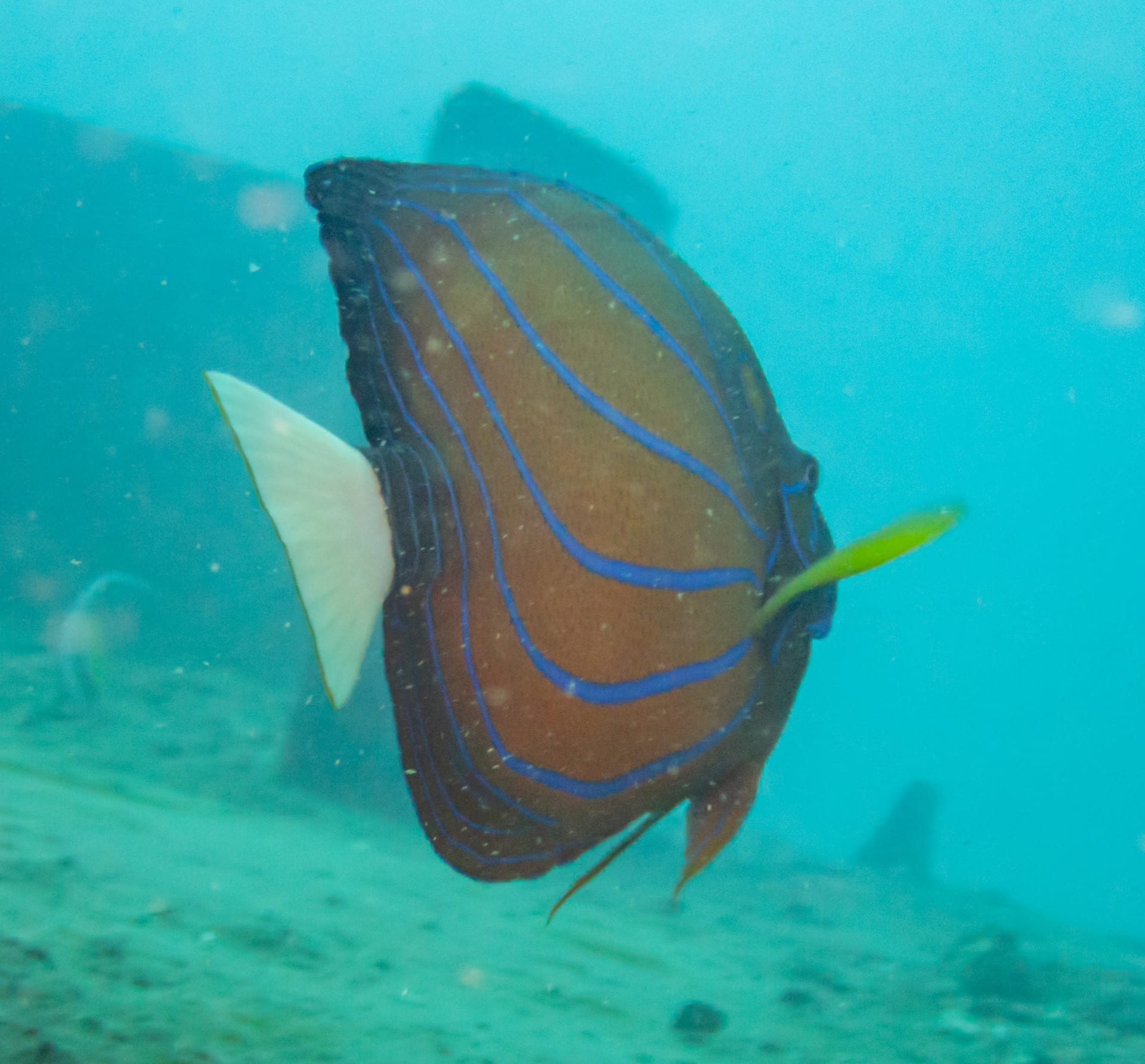
 © portioid / CC BY-SA 4.0
Bluering angelfish
The Bluering angelfish (Wanuke-yakko) is a large angelfish with a brown body, curved blue lines across its body, a blue ring on the shoulder and a white tail. Juveniles look completely different: a blue-black body with white and pale blue vertical bands that gradually give way to the adult colors as the fish grows. It can reach a maximum of 45 cm in total length, so it calls for a spacious tank and long-term planning. It may become territorial, so tank mates need careful thought. Rated as suitable for intermediate keepers, it is best approached once you are comfortable with the basics of marine fish care.
View Bluering angelfish encyclopedia →0% commission on your first sales!Register by September 30, 2026 and your first 2 sales are commission-free!
Breeder Wanted!
List on BreederDirect and sell directly to customers nationwide!
BreederDirect's 6 Transparency Promises
Every Marine Fish listing shows Breeder's full disclosure. No wild-caught. Captive-bred priority, tank size guidance, temperament details—transparent aquaculture.
- Captive-bred
- WYSIWYG
- Reef-safe
- Care Info Included
- Origin Disclosed
- Temperament Listed
Browse all 215 breeds
Care Difficulty
Reef-safe
Temperament
Verified breeders wanted for Marine Fish
Breeders are signing up now ahead of launch. Subscribe to be notified when new listings go live.
Getting alerts is free with a member account. When new listings match your saved search, we'll notify you by email and in-app.
Browse other categories
Verified breeders (preview)
Are you raising marine fish?
Register as a breeder and connect with buyers directly.
Apply as a breederBluering angelfish key facts
- Care level
- Intermediate
- Lifespan
- Little data available
- Size
- Up to 45 cm TL (FishBase)
- Temperature
- 22〜27℃
- Diet
- Omnivore (sponges, tunicates, algae)
- Water Temperature & Quality
- 22-27°C, specific gravity from 1.020 (Saltcorner).
- Container & Tank
- Adults reach 45 cm, so about 680 L (180 gallons) or more is the guideline. Provide cave-like rockwork and live rock.
- Tank Mates & Compatibility
- Do not keep it with other Pomacanthus.
- Reef Compatibility
- Adults nip stony corals (LPS and SPS), soft corals, clams and tubeworms, so it is not reef-safe.
- Diet & Feeding
- Feeds on sponges and tunicates in the wild. Give sponge-containing angelfish foods, frozen brine shrimp and mysis, and algae-based foods such as spirulina and nori, several times a day.
- Health & Cautions
- Newly added fish hide, so feed several times a day to settle them. Juvenile and adult patterns differ completely, so choose with the colour change in mind.
About Bluering angelfish
The Bluering angelfish is a large angelfish with blue arc lines, a blue shoulder ring and a white tail, reaching up to 45 cm. Rated for intermediate keepers. Learn about its color change and key points before bringing one home.
7 things to know before welcoming a Bluering angelfish
1Grows up to 45 cm
This is a large species that reaches a maximum of 45 cm in total length, so even a small individual needs to be planned for with its adult size in mind. Think through tank size, placement and the routine work of water changes before you bring one home.
2Juvenile and adult differ
Juveniles have a blue-black body with white and pale blue vertical bands, looking nothing like the adults. As they grow, they change into the adult pattern of a brown body with blue arc lines and a blue shoulder ring, and watching that transformation is part of the appeal. It helps to check what the adult looks like so you know what to expect from a juvenile.
3Plenty of swimming room
Large angelfish tend to swim around the tank a lot. Stack rockwork toward the back and sides to leave open swimming space, while still providing crevices where the fish can hide, which helps it settle in.
4Choose tank mates carefully
Large angelfish can become territorial and may clash with other angelfish or fish of a similar body shape. If you plan to keep it with others, give the tank generous space and think about the order in which the fish are introduced.
5Not for coral tanks
Adults pick at hard corals (LPS and SPS), soft corals, giant clams and fan worms, so it is not suited to a reef tank. Keep it in a fish-focused aquarium.
6Check its feeding first
Angelfish are thought to feed on sponges and algae in the wild, and some individuals are picky about what they accept in an aquarium. Ask the seller what the fish is currently eating and how well it feeds, then have the same food ready after arrival to make the transition easier.
7Watch water and health
Large fish produce a lot of waste and water quality can decline quickly, so build in extra filtration capacity and keep up regular water changes. Check the body surface, appetite and breathing every day, and consult the seller or an expert early if anything seems off. Keeping a new arrival apart from your existing fish for a while makes changes in its condition easier to notice.
Frequently asked questions about Bluering angelfish
- Q.Can a beginner keep a Bluering angelfish?
- A.It is rated for intermediate keepers, so it is safest to try once you are comfortable with basic marine water quality management. Because it grows large, preparing a suitable tank and confirming that it feeds well are both important.
- Q.How large does it get?
- A.It is a large species that reaches a maximum total length of 45 cm (FishBase). Even if a young fish seems easy to house, plan the tank around its adult size.
- Q.How long does it live?
- A.There is little reliable information on its lifespan, so we cannot give a definite figure. It is wise to set up your tank on the assumption that you may be keeping it for a long time.
- Q.Can I keep it in a coral tank?
- A.No. Adults pick at corals and giant clams, so it is not suited to a reef tank. If corals are your main focus, choose a different fish.
- Q.Does its appearance change as it grows?
- A.Yes, quite dramatically. Juveniles are blue-black with white and pale blue vertical bands, and as they grow they change into the adult pattern of a brown body with blue arc lines.
Useful tools for Bluering angelfish care
Learn more about Bluering angelfish in the encyclopedia
View Bluering angelfish encyclopedia entry →
Care difficulty, lifespan, size and diet — all basics covered.
More in this category
Can't find the one you're looking for?
Post your wishes for free and breeders with matching animals will contact you with introductions.