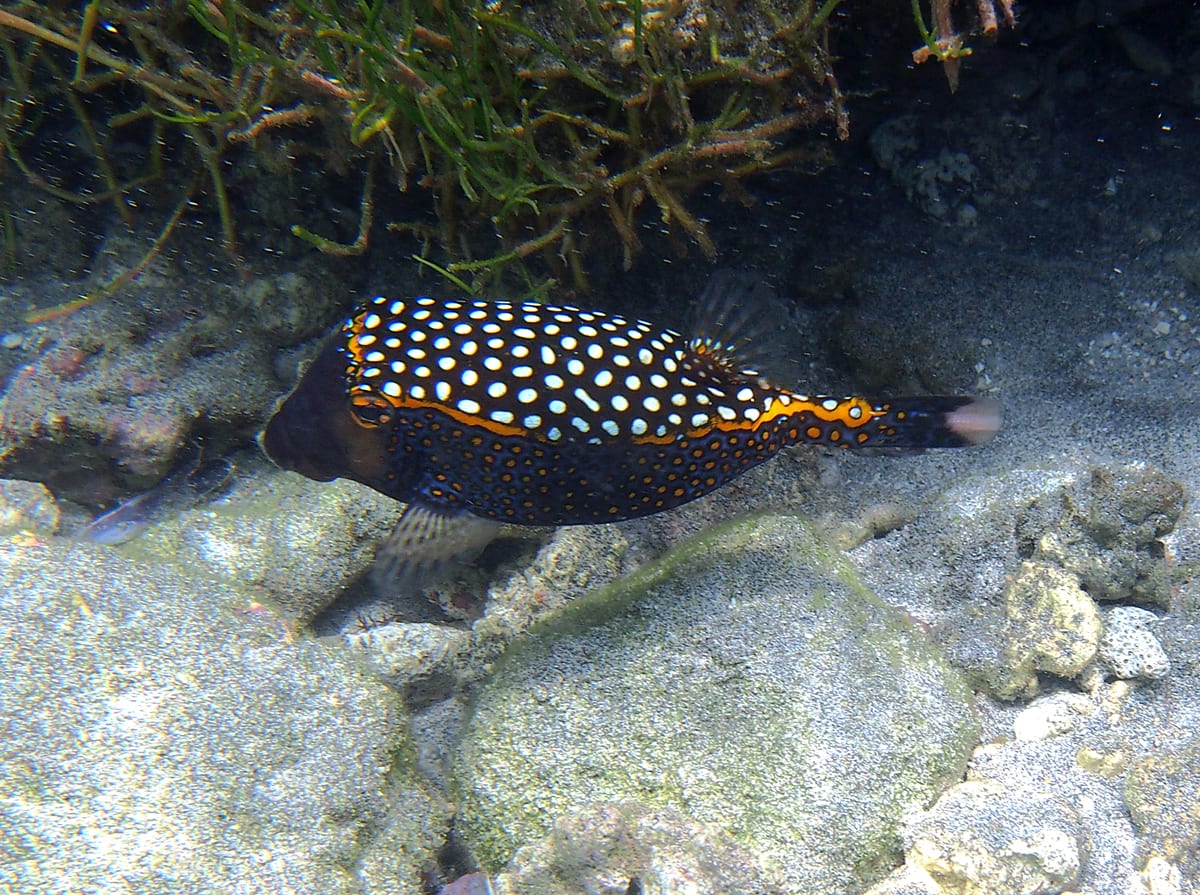
 © Philippe Bourjon / CC BY-SA 3.0
Whitespotted boxfish
The whitespotted boxfish is a small boxfish that lives on coral reefs from the Indo-Pacific to the eastern Pacific. Its rigid, armor-like body and the way it paddles along with tiny fin movements give it a charm all its own. Males and females look quite different: females are dark brown with white spots, while males have a black back with white dots and blue sides marked with yellow bands and spots. Adults reach a maximum total length of 25 cm (FishBase). It is rated for experienced keepers, and little is documented about its lifespan, so read up carefully before bringing one home.
View Whitespotted boxfish encyclopedia →Breeder Wanted!
List on BreederDirect and sell directly to customers nationwide!
BreederDirect's 6 Transparency Commitments
Every Marine Fish listing shows Breeder's full disclosure. No wild-caught. Captive-bred priority, tank size guidance, temperament details—transparent aquaculture.
- Captive-bred
- WYSIWYG
- Reef-safe
- Care Info Included
- Origin Disclosed
- Temperament Listed
Browse all 215 breeds
Care Difficulty
Reef-safe
Temperament
Verified breeders wanted for Marine Fish
Breeders are signing up now ahead of launch. Subscribe to be notified when new listings go live.
Getting alerts is free with a member account. When new listings match your saved search, we'll notify you by email and in-app.
Browse other categories
Verified breeders (preview)
Are you raising marine fish?
Register as a breeder and connect with buyers directly.
Apply as a breederWhitespotted boxfish key facts
- Care level
- Advanced
- Lifespan
- Few reliable data
- Size
- Up to 25 cm TL (FishBase)
- Diet
- Omnivore (small invertebrates, frozen foods, algae)
- Water Temperature & Quality
- Few species-specific temperature data. Be prepared to run activated carbon and make large water changes if it releases toxin.
- Aquarium
- A slow swimmer that dislikes strong flow and tight crevices; give open space and a calm setting to minimise stress.
- Tank Mates & Compatibility
- A slow feeder that suffers with fast or nippy fish. Stress-induced toxin release can kill tankmates, so mix with great care.
- Reef Compatibility
- It eats tunicates, worms, sponges and molluscs, so it is unsuitable for invertebrate-rich tanks. It is not known for eating corals, but cannot be called reef-safe.
- Diet & Feeding
- Feed small portions of frozen mysis, chopped clam and shrimp, and foods containing algae several times a day.
- Health & Cautions
- Boxfishes can release skin toxin under stress and wipe out a tank, so take particular care during transport and introduction. Collecting in Japanese waters must follow prefectural fisheries regulations.
About Whitespotted boxfish
Whitespotted boxfish: a small reef boxfish with distinct male and female colors, up to 25 cm. For experienced keepers. Traits, care notes and FAQ.
7 things to know before welcoming a Whitespotted boxfish
1For experienced keepers
The whitespotted boxfish is rated for experienced keepers. Water quality, getting it to feed and choosing compatible tank mates all need attention. It is safer to gain some saltwater experience before bringing one home.
2Males and females differ
Females are dark brown with white spots, while males have a black back with white dots and blue sides with yellow bands and spots. The two look so different that it pays to check photos of the actual fish before you decide.
3Rigid body, slow swimmer
Boxfish have a hard, shell-like body and swim slowly by working their fins in small strokes. They are not good at quick turns, so cover pump and overflow intakes with a strainer or guard. A layout with room to swim and no overly strong current also helps.
4Stress and skin toxins
Boxfish can release toxins from their skin when severely stressed, which may affect tank mates in a closed aquarium. Acclimate the fish carefully after transport and avoid sudden water changes or harassment. This varies between individuals and does not always happen.
5Choose tank mates carefully
Other boxfish and similarly shaped fish may clash with it, so be cautious about housing them together. Fast, greedy eaters can leave a slow swimmer like this one without food. Also avoid fin-nipping tank mates.
6Check how it eats
In the wild, boxfish are thought to pick at algae and small bottom-dwelling animals. Ask the breeder what the fish has been eating, and watch closely for the first few days after arrival to see that it feeds. Once it settles in, offer a mix of foods to keep its diet balanced.
7Tank size and coral safety
Adults reach a maximum total length of 25 cm (FishBase), so plan a roomy tank with the grown fish in mind. It may pick at corals and invertebrates, so think carefully before keeping it in a coral tank. Provide rockwork to hide in, and put stable water quality first.
Frequently asked questions about Whitespotted boxfish
- Q.Can a beginner keep one?
- A.It is rated for experienced keepers. Water quality, feeding and tank-mate selection all need care, so it is best to build up saltwater experience first.
- Q.How can I tell males from females?
- A.You can tell them apart by color. Females are dark brown with white spots, while males have a black back with white dots and blue sides with yellow bands and spots.
- Q.How large does it grow?
- A.FishBase lists a maximum total length of 25 cm. Prepare a spacious tank with the adult size in mind.
- Q.How long does it live?
- A.Little documentation exists on its lifespan, so no reliable figure can be given. Set up the tank properly before arrival and keep watching how the fish behaves day to day.
- Q.Can it live with corals or other fish?
- A.It needs careful judgment. It may pick at corals and invertebrates, and it can lose out on food to faster fish. Decide on tank mates while watching how the individual fish behaves.
Useful tools for Whitespotted boxfish care
Learn more about Whitespotted boxfish in the encyclopedia
View Whitespotted boxfish encyclopedia entry →
Care difficulty, lifespan, size and diet — all basics covered.
More in this category
Can't find the one you're looking for?
Post your wishes for free and breeders with matching animals will contact you with introductions.