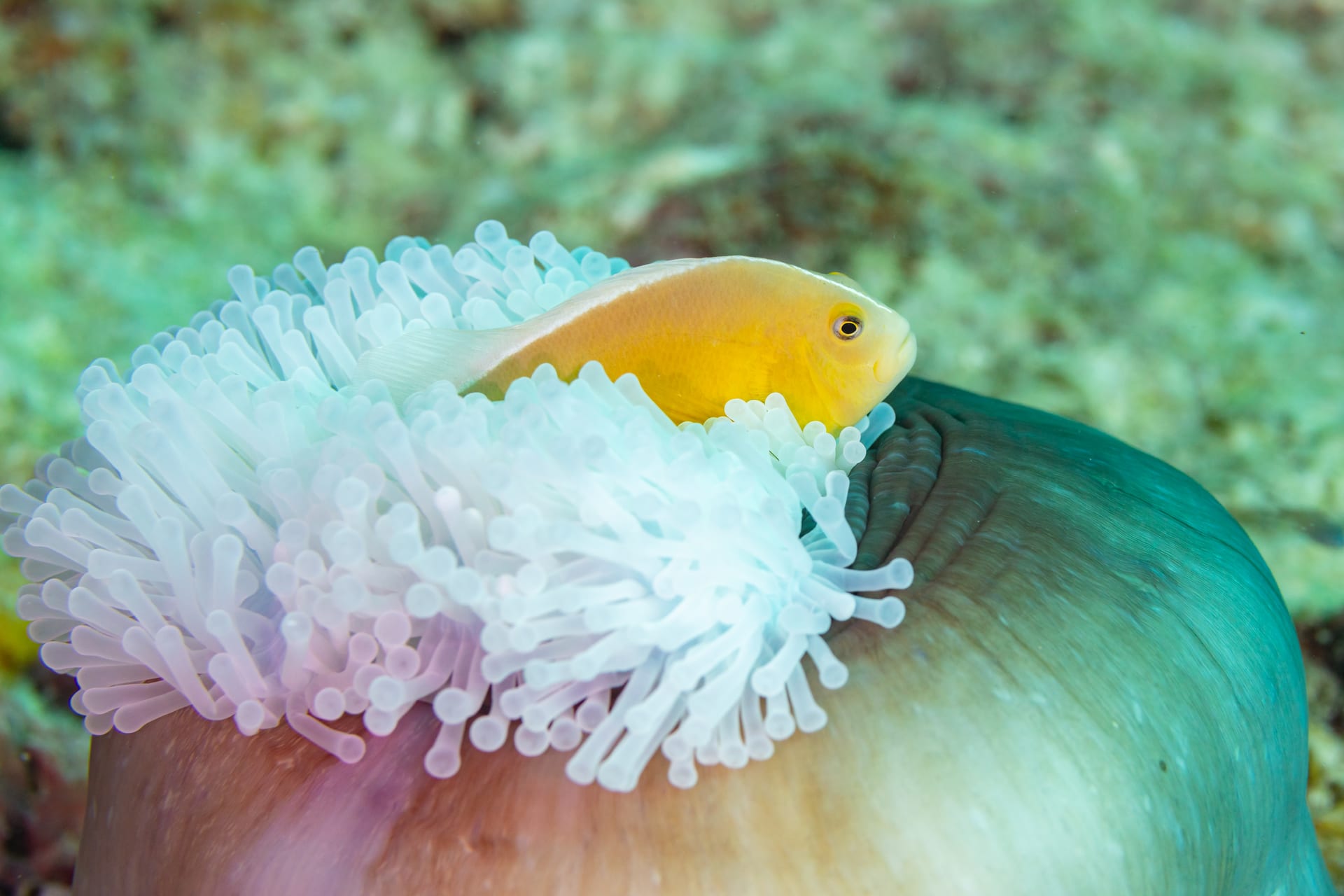
 © Diego Delso / CC BY-SA 4.0
Skunk clownfish
The skunk clownfish is a small clownfish from the Indian Ocean. Its pale orange body carries a single thin white stripe running along the back from the snout to the base of the tail, which gives it a skunk-like look. It is a separate species from the Pacific Sejiro-kumanomi and has a different range. It reaches a maximum standard length of 11 cm, and reference data rates it as suitable for beginners. Like other clownfish it can be territorial, and a pair swimming together is a real highlight. Little is documented about its lifespan, so it is best kept with stable water conditions and steady care.
View Skunk clownfish encyclopedia →0% commission on your first sales!Register by September 30, 2026 and your first 2 sales are commission-free!
Breeder Wanted!
List on BreederDirect and sell directly to customers nationwide!
BreederDirect's 6 Transparency Promises
Every Marine Fish listing shows Breeder's full disclosure. No wild-caught. Captive-bred priority, tank size guidance, temperament details—transparent aquaculture.
- Captive-bred
- WYSIWYG
- Reef-safe
- Care Info Included
- Origin Disclosed
- Temperament Listed
Browse all 215 breeds
Care Difficulty
Reef-safe
Temperament
Verified breeders wanted for Marine Fish
Breeders are signing up now ahead of launch. Subscribe to be notified when new listings go live.
Getting alerts is free with a member account. When new listings match your saved search, we'll notify you by email and in-app.
Browse other categories
Verified breeders (preview)
Are you raising marine fish?
Register as a breeder and connect with buyers directly.
Apply as a breederSkunk clownfish key facts
- Care level
- Beginner-friendly
- Lifespan
- Little data available
- Size
- Up to 11 cm SL (FishBase)
- Temperature
- 23〜27℃
- Diet
- Omnivore (zooplankton and algae)
- Water Temperature & Quality
- 23-27°C, specific gravity 1.020-1.026 (Saltcorner).
- Container & Tank
- About 110 L (30 gallons) or more; about 190 L (50 gallons) if kept with an anemone.
- Tank Mates & Compatibility
- With an anemone it may defend it aggressively, and it may quarrel with other clownfish.
- Reef Compatibility
- Leaves corals alone; reef-safe.
- Diet & Feeding
- Feed frozen brine shrimp, mysis and chopped seafood, plus spirulina-based prepared foods, once or twice a day.
- Health & Cautions
- The orange skunk clownfish (A. sandaracinos) is also sold as "skunk". Confirm this species by its scientific name and Indian Ocean origin.
About Skunk clownfish
The skunk clownfish is a small Indian Ocean clownfish with one white stripe along its back. It reaches up to 11 cm standard length and is rated beginner-friendly. Traits, care points and FAQs.
7 things to know before welcoming a Skunk clownfish
1One White Stripe, Own Species
The key marking is a single thin white line running along the back from the snout to the base of the tail on a pale orange body. This is a different species from the Pacific Sejiro-kumanomi and has a different range, so take care not to mix them up. Check the species name and description on the listing to confirm it is the fish you want.
2Small, but Give Them Room
With a maximum standard length of 11 cm, this is a fish you can consider even for a compact tank. Clownfish do hold territories and swim actively, though, so leave extra water volume and layout space if you plan to keep a pair. Rockwork that creates hiding places helps them settle in.
3Territory and Tank Mates
Like other clownfish, it can be territorial, and conflicts may occur with other clownfish or with assertive fish. If you keep tank mates, limit the number of species and individuals and watch how they get along at first. Hiding spots where a chased fish can retreat make the setup safer.
4Tips for Keeping a Pair
Clownfish are generally said to follow a pattern in which the largest individual becomes the female and the next largest the male. If you want a pair, choosing fish of noticeably different sizes tends to make pairing easier, although compatibility varies between individuals. Putting several fish of similar size together can lead to fighting, so be careful.
5Is an Anemone Required?
Clownfish live with anemones in the wild, but in an aquarium they can be kept without one. If you add an anemone, it needs its own suitable lighting and stable water quality. If you want to see the pairing behavior, read up on anemone care before you start.
6Stable Water and Acclimation
It is rated beginner-friendly, but as a saltwater fish it should not be exposed to sudden swings in temperature or salinity. Introduce it once the tank is set up and the bacteria have established, and acclimate it slowly after it arrives. Routine water changes and equipment checks help you notice problems early.
7Feeding and Health Checks
Before you bring one home, ask the breeder which foods the fish already accepts and how it is doing, which makes care after arrival smoother. Once it arrives, watch its appetite, its skin and its breathing closely. If something seems off and does not improve, consult an experienced keeper or a specialist early.
Frequently asked questions about Skunk clownfish
- Q.Can a beginner keep this fish?
- A.Reference data rates its difficulty as suitable for beginners. Still, it is a saltwater fish, so basic water management, including stable temperature and salinity, is essential. Starting once the tank has stabilized makes for a calmer start.
- Q.How large does it grow?
- A.The maximum standard length is 11 cm according to FishBase. It will be larger than when you first bring it home, so choose a tank with its adult size in mind.
- Q.Is it the same as the Sejiro-kumanomi?
- A.No, they are separate species. The skunk clownfish is found in the Indian Ocean, while the Pacific Sejiro-kumanomi has a different range. Check the species name carefully before you buy.
- Q.Can I keep it without an anemone?
- A.Yes, it can be kept in an aquarium without an anemone. If you want to see it living with one, prepare for the anemone's care requirements as well.
- Q.How long does it live?
- A.Little is documented about its lifespan, so a reliable figure cannot be given. Rather than relying on an estimate, keep observing it daily and maintain a stable environment.
Useful tools for Skunk clownfish care
Learn more about Skunk clownfish in the encyclopedia
View Skunk clownfish encyclopedia entry →
Care difficulty, lifespan, size and diet — all basics covered.
More in this category
Can't find the one you're looking for?
Post your wishes for free and breeders with matching animals will contact you with introductions.