 © Rickard Zerpe / CC BY 2.0
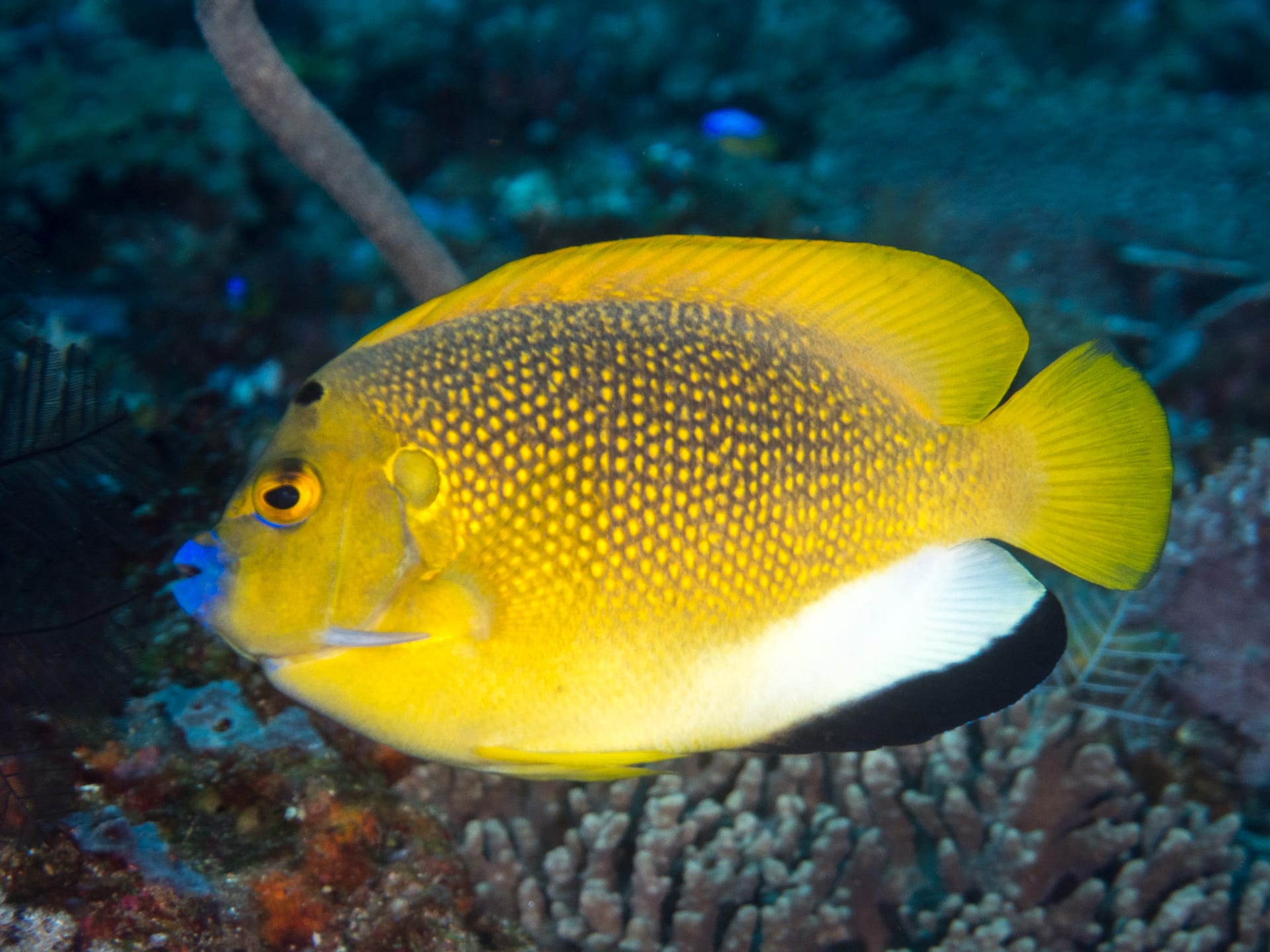
Threespot angelfish
The Threespot angelfish is a bright lemon-yellow angelfish with lips that look as if they were painted blue. A bluish-black spot sits behind the head and a pale brown spot behind the eye, which makes it easy to tell apart from its relatives. It reaches a maximum total length of 26 cm, so it needs room to grow. Its care level is rated for experienced hobbyists, and some individuals take time to accept prepared foods, so it suits aquarists who already have marine fish-keeping experience. Its vivid color can bring real energy to a well-established tank.
View Threespot angelfish encyclopedia →0% commission on your first sales!Register by September 30, 2026 and your first 2 sales are commission-free!
Breeder Wanted!
List on BreederDirect and sell directly to customers nationwide!
BreederDirect's 6 Transparency Promises
Every Marine Fish listing shows Breeder's full disclosure. No wild-caught. Captive-bred priority, tank size guidance, temperament details—transparent aquaculture.
- Captive-bred
- WYSIWYG
- Reef-safe
- Care Info Included
- Origin Disclosed
- Temperament Listed
Browse all 215 breeds
Care Difficulty
Reef-safe
Temperament
Verified breeders wanted for Marine Fish
Breeders are signing up now ahead of launch. Subscribe to be notified when new listings go live.
Getting alerts is free with a member account. When new listings match your saved search, we'll notify you by email and in-app.
Browse other categories
Verified breeders (preview)
Are you raising marine fish?
Register as a breeder and connect with buyers directly.
Apply as a breederThreespot angelfish key facts
- Care level
- Advanced
- Lifespan
- Little data available
- Size
- Up to 26 cm TL (FishBase)
- Temperature
- 22〜29℃
- Diet
- Omnivore (mainly sponges and tunicates)
- Water Temperature & Quality
- 22-29°C, specific gravity 1.020-1.026 (Saltcorner).
- Container & Tank
- About 570 L (150 gallons) or more. It is shy, so provide plenty of caves and hiding places, and keep it as the only angelfish.
- Tank Mates & Compatibility
- Keep it as the only angelfish, in a fish-only tank.
- Reef Compatibility
- It nips stony corals (LPS and SPS), soft corals and clam mantles, so it is not reef-safe.
- Diet & Feeding
- Its staple is sponges and tunicates and some fish are slow to take prepared foods. Combine sponge-containing frozen angelfish foods, brine shrimp, mysis and algae-based foods.
- Health & Cautions
- Getting it to eat is the main challenge, so confirm it is taking prepared food before buying. Use a container rather than a net, as the cheek spine snags.
About Threespot angelfish
Meet the Threespot angelfish: lemon-yellow body, blue lips, and a bluish-black spot behind the head. It grows to 26 cm and is best suited to experienced aquarists. Learn what to know before bringing one home.
7 things to know before welcoming a Threespot angelfish
1Plan for up to 26 cm
The Threespot angelfish reaches a maximum total length of 26 cm, so a small tank will feel cramped as it grows. Choose a larger tank with plenty of open swimming space, sized for the adult fish rather than the juvenile.
2Advanced level, long-term care
This species is rated for advanced hobbyists, and reliable information on its lifespan is limited. Bring one home only when you are ready to care for it over the long term.
3Feeding can take time
In the wild it is said to feed on sponges and similar organisms, and some individuals take time to accept prepared foods. Ask the seller what the fish is eating and how well it feeds before you commit.
4Be careful around corals
Some angelfish nip at corals and clams, so a reef tank calls for caution. Watch the fish closely after introduction and be ready to act if it starts picking at your corals.
5Tankmates need planning
Angelfish tend to be territorial, and clashes with close relatives or similarly shaped fish are possible. If you keep it with other fish, provide a roomy tank and hiding places, and introduce it step by step while watching behavior.
6Quarantine and observe
A newly arrived fish can be stressed by the move. Keeping it in a separate quarantine tank for a while lets you check its appetite, breathing, and skin before it goes into the main tank.
7Keep water conditions stable
Angelfish tend to struggle when water conditions swing suddenly. Introduce the fish into a mature, stable tank and acclimate it slowly, for example with the drip method.
Frequently asked questions about Threespot angelfish
- Q.Can a beginner keep this fish?
- A.Its care level is rated for experienced hobbyists, so it is not a good first marine fish. It is safer to consider it after you have gained experience with water management and getting fish to feed.
- Q.How large does it grow?
- A.The maximum total length is 26 cm according to FishBase. Prepare a tank sized for the adult fish.
- Q.Is it safe to keep with corals?
- A.Some angelfish nip at corals and clams, so caution is needed. Behavior varies between individuals, so watch the fish after introduction and be ready to respond if it causes trouble.
- Q.Will it eat prepared foods?
- A.Some individuals take time to accept prepared foods. Before you decide, ask the seller what the fish is currently eating and how well it feeds.
- Q.How long does it live?
- A.Reliable information on its lifespan is limited, so no clear figure can be given. Plan for long-term care and set up a stable environment before bringing one home.
Useful tools for Threespot angelfish care
Learn more about Threespot angelfish in the encyclopedia
View Threespot angelfish encyclopedia entry →
Care difficulty, lifespan, size and diet — all basics covered.
More in this category
Can't find the one you're looking for?
Post your wishes for free and breeders with matching animals will contact you with introductions.