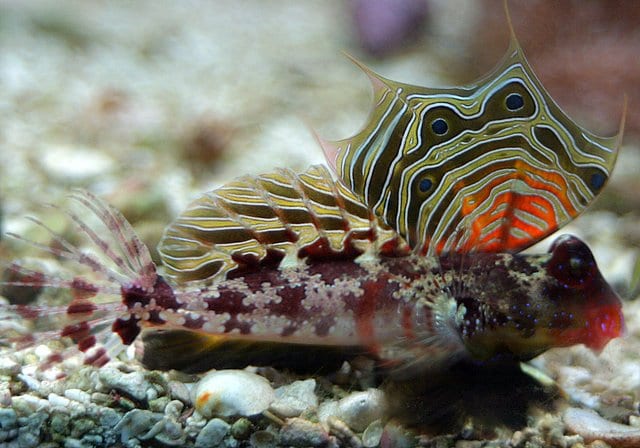
 © Brian Jeffery Beggerly from S'pore / CC BY 2.0
Scooter dragonet
Often sold as the scooter blenny, the scooter dragonet actually belongs to the dragonet family (Callionymidae). Its brown mottled body is scattered with white and black spots that look like a sprinkling of stars, and males carry a tall, large first dorsal fin. It moves as if gliding across the sand. Reaching a maximum total length of 8.9 cm, it is calm in temperament, but it forages for tiny live food in the tank, so it is best suited to experienced keepers who enjoy patiently building a settled aquarium and watching their fish.
View Scooter dragonet encyclopedia →Breeder Wanted!
List on BreederDirect and sell directly to customers nationwide!
BreederDirect's 6 Transparency Commitments
Every Marine Fish listing shows Breeder's full disclosure. No wild-caught. Captive-bred priority, tank size guidance, temperament details—transparent aquaculture.
- Captive-bred
- WYSIWYG
- Reef-safe
- Care Info Included
- Origin Disclosed
- Temperament Listed
Browse all 215 breeds
Care Difficulty
Reef-safe
Temperament
Verified breeders wanted for Marine Fish
Breeders are signing up now ahead of launch. Subscribe to be notified when new listings go live.
Getting alerts is free with a member account. When new listings match your saved search, we'll notify you by email and in-app.
Browse other categories
Verified breeders (preview)
Are you raising marine fish?
Register as a breeder and connect with buyers directly.
Apply as a breederScooter dragonet key facts
- Care level
- Advanced
- Lifespan
- Little data available
- Size
- Up to 8.9 cm TL (FishBase)
- Temperature
- 22〜27℃
- Diet
- Carnivore (small benthic crustaceans)
- Water Temperature & Quality
- 22-27°C, specific gravity 1.020-1.026 (Saltcorner).
- Container & Tank
- About 110 L (30 gallons) or more, and a mature tank with plenty of live rock and sand that naturally produces small crustaceans.
- Tank Mates & Compatibility
- It moves slowly, so avoid fast competitors for food and fin-nippers. One male per tank.
- Reef Compatibility
- Leaves corals alone; reef-safe.
- Diet & Feeding
- Its staple is tiny benthic crustaceans; supplement by target-feeding live brine shrimp. Some fish learn to take frozen or prepared foods, but individuals vary.
- Health & Cautions
- Check regularly that the belly stays rounded. Do not add it to a newly set-up tank.
About Scooter dragonet
The scooter dragonet is a small, star-spotted marine fish that glides over the sand, reaching a maximum total length of 8.9 cm. Rated for experienced keepers. Key traits, care points and tips to know before bringing one home.
7 things to know before welcoming a Scooter dragonet
1Why it suits experts
This species is rated for experienced keepers. Both securing suitable food and keeping the tank environment stable call on prior experience. It is wise to get comfortable with basic marine fish care first.
2Start with a mature tank
It feeds daily on tiny crustaceans that live in live rock and sand, so a freshly set-up tank is a poor fit. Prepare a settled tank where such small creatures have had time to establish themselves.
3Food and feeding
The tiny creatures in the tank may not be enough on their own. Offer small amounts of frozen small crustaceans and watch whether it eats them. Whether an individual accepts prepared foods varies from fish to fish.
4Sand and hiding spots
This fish glides across the sand and tends to spend its time near the bottom. Fine sand and a rock layout with places to hide help it settle in. Avoid crowding the bottom with objects so it has room to move around.
5Tank mates and males
Its temperament is calm, so peaceful tank mates are the better match. Fast-feeding fish can make it hard for this species to get enough food, so choose companions carefully. Males may quarrel with one another, so think carefully before keeping more than one.
6Stable water and acclimation
Sudden changes in water quality or temperature put stress on fish. Acclimate it slowly when it arrives, then keep conditions steady with regular water changes and water checks. If you notice signs of poor health or are considering medication, it is reassuring to consult an experienced keeper or specialist.
7Planning for the long term
Data on its lifespan is scarce, and no clear estimate is known. Daily observation helps you notice changes in appetite or movement. As with other marine fish, it is reassuring to keep a lid on the tank in case of jumping.
Frequently asked questions about Scooter dragonet
- Q.Can a beginner keep one?
- A.It is rated for experienced keepers. Securing food and building a suitable tank environment both take experience, so it is best to consider it after you are comfortable with marine fish care.
- Q.How large does it grow?
- A.The maximum total length is 8.9 cm (FishBase). It is small, but it moves around near the bottom searching for food, so leave some room in both the tank size and the rock layout.
- Q.What does it eat?
- A.It eats tiny crustaceans living in the sand and rock of the tank. Some individuals take frozen small crustaceans, but this varies from fish to fish. Get a settled tank and a feeding plan ready before bringing one home.
- Q.Can I keep more than one?
- A.Males may quarrel with each other, so consider it carefully. Males have a tall, large first dorsal fin, which helps in telling the sexes apart. Tank size and whether enough food reaches every fish are also worth weighing.
- Q.How long does it live?
- A.Data on its lifespan is scarce, and no clear estimate is known. Keep observing it every day so you can notice any change in appetite or movement.
Useful tools for Scooter dragonet care
Learn more about Scooter dragonet in the encyclopedia
View Scooter dragonet encyclopedia entry →
Care difficulty, lifespan, size and diet — all basics covered.
More in this category
Can't find the one you're looking for?
Post your wishes for free and breeders with matching animals will contact you with introductions.