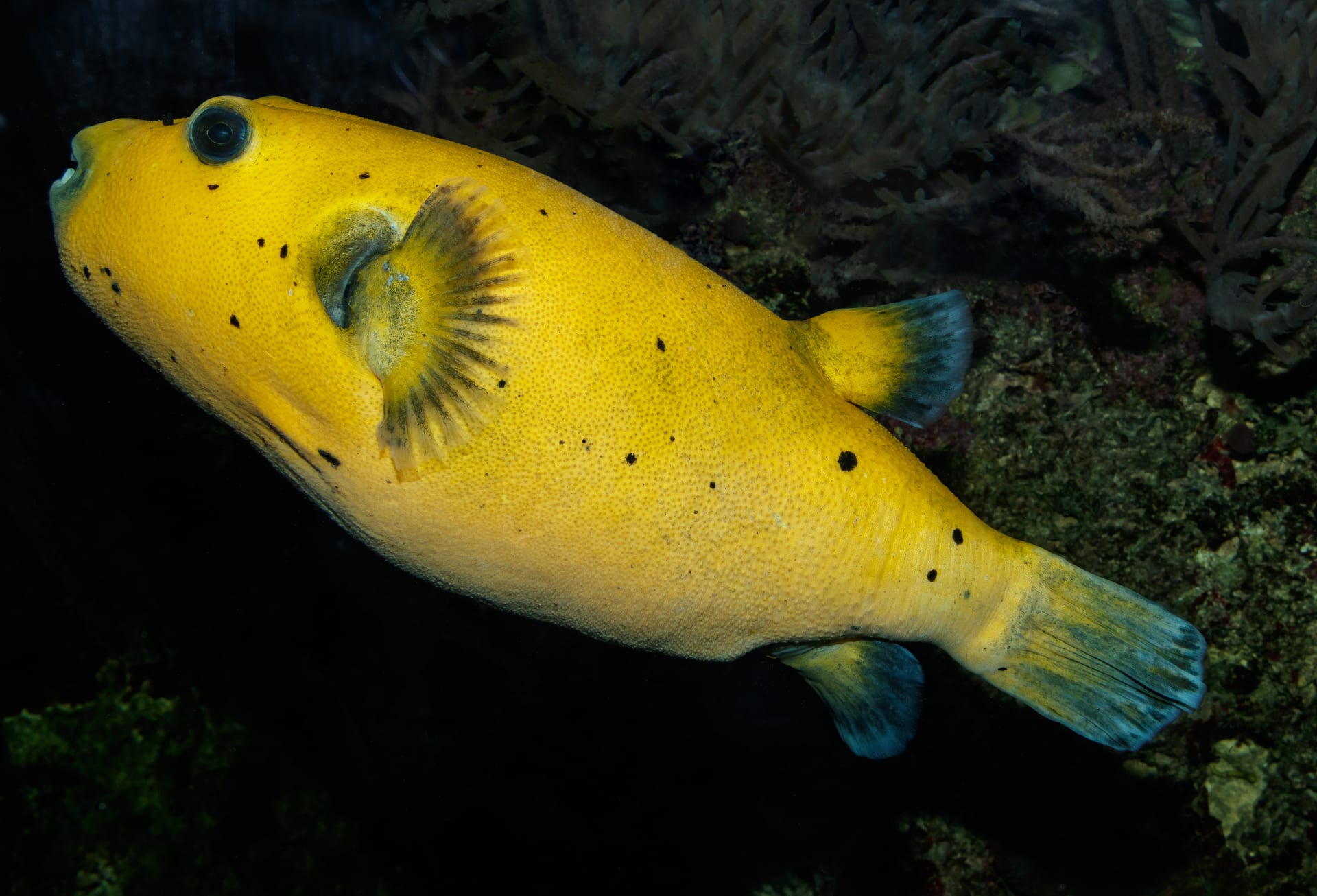
 © H. Zell / CC BY-SA 3.0
Blackspotted puffer
The Blackspotted puffer is a puffer from Indo-Pacific coral reefs. Its body is scattered with black spots, and the dark markings around its eyes and mouth give it a dog-like face, which is why it is also called the "dogface puffer." Body color varies from gray to brown to yellow, so every individual has its own look. It is curious and can become quite engaging once settled in. Adults grow to a maximum of 33 cm in total length and can be feisty, so this species suits intermediate keepers. Prepare a spacious tank and plan to keep it on its own.
View Blackspotted puffer encyclopedia →Breeder Wanted!
List on BreederDirect and sell directly to customers nationwide!
BreederDirect's 6 Transparency Commitments
Every Marine Fish listing shows Breeder's full disclosure. No wild-caught. Captive-bred priority, tank size guidance, temperament details—transparent aquaculture.
- Captive-bred
- WYSIWYG
- Reef-safe
- Care Info Included
- Origin Disclosed
- Temperament Listed
Browse all 215 breeds
Care Difficulty
Reef-safe
Temperament
Verified breeders wanted for Marine Fish
Breeders are signing up now ahead of launch. Subscribe to be notified when new listings go live.
Getting alerts is free with a member account. When new listings match your saved search, we'll notify you by email and in-app.
Browse other categories
Verified breeders (preview)
Are you raising marine fish?
Register as a breeder and connect with buyers directly.
Apply as a breederBlackspotted puffer key facts
- Care level
- Intermediate
- Size
- Up to 33 cm TL
- Diet
- Omnivore (molluscs, crustaceans, frozen foods, algae)
- Water Temperature & Quality
- Few species-specific temperature data. It is messy, so provide ample filtration and watch water quality.
- Aquarium
- It can exceed 30 cm, so a large tank with open swimming space is needed; secure rockwork so it cannot collapse.
- Tank Mates & Compatibility
- Solitary and territorial in the wild; it may nip fins, so choose large, robust tankmates.
- Reef Compatibility
- Not reef-safe: it eats corals (especially Acropora), crustaceans, molluscs, tunicates and sponges, so it does not suit reef tanks or invertebrate companions.
- Diet & Feeding
- Feed shelled foods such as clams and crustaceans, frozen foods and some algae; hard foods help wear down its continuously growing teeth.
- Health & Cautions
- It contains tetrodotoxin and must not be eaten. Yellow fish are hard to tell from the yellow form of A. meleagris. Collecting in Japanese waters must follow prefectural fisheries regulations.
About Blackspotted puffer
Learn about the Blackspotted puffer, a dog-faced puffer from Indo-Pacific coral reefs. This guide covers its traits, care basics, and adult size of up to 33 cm, for intermediate keepers.
7 things to know before welcoming a Blackspotted puffer
1Plan a roomy tank
Adults reach up to 33 cm in total length and swim actively. A small tank restricts their movement, so choose a roomy tank sized for the fully grown fish.
2Best kept alone
This puffer can be feisty and may nip slow-moving fish or those with long fins. Even members of the same species tend to fight, so plan on keeping a single fish per tank.
3Not for coral tanks
In the wild this puffer lives on coral reefs, and it may nip at corals and small invertebrates. It is a poor fit for reef tanks or for keeping with shrimp and snails, so picture a fish-only setup.
4Feeding and teeth
Puffer teeth keep growing and are worn down by chewing hard foods. Include chewy items such as shell-on shrimp and clams, and vary the diet. Check regularly that the teeth are not overgrown.
5Filtration and water changes
This is a hearty eater, so leftovers and waste can foul the water quickly. Build in generous filtration capacity, and make regular water changes and water testing a habit.
6Toxin and handling
Puffers are considered to carry toxins in their bodies, so never eat them. They may inflate when startled, so move the fish without taking it out of the water to keep it from gulping air.
7Check color and feeding
Body color ranges from gray to brown to yellow, and the spot pattern differs from fish to fish. Along with the listing photos, ask the breeder whether the fish is eating well and what foods it has been fed so far.
Frequently asked questions about Blackspotted puffer
- Q.Can a beginner keep one?
- A.It is rated for intermediate keepers. Because adults reach up to 33 cm, should be kept alone, and foul the water easily, it is best to get used to marine fishkeeping first.
- Q.How large does it grow?
- A.Total length is reported at up to 33 cm (FishBase). Sizes vary between individuals, so choose a tank with the fully grown fish in mind.
- Q.How long does it live?
- A.There is little reliable information on lifespan, so no firm figure can be given. Assume a long commitment and make sure you can keep up the equipment and daily care before bringing one home.
- Q.Can it live with corals or other fish?
- A.It may nip at corals and invertebrates, and it can also nip the fins of other fish, so keeping it alone is the usual advice. If you consider tankmates, weigh the tank size and the other fish's temperament carefully.
- Q.What should I feed it?
- A.Focus on chewy foods such as shell-on shrimp and clams, and rotate the variety. Since puffer teeth keep growing, including hard foods helps wear them down.
Useful tools for Blackspotted puffer care
Learn more about Blackspotted puffer in the encyclopedia
View Blackspotted puffer encyclopedia entry →
Care difficulty, lifespan, size and diet — all basics covered.
More in this category
Can't find the one you're looking for?
Post your wishes for free and breeders with matching animals will contact you with introductions.