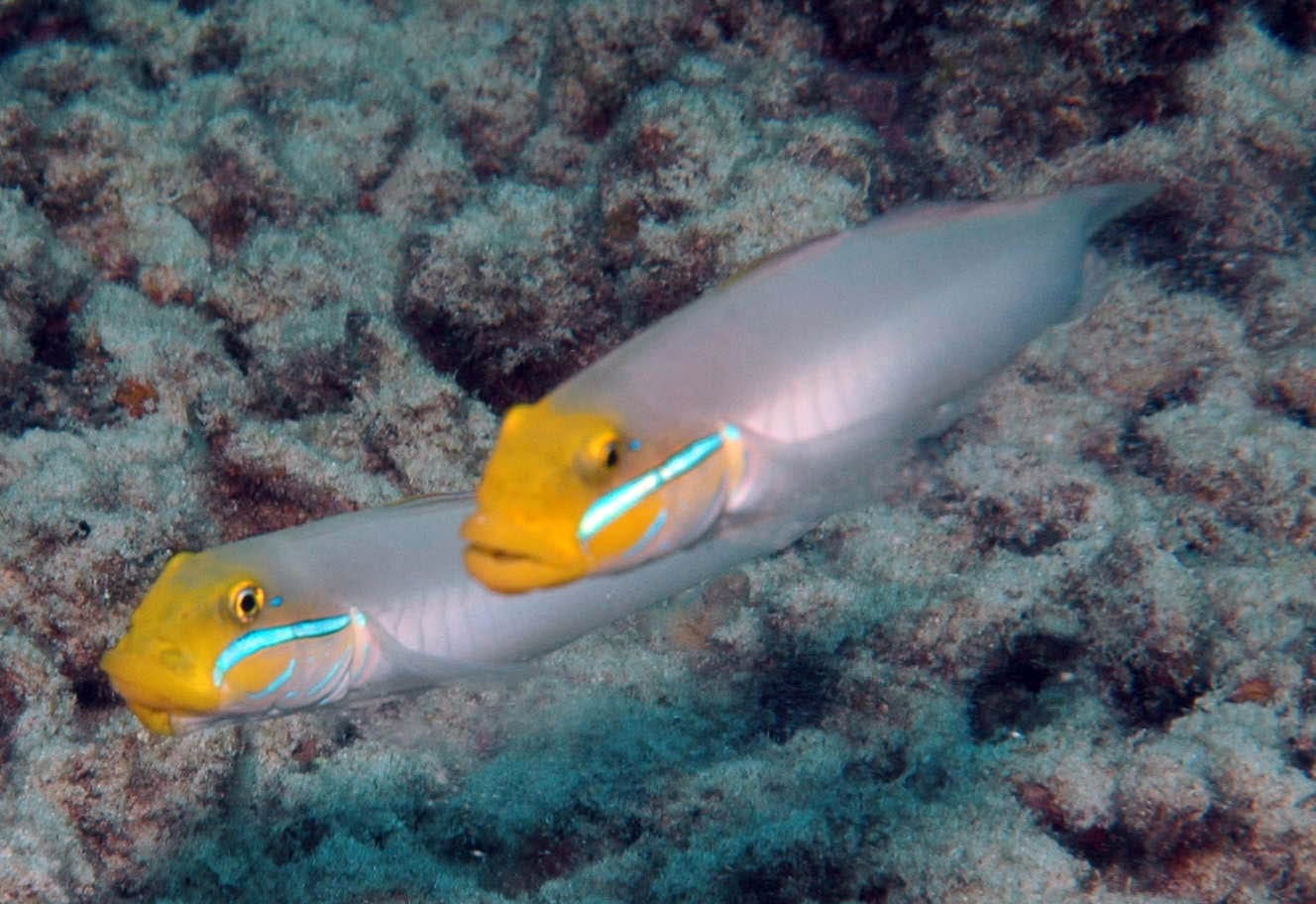
 © Leonard Low from Australia / CC BY 2.0
Blueband goby
The Blueband goby is a striking goby with a pale gray body, a yellow head, and a blue arc running from beneath the eye to the gill cover. It takes mouthfuls of sand, pushes it out through the gills, and filters out the small animals inside to eat, a habit that is fascinating to watch on a sand bed. It reaches a maximum total length of 18 cm and is rated for intermediate keepers. Individuals of the same species can fight, so think carefully before keeping more than one. It suits a settled tank, with a suitable sand bed and a feeding plan worked out before you bring it home.
View Blueband goby encyclopedia →0% commission on your first sales!Register by September 30, 2026 and your first 2 sales are commission-free!
Breeder Wanted!
List on BreederDirect and sell directly to customers nationwide!
BreederDirect's 6 Transparency Commitments
Every Marine Fish listing shows Breeder's full disclosure. No wild-caught. Captive-bred priority, tank size guidance, temperament details—transparent aquaculture.
- Captive-bred
- WYSIWYG
- Reef-safe
- Care Info Included
- Origin Disclosed
- Temperament Listed
Browse all 215 breeds
Care Difficulty
Reef-safe
Temperament
Verified breeders wanted for Marine Fish
Breeders are signing up now ahead of launch. Subscribe to be notified when new listings go live.
Getting alerts is free with a member account. When new listings match your saved search, we'll notify you by email and in-app.
Browse other categories
Verified breeders (preview)

Are you raising marine fish?
Register as a breeder and connect with buyers directly.
Apply as a breederBlueband goby key facts
- Care level
- Intermediate
- Lifespan
- Little data available
- Size
- Up to 18 cm TL (FishBase)
- Temperature
- 22〜27℃
- Diet
- Carnivore (small animals sifted from sand)
- Water Temperature & Quality
- 22-27°C, specific gravity 1.020-1.026 (Saltcorner).
- Container & Tank
- About 110 L (30 gallons) or more, with a wide bed of fine sand (1-2 mm) and rocks it can burrow under.
- Tank Mates & Compatibility
- Avoid aggressive or fin-nipping fish. It fights its own kind unless kept as a pair.
- Reef Compatibility
- Leaves corals alone; reef-safe.
- Diet & Feeding
- The sand bed alone is not enough. Feed frozen mysis, chopped shrimp or fish, sinking pellets and algae-containing foods about four times a day.
- Health & Cautions
- Some fish waste away despite good feeding, so pick a well-rounded specimen. It jumps, so keep a lid on. It hides at first.
About Blueband goby
The Blueband goby has a pale gray body, a yellow head, and a blue arc under the eye, and it sifts sand for food. Maximum total length is 18 cm; intermediate level.
7 things to know before welcoming a Blueband goby
1A sand-sifting feeder
The Blueband goby feeds by taking a mouthful of sand, expelling it through the gills, and filtering out the small animals inside. Watching it cruise over the sand is a highlight of the tank, but remember that the sand bed itself is its food source when you set up its home.
2Choose fine sand
Because it takes sand into its mouth to sift it, fine-grained substrate is the better choice. Avoid coarse, sharp-edged material and spread the sand widely so the fish has room to roam over it. Try not to cover too much of the sand bed with rockwork.
3Wait for a settled tank
A settled tank, where small animals have had time to establish in the sand, makes it easier for the fish to find food. A freshly set-up tank has few of these creatures, so it is safer to bring the goby home once the tank has stabilized.
4Check feeding habits
In nature it eats small animals living in the sand, so how well an individual accepts prepared or frozen foods varies. Before bringing one home, ask the seller what it is eating now. After arrival, watch its sand-sifting behavior and body condition every day.
5Up to 18 cm long
Its total length can reach 18 cm, so choose a tank with room both to swim and for a generous sand bed. Gobies spend much of their time near the bottom, so floor area is a more useful measure than tank height.
6Watch for same-species fights
It tends to be peaceful toward other fish, but fighting between individuals of the same species is known to occur. If you plan to keep more than one, talk with the seller about tank size and pairing before you decide.
7Prevent jumping
Gobies can jump when startled. Fit a lid on the tank and close off gaps around pipes and cables to keep the fish safe.
Frequently asked questions about Blueband goby
- Q.Can beginners keep this fish?
- A.Its care level is rated intermediate. Because it needs a suitable sand bed and a feeding plan, it is best considered once you have some saltwater experience and a stable tank.
- Q.What does it eat?
- A.It takes sand into its mouth, expels it through the gills, and filters out the small animals inside. How well it accepts prepared or frozen foods differs between individuals, so it helps to ask the seller before you buy.
- Q.How large does it grow?
- A.According to FishBase, the maximum total length is 18 cm. Plan for its full size by preparing a tank that allows a wide sand bed.
- Q.How long does it live?
- A.Reliable information on its lifespan is limited, so a specific number cannot be given. Set up its environment with the long term in mind and observe it daily.
- Q.What should I ask the seller first?
- A.Ask what food it is eating, what kind of sand it is kept on, and how it gets along with its tank mates. Checking through the listing page or an inquiry will help you prepare its environment after arrival.
Useful tools for Blueband goby care
Learn more about Blueband goby in the encyclopedia
View Blueband goby encyclopedia entry →
Care difficulty, lifespan, size and diet — all basics covered.
More in this category
Can't find the one you're looking for?
Post your wishes for free and breeders with matching animals will contact you with introductions.