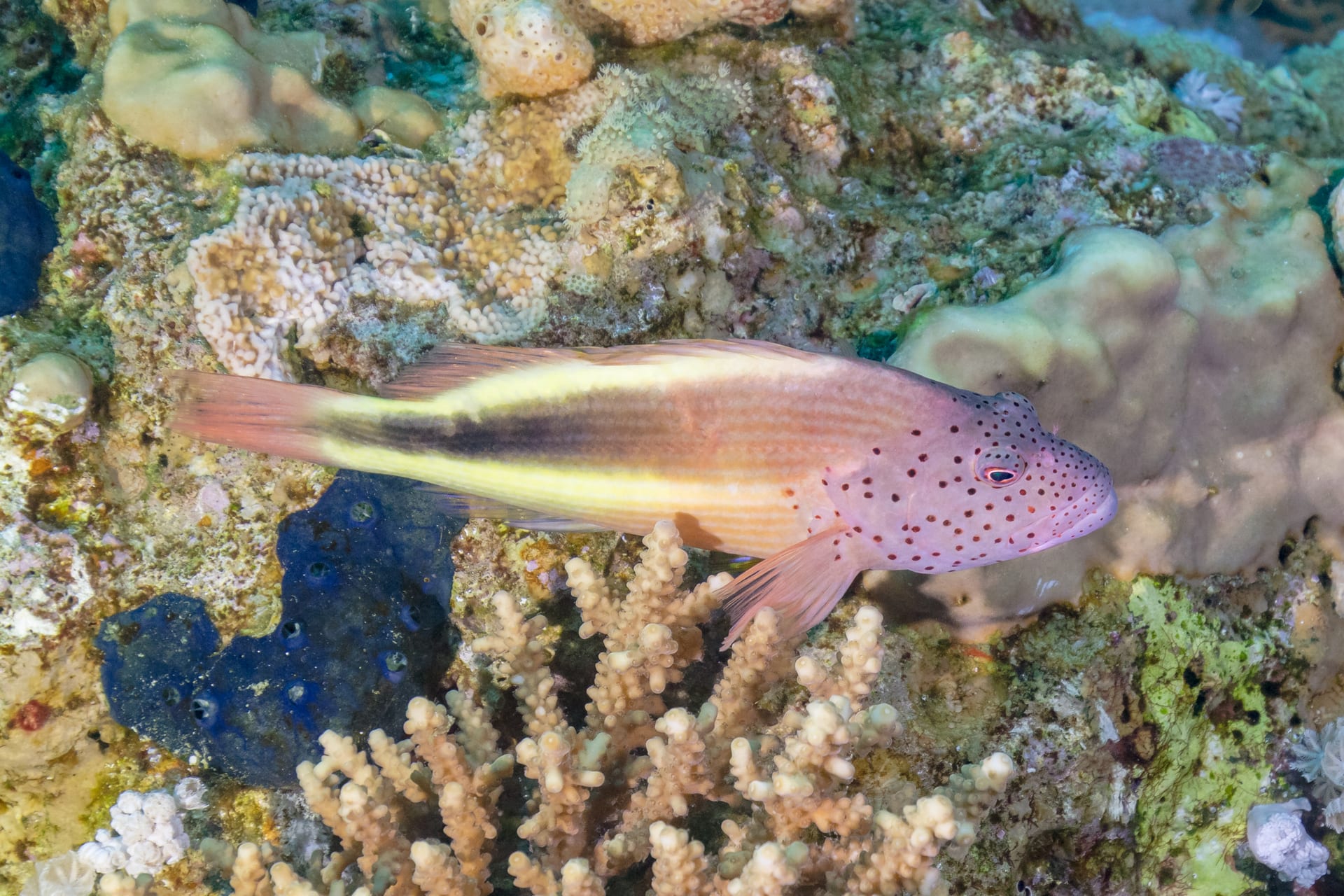
 © Diego Delso / CC BY-SA 4.0
Blackside hawkfish
The Blackside hawkfish is a hawkfish with many small reddish-brown spots scattered across its head and, often, a black vertical band on the rear of its upper body. Its body color changes a great deal with growth and origin, but the head spots stay consistent and make a reliable marker. It is appealing for its habit of perching on rock or coral and watching its surroundings, and it grows to a maximum total length of 22 cm. It is a carnivore with a bold streak, so plan tankmates and tank space carefully. Care is rated for intermediate keepers, and little reliable information exists on its lifespan, so we cannot give a specific figure.
View Blackside hawkfish encyclopedia →Breeder Wanted!
List on BreederDirect and sell directly to customers nationwide!
BreederDirect's 6 Transparency Commitments
Every Marine Fish listing shows Breeder's full disclosure. No wild-caught. Captive-bred priority, tank size guidance, temperament details—transparent aquaculture.
- Captive-bred
- WYSIWYG
- Reef-safe
- Care Info Included
- Origin Disclosed
- Temperament Listed
Browse all 215 breeds
Care Difficulty
Reef-safe
Temperament
Verified breeders wanted for Marine Fish
Breeders are signing up now ahead of launch. Subscribe to be notified when new listings go live.
Getting alerts is free with a member account. When new listings match your saved search, we'll notify you by email and in-app.
Browse other categories
Verified breeders (preview)
Are you raising marine fish?
Register as a breeder and connect with buyers directly.
Apply as a breederBlackside hawkfish key facts
- Care level
- Intermediate
- Size
- Up to 22 cm TL
- Temperature
- 22〜27℃
- Diet
- Carnivore (small fish and crustaceans)
- Water Temperature & Quality
- 22-27°C, specific gravity 1.020-1.026 (Saltcorner).
- Container & Tank
- About 190 L (50 gallons) or more, with rocks or high perches from which it can watch the tank.
- Tank Mates & Compatibility
- Keep it in a fish-only tank with larger, robust fish, and add it last.
- Reef Compatibility
- It does not eat corals, but it eats cleaner and other ornamental shrimp, tubeworms, small snails and crabs.
- Diet & Feeding
- Feed chopped fish, crustacean and shellfish, frozen, twice a day; live shrimp can help at first.
- Health & Cautions
- It defends its perches fiercely, even against newcomers and larger fish. One per tank.
About Blackside hawkfish
Blackside hawkfish: reddish-brown head spots, up to 22 cm, best for intermediate keepers. Traits, temperament, pre-purchase tips and FAQs.
7 things to know before welcoming a Blackside hawkfish
1Suited to intermediate keepers
The Blackside hawkfish is rated for intermediate keepers. It is easier to keep well once you are comfortable maintaining water quality and judging a new fish's condition yourself. If this would be your first marine fish, it helps to get used to setting up and maintaining a tank first.
2Grows up to 22 cm
Total length reaches a maximum of 22 cm (FishBase). Even if you bring home a small fish, plan a tank suited to its adult size. A roomy layout, including space around the rockwork and along the bottom, works best.
3Perching behavior
Hawkfish are known for perching on rock or coral and keeping watch over their surroundings. Building ledges and raised spots with live rock gives the fish somewhere to settle and feel secure. It may also perch on corals, so adjust the layout as you observe how it behaves.
4Feed a carnivore diet
The Blackside hawkfish is a carnivore, so its diet centers on animal foods such as frozen seafood. Small fish, shrimp and crabs that fit in its mouth may be eaten, so choose tankmates with care. Uneaten food can degrade water quality, so remove it promptly.
5Choose tankmates carefully
This fish can be bold, and it may not get along with small fish or shrimp that fit in its mouth. Other hawkfish and close relatives may become territorial rivals, so think carefully before keeping more than one. Plan around tank size and the size of each tankmate.
6Prevent jumping
Fish jumping out of the tank when startled can happen with marine fish in general. Fit a lid and close gaps around pipes and cables. Take extra care just after introduction, when the surroundings are new to the fish.
7Watch closely at first
Check a newly arrived fish every day for its skin condition, movement and response to food. Parasitic diseases such as white spot can be a problem with marine fish. If possible, observe the fish in a separate tank before moving it to the main tank, which helps limit the effect on existing animals.
Frequently asked questions about Blackside hawkfish
- Q.Can a beginner keep a Blackside hawkfish?
- A.It is rated for intermediate keepers. Prior marine fish experience and confidence with water quality and tankmate choices will help. If you are new to the hobby, get comfortable with tank management first.
- Q.How large does it get?
- A.Total length reaches a maximum of 22 cm according to FishBase. Prepare a tank and layout suited to its adult size.
- Q.How long does it live?
- A.Little reliable information exists on its lifespan, so we cannot give a specific figure. Set up a suitable environment and be prepared for a long-term commitment.
- Q.Can it live with other fish and corals?
- A.It is a carnivore with a bold streak, so be careful about keeping it with small fish, shrimp or crabs that fit in its mouth. Individuals vary, so judge coexistence with corals by watching how the fish behaves.
- Q.How can I identify a Blackside hawkfish?
- A.The common marker is the many small reddish-brown spots on the head, and there is often a black vertical band on the rear of the upper body. Body color changes a lot with growth and origin, so look at the head spots rather than overall color.
Useful tools for Blackside hawkfish care
Learn more about Blackside hawkfish in the encyclopedia
View Blackside hawkfish encyclopedia entry →
Care difficulty, lifespan, size and diet — all basics covered.
More in this category
Can't find the one you're looking for?
Post your wishes for free and breeders with matching animals will contact you with introductions.